
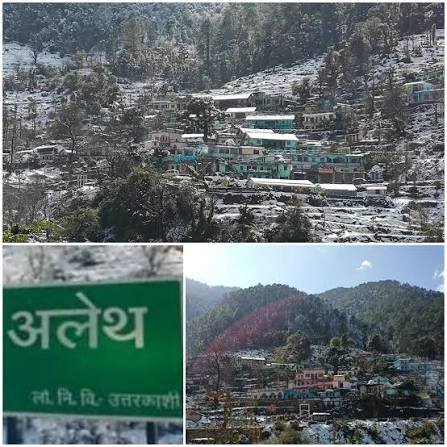
Aleth Village is a small, traditional Himalayan settlement in the Bhatwari block of Uttarkashi district, Uttarakhand, located about 15 km from Uttarkashi town. With just 80 households and a population of 394 according to the 2011 Census, it is the kind of close-knit mountain village where farming, family, and seasonal routine still shape daily life. For travelers who want to see Uttarkashi beyond its main pilgrimage stops, Aleth offers terraced fields, traditional Garhwali homes, and an unhurried rural pace within easy reach of the district headquarters.
This guide covers what is reliably documented about Aleth — its administration, geography, agriculture, and culture — along with practical travel information for visiting. Where specific details such as exact road conditions, homestay availability, or local event , we say so clearly rather than guessing. Kashi of North, a local Uttarkashi travel resource, can help you plan a visit to Aleth as part of a wider Uttarkashi itinerary.
Quick Information About Aleth Village
Aleth is a small Garhwali village in Bhatwari block, Uttarkashi district, roughly 15 km from Uttarkashi town, with a population of 394 across 80 households as per the 2011 Census.
| Information | Details |
|---|---|
| Village | Aleth |
| District | Uttarkashi |
| State | Uttarakhand |
| Country | India |
| Tehsil | Bhatwari |
| Development Block | Bhatwari |
| Gram Panchayat | Dhanpur |
| Distance from Uttarkashi | Approximately 15 km |
| Geographical Area | 127.38 hectares |
| Census Village Code | 040803 |
| PIN Code | 249193 |
| Households | 80 |
| Population (2011 Census) | 394 (186 male, 208 female) |
| Language | Garhwali, Hindi |
| Main Occupation | Traditional mountain agriculture and allied rural livelihoods |
| Accommodation | Limited in the village itself; wider options in Uttarkashi town — confirm current availability with Kashi of North |
| Mobile Network | Not independently verified; travelers should expect variable coverage typical of Bhatwari-block villages and confirm locally |
Where Is Aleth Village?
Aleth Village sits in the Bhatwari block and tehsil of Uttarkashi district, Uttarakhand, about 15 km from Uttarkashi town, within the Bhagirathi valley’s surrounding mountain landscape.
Administratively, Aleth falls under Dhanpur Gram Panchayat, itself part of the Bhatwari Kshettra Panchayat and Uttarkashi Zila Panchayat. This places the village within a well-defined local governance structure, with a Gram Pradhan and Panchayat administration responsible for local infrastructure and development matters.
Geographically, Aleth sits within the mountainous terrain typical of the Bhatwari region — forested slopes, terraced agricultural land, and mountain valleys surrounding Uttarkashi. Uttarkashi town functions as the nearest urban and service center for the village, meaning most travelers will pass through or base themselves in Uttarkashi before heading to Aleth.

Aleth Village Uttarkashi Location
Where is Aleth Village in Uttarkashi?
Aleth Village is located in the Bhatwari block and tehsil of Uttarkashi district, Uttarakhand, approximately 15 km from Uttarkashi town. It comes under Dhanpur Gram Panchayat and sits within the mountainous Bhagirathi valley region surrounding the district headquarters.
For travelers unfamiliar with the area, the simplest way to think of it is this: Uttarkashi town is the main hub, and Aleth is a short drive into the surrounding hills within the Bhatwari administrative area — one of several small villages that make up the rural landscape around the town.
History of Aleth Village
Detailed written historical records specific to Aleth are limited; what is documented relates mainly to its administrative classification, while the deeper social history of the village is preserved through oral tradition and community memory, as is common across small Himalayan settlements.
Aleth is formally recorded under Census Village Code 040803, part of Dhanpur Gram Panchayat within Bhatwari block. Beyond these administrative facts, dedicated historical documentation about the village’s founding, early settlers, or specific historical events is not widely published.
This is typical of Uttarkashi’s smaller villages, where community history tends to be carried through oral tradition — passed down by elders, reflected in local customs, and tied closely to the agricultural and religious calendar — rather than recorded in formal written archives. When visiting, travelers interested in the village’s past are encouraged to speak respectfully with residents, who are often the best source of Aleth’s living history, rather than relying on generalized claims about the village’s origins.
Culture and Traditions
Aleth reflects the broader Garhwali cultural traditions of the Uttarkashi region — Garhwali and Hindi in daily use, community-centered festivals and weddings, and folk music traditions including Mangalgeet and Vivahgeet performed with instruments such as the hurka and damama.
Village life in Aleth is shaped by close community relationships and seasonal rhythms rather than a fixed tourist calendar. Garhwali is commonly spoken alongside Hindi, and traditional folk music remains part of important social occasions — weddings, seasonal celebrations, and community gatherings often feature Mangalgeet (auspicious songs) and Vivahgeet (wedding songs), traditionally accompanied by instruments like the hurka (a hand drum) and damama.
Traditional dance and community performances also contribute to local celebrations, consistent with cultural patterns found across villages in the Bhatwari region. For visitors, experiencing this culture generally means being present respectfully during genuine community moments — a wedding procession, a village gathering, a shared meal — rather than expecting staged cultural shows.
Village Deities and Temples
In short: Specific temple names and religious sites unique to Aleth are not independently documented in available records, though the village — like others in Uttarkashi district — likely maintains local devta or devi worship traditions consistent with the region’s broader Devbhoomi (“Land of the Gods”) identity.
Uttarkashi district as a whole is closely associated with devta (local deity) and devi (goddess) worship traditions, where individual villages often maintain their own temple, priest lineage, and set of customs tied to a guardian deity. Rather than naming unverified temples for Aleth specifically, this guide encourages travelers to ask local residents about the village’s own religious practices and any nearby shrines when they visit — this is both more accurate and more respectful than assuming details from the wider regional pattern.
Geography of Aleth Village
Aleth covers approximately 127.38 hectares in the mountainous Bhatwari region of Uttarkashi district, characterized by forested slopes, terraced agricultural fields, and the broader Bhagirathi valley landscape.
The village’s relatively small geographical footprint and modest population give it the character of a compact mountain settlement, where houses, farmland, and forest edge sit close together. Terraced fields are a defining feature of the landscape, shaped by the sloping terrain typical of this part of Uttarkashi. Streams and seasonal water sources common to the Bhatwari region support both agriculture and daily household needs.
Aleth’s setting connects it to the wider Himalayan geography surrounding Uttarkashi town — mountain ridgelines, mixed forest cover, and the Bhagirathi river system running through the valley below.
Climate and Weather
Aleth experiences a typical mid-elevation Garhwal Himalayan climate — pleasant spring and autumn conditions, warm but manageable summers, a distinct monsoon with rain-related road risk, and cold winters, though exact elevation-specific data for the village itself is not independently verified.
Spring
Temperatures are generally pleasant, agricultural activity picks up as fields are prepared and sown, and mountain views tend to be clear on good days.
Summer
Daytime conditions are typically comfortable for a hill village, with cooler mornings and evenings compared to the plains.
Monsoon
Rainfall increases significantly, turning the surrounding hills green but also raising the risk of slippery paths and road disruption on the approach from Uttarkashi. Travel during heavy monsoon weeks should be planned cautiously.
Autumn
Skies tend to clear after the monsoon, offering some of the best mountain visibility and generally comfortable travel conditions.
Winter
Mornings turn cold with frost common at this elevation range; whether snowfall reaches the village directly depends on exact elevation and yearly conditions, which aren’t independently verified here — confirm current winter conditions locally before planning a cold-season visit.
Best Time to Visit Aleth Village
What is the best time to visit Aleth Village?
The most comfortable general window is spring through early summer and again in autumn, avoiding the heaviest monsoon weeks; the right season ultimately depends on whether you prioritize agricultural scenery, clear mountain views, or a quieter off-season visit.
| Season | Weather | Landscape | Travel Conditions | Recommendation |
|---|---|---|---|---|
| Spring (Mar–May) | Pleasant, mild | Green fields, active farming | Generally good | Strong choice for village life and agriculture |
| Summer (Jun–early Jul) | Warm days, cool evenings | Full green cover | Good, watch for pre-monsoon showers | Good for general village visits |
| Monsoon (Mid Jul–Sep) | Heavy rain | Lush but slippery | Landslide risk on approach roads | Avoid unless necessary; confirm conditions first |
| Autumn (Oct–Nov) | Clear, cool | Best mountain visibility | Generally good | Excellent for photography and travel |
| Winter (Dec–Feb) | Cold, frosty mornings | Bare fields, possible frost/snow | Can be affected by cold-weather road conditions | For travelers comfortable with cold-season travel |
How to Reach Aleth Village
From Uttarkashi
Aleth is approximately 15 km from Uttarkashi town via local roads through the Bhatwari block. A private taxi is the most practical option; exact travel time depends on current road conditions, so confirm with a local driver or Kashi of North before setting out.
From Dehradun
Travel via the Dehradun–Uttarkashi road through Chamba and Tehri, entering the Bhagirathi valley corridor, then continue the final stretch from Uttarkashi town to Aleth.
From Rishikesh
Follow the Rishikesh–Uttarkashi road along the Bhagirathi/Bhilangana valley system, then complete the last leg from Uttarkashi to Aleth by local taxi.
From Haridwar
Join the Haridwar–Rishikesh–Uttarkashi road corridor, following the same general route as from Rishikesh, before continuing on to Aleth from Uttarkashi.
From Delhi
The practical route is Delhi → Haridwar/Rishikesh → Uttarkashi → Aleth Village, typically covered over a full day of travel with an overnight stay in or around Uttarkashi before the short onward trip to the village.
By Road
Options include state buses and shared taxis to Uttarkashi, followed by a private taxi or local transport to Aleth; self-drive and motorcycle travel are also possible for those comfortable with Himalayan mountain roads. Road conditions throughout this region can change due to rain, landslides, snow, road construction, or seasonal closures, so it’s worth checking current status before departure.
Only the Uttarkashi–Aleth distance is independently documented at approximately 15 km; the remaining figures depend on route, road conditions and season, so Kashi of North recommends confirming current distances and travel times before finalizing your plan.
What Makes Aleth Village Special?
Aleth’s appeal lies in its scale and setting — a small, close-knit farming community of under 400 people, easily reached from Uttarkashi town yet still shaped by traditional agriculture and Garhwali custom rather than tourism infrastructure.
Rather than presenting Aleth as an undiscovered secret, it’s more accurate to describe it as a working Himalayan village that happens to sit conveniently close to Uttarkashi — making it accessible for travelers who want a genuine rural experience without a long or difficult journey. Its terraced fields, small population, and community-centered Panchayat governance reflect a way of life still common across much of rural Uttarkashi, offered here in an easily reachable form.
Things to Do in and Around Aleth Village
- Village walks along local paths, past traditional homes and terraced fields
- Photography of agricultural terraces, mountain views, and village architecture
- Nature walks through the surrounding forest edge and farmland
- Agriculture observation — seeing terraced wheat, maize, or ragi (finger millet) fields depending on season
- Local food experience through homestay meals where available
- Cultural interaction with residents, approached respectfully and without imposing
- Bird watching, typical of the mixed forest and farmland habitat in this part of Bhatwari block
- Sunrise and sunset photography from open points around the village
- Nearby sightseeing in Uttarkashi town and along the Bhagirathi valley road
Village Walk Experience
Walking through Aleth means following narrow paths between traditional Garhwali homes, many built from local stone and wood suited to the mountain climate. Terraced fields step down the slopes around the settlement, worked according to the season — wheat and maize in their respective growing periods, with ragi (finger millet) a common hill crop in this part of Uttarkashi.
Morning in the village typically means an early start for households: livestock let out, fields checked, water collected. Forest edges close to the settlement offer a transition from farmland to wilder mountain terrain, with views opening up toward the surrounding Bhatwari hills on clear days.
Evenings bring a quieter rhythm — animals brought back in, cooking fires lit, and the kind of unhurried village stillness that’s common across small Himalayan settlements once the day’s outdoor work winds down. Visitors walking through should keep a respectful pace, greet residents naturally, and avoid entering private property or farmland without invitation.
Local Food
Traditional Uttarakhand hill food — dishes built around local grains, pulses, and seasonal vegetables — is what travelers can generally expect in and around Aleth, though exact availability depends on the household, season, and local hospitality rather than a fixed restaurant menu.
Dishes commonly associated with Garhwali households in this region include mandua roti (finger millet flatbread), jhangora (barnyard millet), phaanu and chainsoo (lentil-based preparations), kandalee (nettle-based dishes), local rajma, gahat dal (horse gram lentils), bhatt (black soybean), seasonal vegetables, local chutneys, and Himalayan tea. Since Aleth does not have documented commercial restaurants, most food experiences here come through homestay hospitality where available, so it’s worth confirming meal arrangements in advance — Kashi of North can help coordinate this as part of your visit.
Rural Lifestyle
Daily life in Aleth centers on agriculture, livestock rearing, and household routines shaped by the seasonal calendar, with women typically playing a central role in farming and household water and fuel collection, consistent with patterns common across small Himalayan villages.
Agriculture and livestock rearing form the backbone of household economy in villages like Aleth, supplemented by seasonal work and, in many hill communities, some degree of youth migration toward towns and cities for education or employment — a broader trend affecting many small Uttarakhand villages rather than something unique to Aleth. Traditional homes, local water sources, and small village markets (typically accessed via Uttarkashi town for larger needs) round out the practical side of daily life.
This lifestyle should be understood and respected as a functioning, dignified way of life rather than something to be romanticized or treated as a hardship narrative for visitors.
Agriculture
Aleth’s farming follows the terraced-field model common across the Bhatwari region, with crops including wheat, maize, and ragi (finger millet) grown according to the mountain’s seasonal calendar.
Terraced fields allow farming to continue on Aleth’s sloping terrain, a technique widespread across Himalayan villages where flat land is limited. Crops are chosen to suit the elevation and climate, with wheat and maize as staple grains alongside ragi, a nutritious hill millet well suited to mountain agriculture. Farming here isn’t purely economic — the agricultural calendar shapes household routines, community cooperation during planting and harvest, and even the timing of certain local celebrations.
Flora and Fauna
The forested slopes around Aleth, typical of the Bhatwari region’s mid-elevation zone, likely support common Himalayan tree species and wildlife found throughout Uttarkashi district, though species specific to Aleth itself are not independently documented.
Mixed forest in this elevation band of Uttarkashi commonly includes oak, along with other native Himalayan species, supporting typical hill wildlife and birdlife. Sightings of animals such as langur or barking deer are possible in forested areas across the region but should never be treated as guaranteed — wildlife encounters depend on season, time of day, and simple chance.
Nearby Places to Visit
Uttarkashi
The district headquarters, about 15 km away, is the natural base for visiting Aleth and offers wider stay, food, and transport options. Best visited alongside Aleth as part of the same day. ( readmore… Uttarkashi Travel Guide: Everything You Need to Know Before You Go)
Kashi Vishwanath Temple
A major Shiva temple in Uttarkashi town, one of the most significant pilgrimage sites in the district. Best reason to visit: core spiritual stop for most Uttarkashi itineraries. (read more… Kashi Vishwanath Temple Uttarkashi: The Spiritual Heart of the Kashi of the North)
Shakti Temple
Located near Kashi Vishwanath Temple, known for a large trishul (trident) structure. Best reason to visit: combined temple visit with Kashi Vishwanath.
Kuteti Devi Temple
A goddess temple within the Uttarkashi region, part of the district’s devi worship tradition. Best reason to visit: additional spiritual stop for a temple-focused day. (readmore.. Kuteti Devi Temple Uttarkashi: History, Significance & Travel Guide)
Gangnani
A halt along the Uttarkashi–Gangotri road, locally known for hot water springs. Best reason to visit: scenic stop en route further up the valley. (readmore.. Gangnani Travel Guide: The Hot Spring on the Way to Gangotri)
Bhatwari
The block headquarters town that Aleth administratively belongs to, along the Uttarkashi–Gangotri corridor. Best reason to visit: access point for surrounding villages and treks. (read more.. Bhatwari Village Travel Guide: The Town That Keeps the Valley Moving)
Netala
A small settlement along the Bhagirathi valley route, generally used as a transit stop. Best reason to visit: roadside halt with river views. ( read more… Netala, Uttarkashi — A Complete Travel Guide to This Bhagirathi Valley Village)
Nachiketa Tal
A high-altitude lake associated with local mythology, in the wider Uttarkashi region. Best reason to visit: a scenic, less-crowded nature and trekking destination. (read more… Nachiketa Tal: Complete Guide to Uttarkashi’s Sacred Forest Lake)
Dayara Bugyal
A well-known high-altitude meadow trek in Uttarkashi district. Best reason to visit: accessible alpine trekking experience. (read more… Dayara Bugyal Trek — Complete Guide to Uttarakhand’s Finest Alpine Meadow)
Harsil
A riverside village further up the Gangotri road, known for apple orchards and deodar forest. Best reason to visit: standout Himalayan scenery. (read more… Harsil Valley Travel Guide: The Crown of Uttarkashi)
Gangotri
The source region of the Bhagirathi river and a major Char Dham pilgrimage site. Best reason to visit: primary pilgrimage destination of the region. (read more … Gangotri Temple, Glacier, and the Source of the Ganga)
Exact distances and travel times from Aleth to each of these vary by route; Kashi of North can confirm current figures and help build a combined itinerary.
Aleth Village + Uttarkashi Itineraries
1-Day Trip
Morning in Aleth Village (walk, photography, local interaction) → drive to Uttarkashi → Kashi Vishwanath and Shakti Temple → evening at the Ganga ghats.
2-Day Trip
Day 1: Arrive Uttarkashi, settle in, visit town temples. Day 2: Full morning in Aleth Village, afternoon drive toward Gangnani or Bhatwari, return to Uttarkashi.
3-Day Trip
Day 1: Uttarkashi town and temples. Day 2: Aleth Village experience plus surrounding countryside. Day 3: Onward day trip toward Harsil or Dayara Bugyal, depending on interest and fitness.
Slow Travel Itinerary
Spend an unhurried day or two based in or near Aleth and Uttarkashi, prioritizing village walks, local food, photography, and genuine conversation over a packed sightseeing schedule.
Accommodation Near Aleth Village
In short: Dedicated accommodation directly in Aleth is not independently documented; most travelers base themselves in Uttarkashi town, roughly 15 km away, which offers a fuller range of hotels, guest houses, and homestays.
Homestays
Some travelers may find village homestay options in or near Aleth through local contacts; availability isn’t fixed, so it’s best to confirm current options before planning around this.
Guest Houses
Simple guest house accommodation is more reliably available in Uttarkashi town and along the Gangotri road corridor.
Hotels in Uttarkashi
Uttarkashi offers a range of hotels across different budgets, making it the most practical base for a visit to Aleth.
Budget and Family Stays
Families and budget travelers will generally find more consistent facilities in Uttarkashi town than in the village itself.
If you want to stay near Aleth Village or explore Uttarkashi comfortably, Kashi of North can help you find suitable hotels, homestays, and local travel services.
📞 Call/WhatsApp: 7253079221 ✉️ Email: kashiofnorth@gmail.com
ATMs, Fuel and Medical Facilities
Aleth itself does not have documented ATM, fuel station, or hospital facilities. Uttarkashi town, about 15 km away, is the nearest practical center for ATMs, petrol pumps, pharmacies, medical care, and police assistance. Plan to handle cash withdrawal, fueling, and any medical needs in Uttarkashi before heading to the village.
Safety Tips
- Check weather conditions before travelling, especially during monsoon and winter
- Avoid driving unfamiliar mountain roads after dark
- Carry sufficient cash, since digital payment options may be limited
- Download offline maps in advance
- Inform someone of your travel plan and expected return
- Respect private property and farmland while walking through the village
- Do not enter forested areas without local guidance
- Follow local advice regarding road conditions during monsoon
- Carry basic emergency supplies, including a first-aid kit
Responsible Village Tourism
Respect Local Culture: Approach village life as a living community, not a display for visitors.
Ask Before Photographing: Always ask permission before photographing residents, children, or private homes.
Avoid Plastic: Carry reusable bottles and bags rather than single-use plastic.
Support Local Businesses: Choose local homestays, guides, and food where available.
Do Not Disturb Wildlife: Observe from a distance and avoid interfering with animals or habitats.
Respect Temples: Follow local customs at any religious sites you visit.
Avoid Loud Music: Keep noise levels low, especially in residential areas.
Protect Water Sources: Do not pollute or waste local streams and water supplies.
Do Not Litter: Carry out all waste you bring in.
Leave No Trace: Aim to leave the village and its surroundings exactly as you found them.
Responsible tourism in villages like Aleth directly benefits the local community, encouraging sustainable travel rather than extractive tourism.
Photography Guide
Aleth offers photographic opportunities in its terraced fields, traditional village architecture, and surrounding mountain views, with sunrise and sunset light generally the most rewarding times to shoot. Agricultural scenes — planting, harvesting, livestock work — can make compelling images when approached respectfully.
Always ask permission before photographing residents, children, religious ceremonies, or private homes. A respectful request, even through simple gestures if there’s a language gap, goes a long way toward a positive interaction.
Who Should Visit Aleth Village?
| Traveler | Suitability | Why |
|---|---|---|
| Families | Good, with realistic expectations | Village walks and cultural exposure suit older children well; limited facilities require some flexibility |
| Couples | Good | Quiet, unhurried setting suited to a relaxed day |
| Backpackers | Good | Low-cost, authentic rural experience close to Uttarkashi |
| Solo Travelers | Good, with normal precautions | Manageable distance and generally safe rural setting |
| Photographers | Very good | Terraced fields, mountain light, and village architecture |
| Nature Lovers | Good | Forest edges, farmland, and mountain views nearby |
| Pilgrims | Good as an add-on | Easily combined with Uttarkashi’s main temples |
| Adventure Travelers | Moderate | Better suited as a cultural stop alongside nearby treks like Dayara Bugyal |
Who May Not Enjoy Aleth Village?
Aleth may not suit travelers expecting luxury resorts, nightlife, shopping, a wide choice of restaurants, or constant mobile connectivity. Visitors who need highly developed tourist infrastructure or fast-paced sightseeing may find a village visit slower and simpler than they’re looking for — which is precisely the point for those seeking a genuine rural Himalayan experience.
Local Etiquette
- Greet locals respectfully, using simple Hindi or Garhwali greetings where possible
- Dress modestly, especially near temples or religious sites
- Remove shoes where locally required
- Ask before entering homes or private property
- Ask before photography, particularly of people
- Do not touch religious objects without permission
- Respect village customs, even when unfamiliar
- Avoid loud or disruptive behavior
Frequently Asked Questions
Where is Aleth Village? Aleth Village is in the Bhatwari block and tehsil of Uttarkashi district, Uttarakhand, about 15 km from Uttarkashi town.
Where is Aleth Village in Uttarkashi? It falls under Dhanpur Gram Panchayat within Bhatwari block, part of the mountainous landscape surrounding Uttarkashi town in the Bhagirathi valley region.
How far is Aleth Village from Uttarkashi? Aleth is approximately 15 km from Uttarkashi town, typically reached by taxi or local transport.
How can I reach Aleth Village? Most travelers reach Uttarkashi town first (by road from Dehradun, Rishikesh, or Haridwar), then continue to Aleth by local taxi.
What is Aleth Village famous for? Aleth is known locally as a traditional Bhatwari-block farming village rather than for any specific landmark; its appeal lies in authentic Garhwali village life close to Uttarkashi.
Is Aleth Village worth visiting? Yes, for travelers interested in rural Himalayan life, agriculture, and Garhwali culture, especially as an easy add-on to an Uttarkashi trip.
What is the best time to visit Aleth Village? Spring through early summer and autumn generally offer the most pleasant weather and travel conditions, while heavy monsoon weeks are best avoided.
Can I visit Aleth Village with family? Yes, families comfortable with basic rural infrastructure and some walking will generally enjoy the village visit, especially when based in Uttarkashi town.
Is Aleth Village suitable for solo travelers? Yes, with normal travel precautions; the short distance from Uttarkashi makes it manageable for solo exploration.
Is accommodation available near Aleth Village? Direct accommodation in Aleth is not well documented; most travelers stay in Uttarkashi town, about 15 km away, which has hotels, guest houses, and some homestays.
Are homestays available? Homestay availability specifically in Aleth is not confirmed; Kashi of North can check current local options before your visit.
Can I hire a taxi to Aleth Village? Yes, private taxis from Uttarkashi are the most practical way to reach Aleth, and Kashi of North can arrange this for you.
What food can I try? Traditional Garhwali dishes such as mandua roti, jhangora, phaanu, chainsoo, gahat dal, bhatt, and local vegetables, depending on household and season.
Is mobile network available? Coverage is not independently verified and likely varies by location; don’t rely on constant connectivity and download offline maps beforehand.
Is internet available? Internet access is uncertain in the village itself; more reliable connectivity is available in Uttarkashi town.
Are ATMs available nearby? No ATM is documented in Aleth itself; the nearest reliable ATM access is in Uttarkashi town.
What are the nearest tourist attractions? Uttarkashi town’s temples (Kashi Vishwanath, Shakti Temple, Kuteti Devi), along with Gangnani, Bhatwari, and further afield Harsil and Gangotri.
How far is Aleth Village from Gangotri? An exact figure isn’t independently verified here; Kashi of North can confirm current distance and route based on real-time road conditions.
How far is Aleth Village from Harsil? Similarly not independently verified; confirm with Kashi of North for an accurate, current estimate.
Can Aleth Village be included in an Uttarkashi itinerary? Yes, it fits naturally as a half-day or full-day addition to a broader Uttarkashi trip, given its short distance from town.
What should I pack? Comfortable shoes, a warm layer, rain protection, sunscreen, cash, a power bank, and offline maps, among other essentials listed in the packing table above.
Is Aleth Village safe? Generally yes, as a rural farming community, with the usual precautions recommended for mountain travel — check weather, avoid night driving on unfamiliar roads, and keep someone informed of your plans.
Can I visit during monsoon? It’s possible but not ideal, given increased rain, slippery paths, and landslide risk on approach roads; confirm current conditions before travelling.
Does it snow near Aleth Village? This isn’t independently confirmed for Aleth’s specific elevation; winter conditions can include frost and possibly snow depending on the year — check locally before a winter visit.
What is village life like? Centered on agriculture, livestock, and household routines shaped by the seasonal calendar, with strong community ties typical of small Garhwali settlements.
What language do people speak? Garhwali and Hindi are commonly spoken in Aleth and the wider Uttarkashi region.
What festivals are celebrated? Specific festival names unique to Aleth aren’t independently documented; the wider Uttarkashi region observes events like the Magh Mela, alongside individual village customs and celebrations.
Can I experience Garhwali culture? Yes, through village walks, respectful interaction with residents, and, where possible, homestay meals and conversation.
Is Aleth Village good for photography? Yes, particularly its terraced fields, traditional architecture, and mountain views, especially in good early morning or late afternoon light.
How can Kashi of North help plan a trip to Aleth Village? Kashi of North can arrange transport, check current accommodation and homestay options, provide a local guide, and build a combined itinerary linking Aleth with Uttarkashi and nearby destinations — contact us at 7253079221 or kashiofnorth@gmail.com.
Planning Your Aleth Village Trip?
Kashi of North can help you arrange:
- Hotels and homestays
- Local taxis
- Village tours
- Local guides
- Uttarkashi sightseeing
- Customized itineraries
Need a Hotel Before or After Visiting Aleth Village?
If your journey continues toward Gangotri, Harsil, Dayara Bugyal, or other Uttarkashi destinations, Kashi of North can help you find a suitable stay and plan your transportation for the full trip.
📞 Call/WhatsApp: 7253079221 ✉️ Email: kashiofnorth@gmail.com
Conclusion
Aleth Village is a small but genuine piece of the Garhwal Himalayas — a farming community of under 400 people in Uttarkashi district’s Bhatwari block, shaped by terraced agriculture, Garhwali tradition, and the everyday rhythm of mountain life. It isn’t presented here as a hidden secret or a must-see landmark, but as an honest, easily reached example of rural Uttarkashi worth including in a slower-paced Himalayan trip.
Whether you spend a few hours walking its paths and fields, or build it into a longer Uttarkashi itinerary alongside the district’s temples, Gangotri, or nearby treks, Aleth offers a grounded contrast to more commercialized stops in the region.
Planning your Aleth Village trip? Kashi of North can help with hotel booking, homestays, taxi booking, local guides, village experiences, Uttarkashi tours, and customized Himalayan itineraries.
🌐 Website: https://kashiofnorth.com 📞 Call/WhatsApp: 7253079221 ✉️ Email: kashiofnorth@gmail.com