
Kandar Devta Temple, Uttarkashi: The Complete Travel & Cultural Guide to Sangrali’s Village Deity Shrine
Kandar Devta Temple
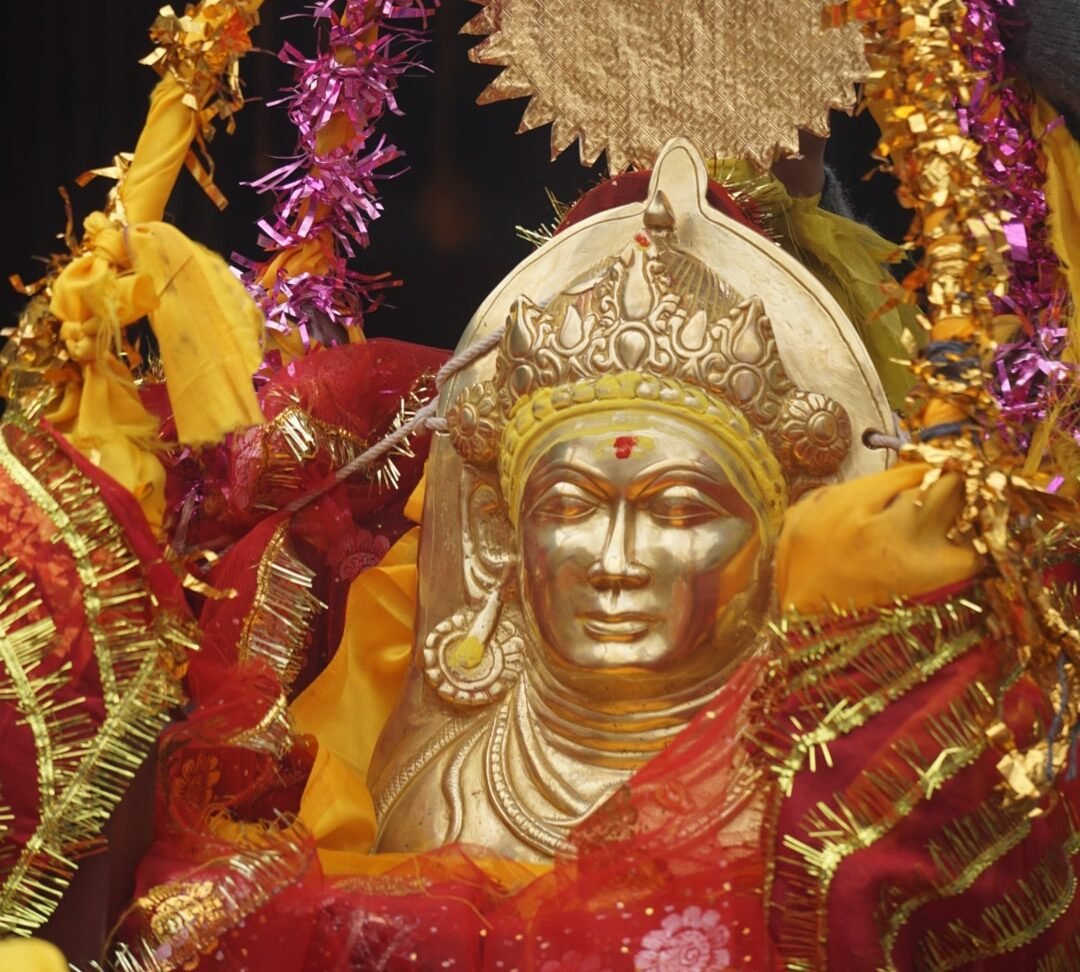
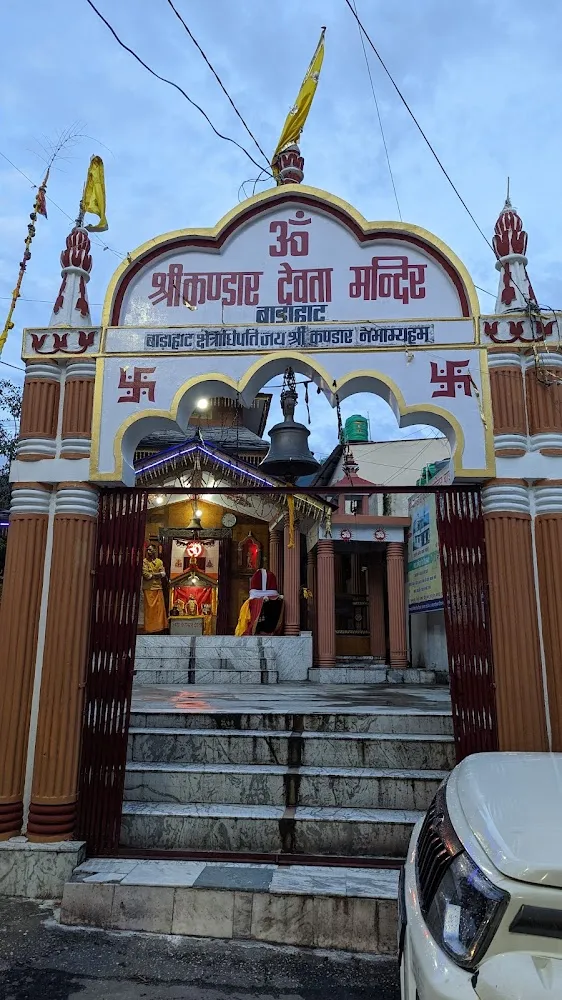
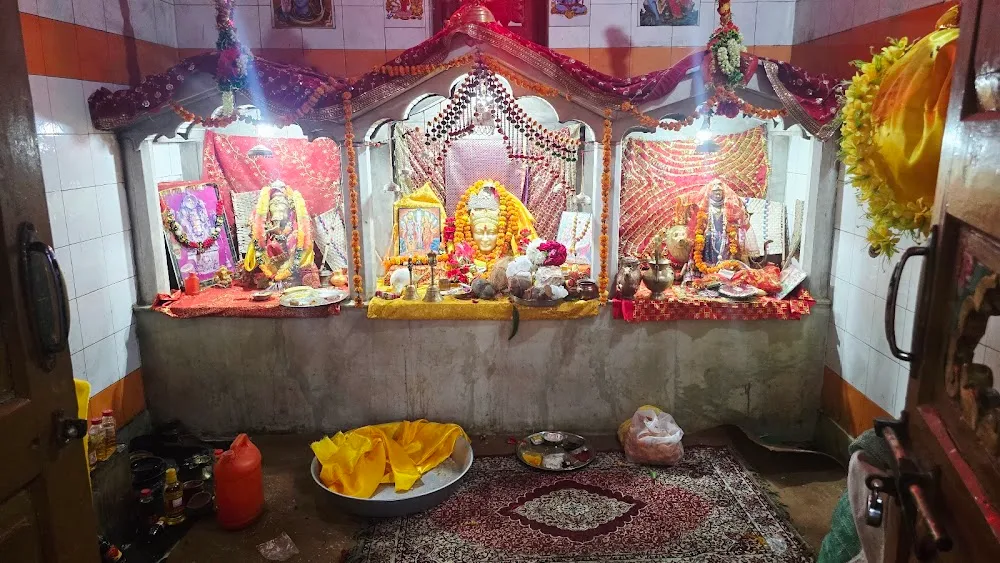
Kandar Devta Temple is a gram devata (village deity) shrine in Sangrali village, perched on the Varunavat ridge roughly 13 kilometres from Uttarkashi town in Uttarakhand’s Garhwal Himalaya. It is dedicated to Kandar Devta — locally also called Jyoti — who is worshipped as the presiding deity and protector of Sangrali and a cluster of neighbouring villages. The temple is known less for grand architecture than for the intensity of its living tradition: villagers still bring disputes, illnesses, and major life decisions before the deity’s palanquin, and the temple functions as much as a community court and gathering place as a place of prayer.
Uttarkashi itself is called the “Kashi of the North” — a town on the Bhagirathi river beside a hill named Varunavat, at the confluence of two small streams locally identified with the Varuna and Asi, mirroring the geography of Varanasi. While most visitors come to Uttarkashi for the Kashi Vishwanath Temple in the town centre or as a stopover on the way to Gangotri, Kandar Devta Temple sits in a different register of the district’s sacred geography — a village shrine that has never been built for pilgrims from outside, and whose importance is measured by the community that has kept it alive rather than by the number of visitors who reach it.
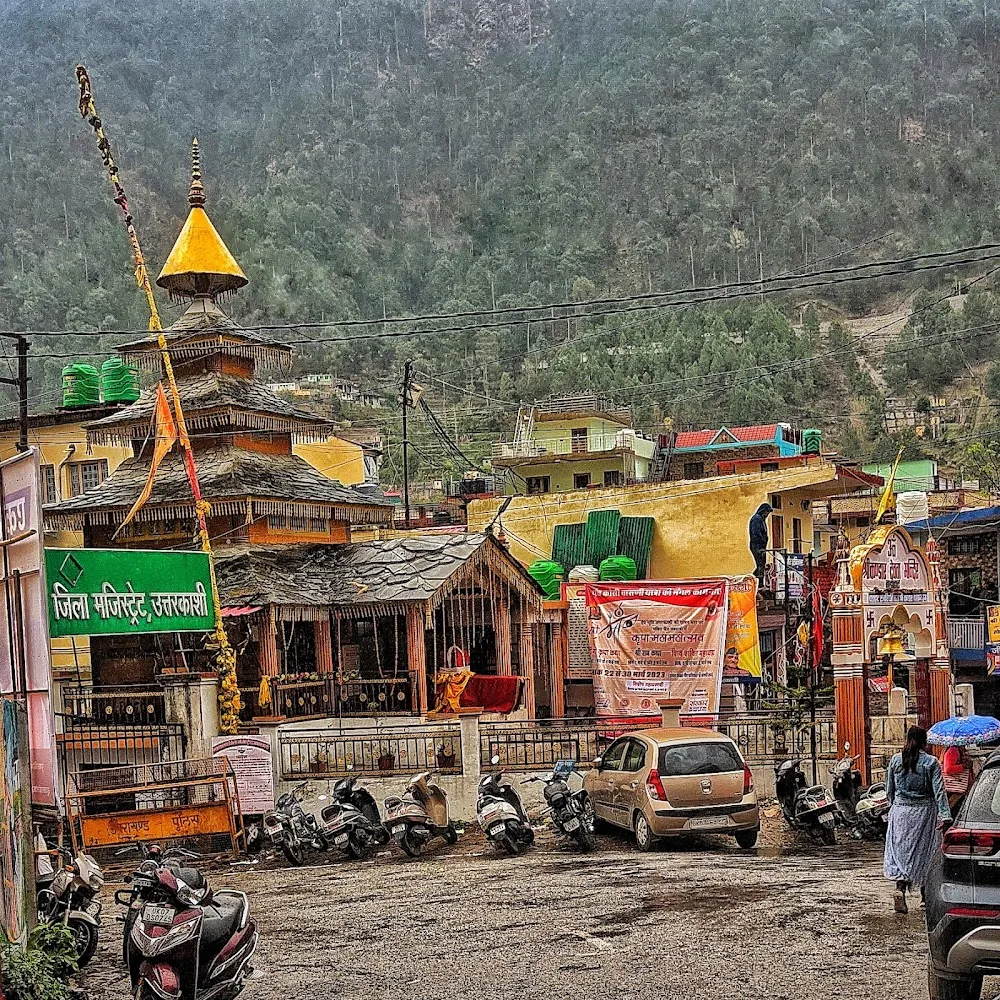
There is also a related Kandar Devta shrine within Uttarkashi town itself, near Bhairav Chowk, which functions more as an administrative seat associated with the deity — sometimes described as the “office” from which Kandar Devta’s affairs in the wider Barahat region are conducted — while the original temple, the one this guide focuses on, stands on the mountain above Sangrali. Travellers sometimes conflate the two; if you’re aiming for the hill shrine and the village experience, make sure your driver or guide knows you mean Sangrali.
For travellers who want to understand Uttarakhand beyond its famous Char Dham circuit, Kandar Devta Temple is one of the clearest windows into how Garhwali mountain communities actually practise religion day to day — and Kashi of North arranges guided visits to Sangrali as part of its wider Uttarkashi pilgrimage and village-tour offerings.
A note on sources: this guide draws on the general, well-documented traditions of Garhwali gram devata (village deity) worship, on published local reporting about Kandar Devta and the Sangrali temple, and on accounts from travellers who have visited the village. Where a detail is oral tradition, local legend, or a matter of community belief rather than a documented, verifiable fact, we’ve said so. Festival dates, timings, and access conditions can change from year to year and from village to village — always confirm the current details with Kashi of North or with the community before you travel.
Quick Information
Kandar Devta Temple sits in Sangrali village on the Varunavat ridge above Uttarkashi, roughly 13 km from the district headquarters, and is open to visitors through the year with no fixed entry fee. The table below summarises what’s reliably known; a few fields are marked “not officially published” because no fixed public record exists — for those, confirm current details locally or through Kashi of North before you travel.
| Attribute | Details |
|---|---|
| Deity | Kandar Devta (also known locally as Jyoti) |
| Village | Sangrali, on the Varunavat ridge |
| District | Uttarkashi |
| State | Uttarakhand, India |
| Nearest Town | Uttarkashi (district headquarters) |
| Distance from Uttarkashi Town | Approx. 13 km by road/trail |
| Elevation | Not officially published for the temple site; Uttarkashi town itself sits at roughly 1,150–1,350 m (sources vary), with Sangrali several hundred metres higher up the ridge |
| Temple Type | Gram devata (village deity) shrine; traditional Garhwali stone-and-timber construction |
| Villages Associated with the Deity | Sangrali, Pata, Bagyal, Gangori/Khand Gangori, Lakheshwar, Barahat, Basuga, and other villages in the wider belt (exact list varies by source and by occasion) |
| Best Time to Visit | March–June and September–November |
| Entry Fee | None officially published; village deity shrines in this region typically do not charge entry, though devotees make voluntary offerings |
| Opening Hours | No fixed public hours; the shrine is generally accessible through the year, but access and rituals follow the local priest’s and temple committee’s schedule |
| Photography Rules | No official policy published; always ask the priest or a community member before photographing the deity’s image or an ongoing ritual |
| Main Festivals | The Bhandani fair (a local one-day mela at the temple) and the Magh Mela period around mid-January, when the deity’s palanquin travels between the village and Uttarkashi town |
History of Kandar Devta Temple
The documented history of Kandar Devta Temple is thin; its real history lives in oral tradition, in the memory of the villages that maintain it, and in the continuous cycle of festivals that each generation has added to. This is true of nearly every gram devata shrine in the Garhwal Himalaya — these were never institutions built around inscriptions and land grants the way major dynastic temples were, but sacred sites that grew out of a community’s relationship with a particular place and a particular protective power.
What can be said with more confidence is the setting: Sangrali is a village of old stone, timber, and slate-roofed houses arranged in tiers down the Varunavat ridge, with the temple near the top of the settlement. Travellers who have made the climb describe sweeping views of the Bhagirathi valley and, on clear days, the snow-bound peaks of the Bandarpunch massif from near the shrine. The village itself, and the trail that leads up to it through Bagyal and Pata villages, are often described as living examples of traditional Garhwali rural architecture — a detail worth as much attention as the temple itself.
The wider religious framework Kandar Devta belongs to — the gram devata and kshetra devata tradition of the Garhwal Himalaya — is old. Scholars of Himalayan religion trace elements of this village-deity worship back well over a thousand years, with layers that plausibly predate the classical Hindu temple tradition of the plains entirely. Village deities were typically installed at sites already understood as sacred — a spring, a grove, a ridge with a commanding view — and the deity’s territory was defined by the geography its devotees inhabited. Kandar Devta’s association with Sangrali, positioned high on the Varunavat ridge overlooking the valley, fits this older pattern.
A widely told local legend also exists about how the deity’s idol first came to be installed on the mountain — a farmer, a buried image found while ploughing, a king, and a priest’s counsel to place the idol on Varunavat rather than in the palace. This is folklore rather than documented history, and it’s addressed in full in the next section on legends. What matters for the historical picture is that the temple’s authority over its territory — a role that today expresses itself through the deity’s palanquin adjudicating community disputes — appears to be long-standing and is treated by the community as ancient, even where no fixed date can be attached to it.
Preserving a tradition like this across generations, in a district that has seen enormous change through pilgrimage tourism, hydropower development, and border-security infrastructure, is itself notable. The continuity owes something to the remoteness of villages like Sangrali, and a great deal to the weight Garhwali culture places on sacred obligation — the sense that maintaining the deity’s worship is a duty owed by the whole community, not a matter of individual piety alone.
Who Is Kandar Devta?
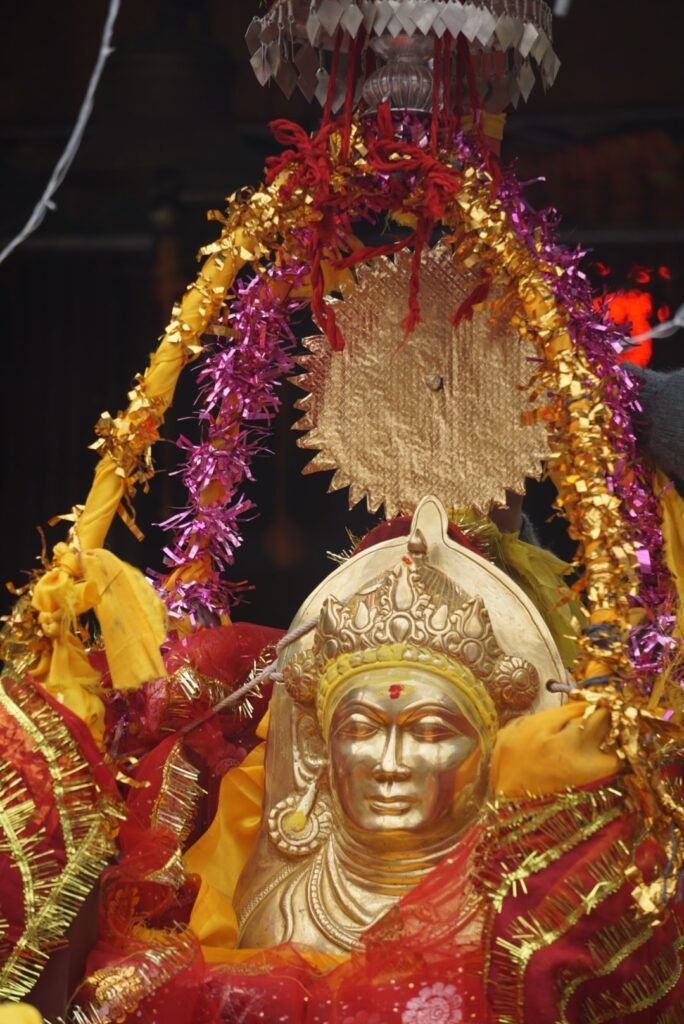
Kandar Devta — also known locally as Jyoti — is worshipped as the presiding protective deity of Sangrali and a cluster of surrounding villages in the Barahat region near Uttarkashi, and is understood by the community as a deity connected to both past and future. He is not one of the pan-Hindu deities of the great temples; he is a kshetra devata, a deity of a specific territory, whose relationship with his devotees is direct, local, and — most distinctively — judicial.
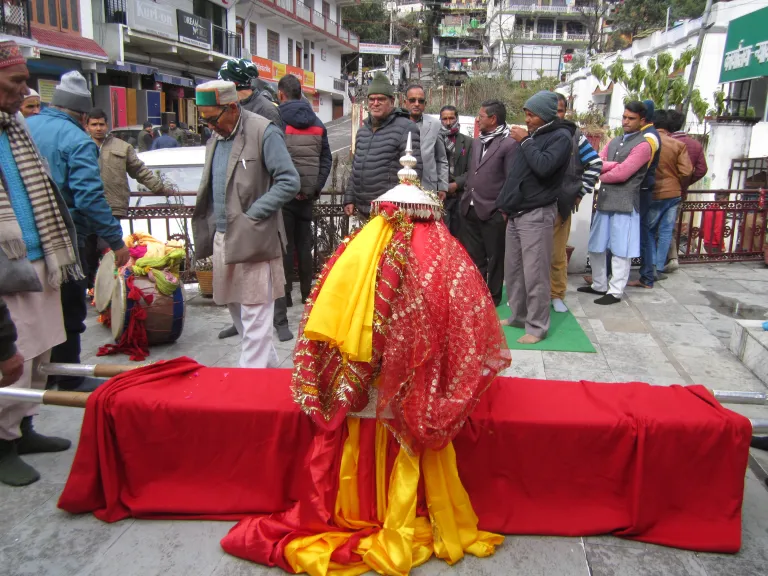
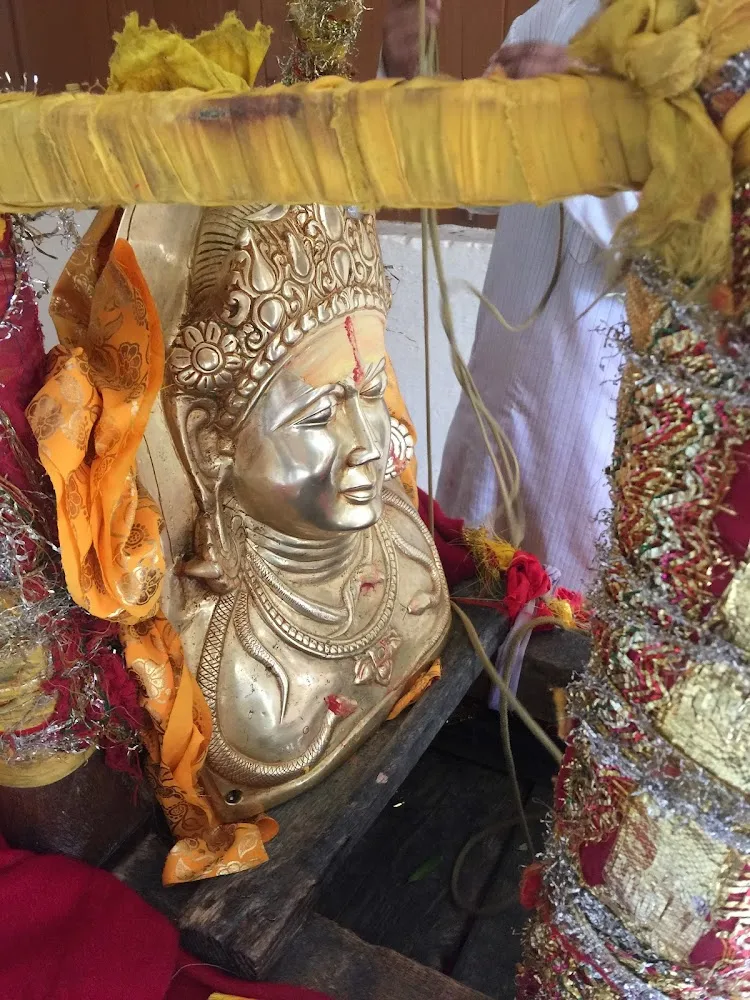
In the villages associated with Kandar Devta, the deity is approached the way a community elder or a court might be approached elsewhere. Disputes between neighbours, questions about the compatibility of a proposed marriage, decisions about the timing of a house construction or a sacred-thread ceremony, and even health complaints are all, according to local tradition, brought before Kandar Devta rather than resolved by a priest consulting a horoscope, a doctor writing a prescription, or a police officer settling a quarrel. The deity’s palanquin, carried on the shoulders of devotees, is believed to sway or move in response to the questions put to it — a swaying that the community reads as the deity’s judgement.
Local accounts describe specific categories of belief associated with this practice: that Kandar Devta can pronounce a marriage possible even where a priest’s astrological reading suggested otherwise, and that ailments such as headaches, fevers, and toothaches are addressed through this ritual process. These are, importantly, matters of community faith and traditional practice rather than clinical claims — and, as with any health concern, visitors and residents alike also rely on ordinary medical care where it’s needed. What’s significant for understanding the temple is simply how central this belief is to daily life in the villages that hold it: Kandar Devta is not approached only at festival time, but treated as an ongoing presence in the practical decisions of village life.
This oracular tradition — in which the deity’s will is understood to manifest through a moving palanquin, or in some Garhwali traditions through a designated human medium (a pashwa or maalyar) — is one of the most distinctive features of village-deity religion across the Garhwal Himalaya. It is a specific, structured practice with its own conventions, not an improvised performance, and it is taken with complete seriousness by those who participate in it.
For the visitor, the important framing is this: Kandar Devta is not primarily a tourist attraction with a mythology attached. He is a living authority in the lives of the villages around Sangrali, and a visit to the temple is a visit into that ongoing relationship — best approached as a respectful guest rather than a spectator.
Mythology and Legends
A widely repeated local legend explains the origin of Kandar Devta’s idol and its installation on the Varunavat mountain — a story of oral tradition rather than documented history, and one that villagers themselves would tell better and in more detail than any outside account. As it’s commonly recounted: a farmer ploughing his field uncovered a metal idol buried in the earth. Not knowing quite what to do with it, he brought it to the local king, who placed it in the temple within his palace. The next morning, so the story goes, the king found the idol had moved on its own, to a position of prominence. Taking this as a sign, the king carried the idol to the Parshuram temple, where the priest there advised that the deity be installed away from the settled town — on the Varunavat mountain, at what became the Sangrali shrine.
Whether or not every detail of this account can be verified, it captures something true about the broader gram devata tradition of the Garhwal Himalaya: these deities are frequently associated with sites discovered rather than built, images uncovered in the landscape rather than commissioned, and installations guided by priestly counsel toward locations already marked as significant — a hilltop, a grove, a place with a commanding view of the valley.
Beyond the origin story, the deeper “mythology” of Kandar Devta is really the accumulated body of belief about what the deity does — the healing, the marriage arrangements, the dispute resolution described in the previous section — which functions less like a fixed canon of myths and more like a living oral record, added to with each generation’s encounters with the deity. This is consistent with how gram devata traditions work across Garhwal: the sacred narrative isn’t frozen in an ancient text, it continues to be told and retold by pashwas, priests, and villagers describing what they’ve personally witnessed the deity do.
Because so much of this is oral and community-held, this guide deliberately doesn’t attempt to expand or embellish it. If you want the fuller, more textured version of Kandar Devta’s stories — the specific miracles attributed to him, the details of his relationship with the neighbouring deities of Pata, Bagyal, and the other associated villages — the right source is a conversation with a priest or elder in Sangrali itself, ideally arranged through a local guide who can make the appropriate introductions.
Religious Importance
Kandar Devta occupies a place in the religious life of Sangrali and its neighbouring villages that goes well beyond a single day of worship — devotees turn to the deity for guidance on marriage, health, disputes, and major household decisions throughout the year, not only during festivals. This everyday religious involvement is what distinguishes gram devata worship from pilgrimage to a major temple: it is not a destination visited once, but a continuing relationship that shapes ordinary decisions.
Families in the associated villages often maintain a personal relationship with the deity across generations — a grandparent’s dispute settled by the palanquin becomes a story told to grandchildren, a marriage blessed (or, according to belief, arranged where an astrologer had said it was impossible) becomes part of family memory. The annual worship cycle, anchored by the Bhandani fair and the Magh Mela period, renews this relationship collectively, while individual visits to the temple — to ask a question, to make an offering, to seek resolution of a problem — happen throughout the year.
Regionally, Kandar Devta is understood as one of several kshetra devatas whose territories together make up the sacred geography of the Barahat–Uttarkashi belt, alongside better-known deities associated with Uttarkashi town such as Kashi Vishwanath and the goddess of the Shakti Temple. The gram devata layer beneath these town temples is, in a sense, the older and more continuously local one — the religious infrastructure that existed before, and continues alongside, the pan-Hindu pilgrimage sites that draw the district’s wider fame.
Temple Architecture
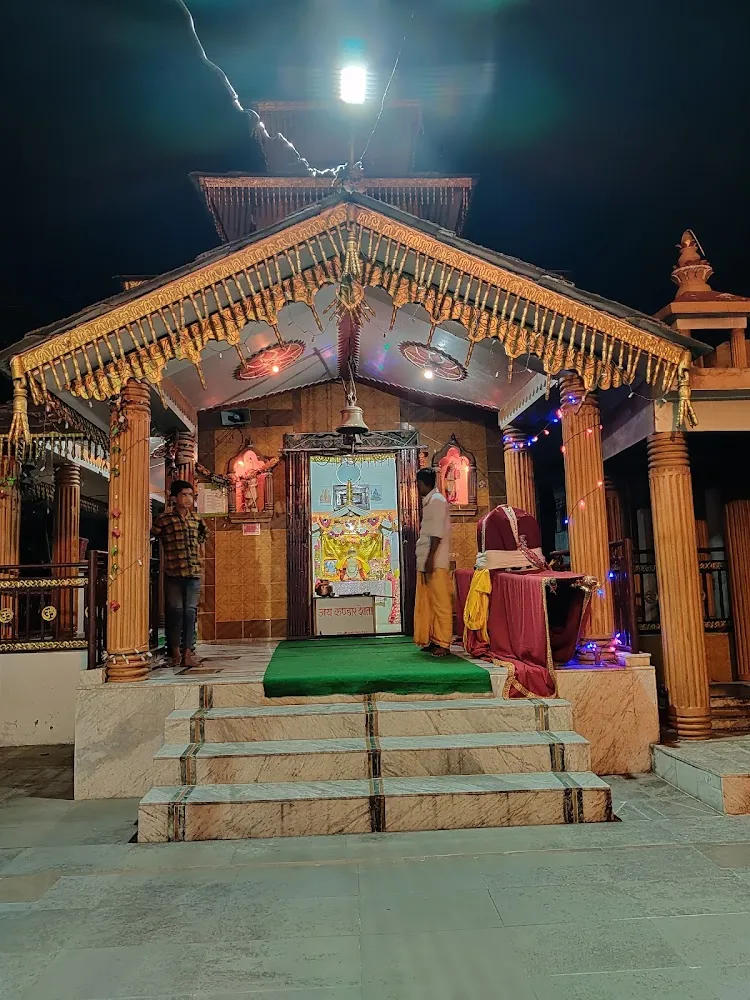
Kandar Devta Temple follows the characteristic Garhwali village-shrine building tradition: a stone base supporting an upper structure in carved timber, with a steeply pitched, multi-tiered roof designed for heavy Himalayan snowfall — a style shared across gram devata temples throughout upper Uttarkashi district rather than unique to this one shrine. In the absence of a detailed published architectural survey specific to the Sangrali temple, this section describes the regional building tradition it belongs to, rather than inventing specifics that haven’t been documented.
Garhwali temple architecture in this style typically combines a solid stone plinth and lower walls — practical against both moisture and the weight of snow — with an upper section built substantially in wood, usually deodar or oak sourced from the surrounding middle-Himalayan forest. The woodwork is where the craftsmanship shows most clearly: carved door frames, pillar brackets, and panel work carrying decorative and often iconographic detail, produced by local carpenters working in a tradition passed down through families of craftsmen rather than through formal architectural training.
The roofline is the most visually distinctive element from a distance — layered wooden shingles or stone slabs in a steep pitch that sheds snow efficiently, giving these temples a compact, vertical silhouette that reads clearly against the hillside even from far below. Metalwork — bells, offering vessels, and the fittings of the palanquin itself — is typically the product of local artisans working within the same regional craft tradition.
What’s just as important as the built structure is its setting. Sangrali’s temple sits within a landscape of specific trees, stones, and viewpoints that the community understands as part of the deity’s domain, not merely as a scenic backdrop. The village around it — tiered stone-and-slate houses stepping down the ridge — is itself an example of vernacular Himalayan building that has become increasingly rare as concrete construction spreads through the district, and it rewards as much attention from a visiting photographer or architecture enthusiast as the temple proper.
Festivals and Celebrations
Kandar Devta Temple’s ritual calendar centres on two occasions in particular: the Bhandani fair, a one-day local mela held at the Sangrali temple complex, and the Magh Mela period around mid-January, Uttarkashi’s old commercial fair, in which the deity’s palanquin travels down to town. Exact scheduling can vary by year and should be confirmed locally rather than assumed from any fixed calendar date.
The Bhandani Fair. This one-day fair at the temple complex opens with religious rituals conducted at the shrine, after which villagers from Sangrali and neighbouring settlements — accounts mention Pata, Bagyal, Gangori, Lakheshwar, Sald, and Gyanja among others — gather for a day of celebration. Devotees carry the deity’s palanquin through the community, and the Raso Tandi folk dance is performed alongside it, continuing in some years late into the night. The fair is understood as an occasion to pray collectively for the community’s happiness, prosperity, and wellbeing. At its conclusion, priests place the deity’s idol in a storage space to “rest,” traditionally for a period of about three days, before regular temple activity resumes.
The Magh Mela period. Uttarkashi town’s Magh Mela is described in local accounts as an old commercial fair that traditionally opens around Makar Sankranti (roughly January 14) and continues for about a week. As part of its opening rituals, Kandar Devta — along with the palanquins of other local deities — is carried from the village down to Uttarkashi, where the deity is bathed in the Bhagirathi before the fair is formally inaugurated. This connects the village shrine directly to the town’s wider religious and commercial life for that week each year.
Beyond these two anchor events, gram devata worship across Garhwal typically follows the seasonal agricultural calendar — festivals marking the turn of seasons, sowing, and harvest — and it’s likely that Kandar Devta’s worship follows a similar rhythm at the village level, even where specific dates for smaller observances aren’t publicly documented.
Across all of these occasions, traditional Garhwali folk music and dance are inseparable from the worship itself. Jagar — a form of ritual singing used specifically to invoke and honour local deities — is among the most significant surviving forms of indigenous Himalayan sacred music, and where it’s performed as part of Kandar Devta’s festivals, it offers visitors access to a cultural layer that no mainstream Char Dham itinerary touches.
If your visit is timed around a festival, verifying the current date directly — through Kashi of North, through a local guide, or through the Uttarkashi district administration — is essential, since none of these dates should be treated as fixed on a Gregorian calendar without confirmation.
Rituals and Worship
Worship at Kandar Devta Temple centres on the palanquin (doli) as the medium through which the deity’s presence and judgement are understood to manifest — a practice devotees approach with the same seriousness as a formal hearing, not a folk performance for onlookers. When a person or family brings a question or a problem before the deity, the palanquin is carried by designated devotees, and its movement — a swaying or pulling in a particular direction — is read by those present as Kandar Devta’s answer. This oracular practice, found in various forms across Garhwali village-deity worship, has its own internal conventions and vocabulary that are best explained by a priest or community elder rather than summarised secondhand.
Typical offerings at gram devata shrines in this tradition include flowers, grains, and small quantities of ghee or oil for temple lamps; specific requirements at Kandar Devta Temple are best confirmed with the presiding priest on arrival rather than assumed. Major rituals — such as the opening of the Bhandani fair or the deity’s ceremonial bathing before the Magh Mela — are conducted by the temple’s priests according to customary sequence.
Visitor etiquette. If you’re visiting outside a festival period, a quiet, respectful presence is appropriate — this is a working shrine, not a monument. If your visit coincides with an active ritual or a moment when the palanquin is in use for a community matter, stand back and observe without inserting yourself into the process; a local guide or your Kashi of North host can help you understand what’s happening and when it’s appropriate to approach the priest with questions.
Local Culture
The culture surrounding Kandar Devta Temple is inseparable from the broader Garhwali village life of the Bhagirathi valley — its folk music, its oral storytelling, its seasonal work, and its traditional stone-and-slate architecture, all of which are as much a part of a visit to Sangrali as the temple itself. Garhwali folk music traditions including Jagar (ritual invocation singing), Basanti, and Chaufula run through festival occasions at gram devata shrines across the district, and traditional dance — the Raso Tandi performed with the palanquin at the Bhandani fair being one clear local example — carries stories and devotional content that are rarely written down.
Sangrali village itself, reached by a trail that climbs through Bagyal and Pata villages (or by a motorable road for those not trekking), is a working example of a Garhwali mountain settlement: tiered stone and slate-roofed houses, terraced fields, and a rhythm of life still organised in part around the temple at the top of the ridge. Community members here have described the temple less as a place set apart from daily life than as a kind of village institution — a court, a meeting point, and a spiritual anchor rolled into one.
For visitors, engaging with this culture productively usually means asking rather than assuming: asking a homestay host about the Bhandani fair’s history, asking a guide what the Jagar songs are about, asking before photographing a ritual. Garhwali village hospitality is generally generous with this kind of knowledge when approached respectfully, and conversations like these are often what visitors remember most from a trip to villages like Sangrali.
Why Visit Kandar Devta Temple?
Kandar Devta Temple offers travellers a genuinely different kind of experience from Uttarkashi’s famous pilgrimage sites: a quieter, more local encounter with Garhwali religious life, set in a village of striking traditional architecture with panoramic Himalayan views. A few reasons this shrine rewards the effort of reaching it:
- A living tradition, not a monument. Unlike sites preserved primarily for visitors, Kandar Devta Temple is an active part of daily community decision-making — a rare chance to witness religion functioning as social infrastructure rather than as spectacle.
- Authentic Garhwali village architecture. Sangrali’s stone, timber, and slate-roofed houses, arranged in tiers down the Varunavat ridge, are becoming less common as concrete construction spreads elsewhere in the district.
- Panoramic Himalayan views. The temple’s position on the Varunavat ridge offers views over the Bhagirathi valley and, on clear days, toward the Bandarpunch massif.
- A contrast that deepens both experiences. Pairing a visit here with Uttarkashi’s Kashi Vishwanath and Shakti temples in town shows the two layers of the district’s sacred geography side by side — the grand pan-Hindu temple and the intimate village shrine.
- Photography with genuine character. Between the architecture, the mountain setting, and — if timed right — festival colour and folk dance, Sangrali offers material that the standard Char Dham circuit doesn’t.
- A peaceful, uncrowded atmosphere. Outside festival days, the temple and village are quiet, making this a good stop for travellers who find the main pilgrimage towns overwhelming.
Things to Do Nearby
Beyond the temple visit itself, Sangrali and the surrounding Varunavat ridge offer a handful of activities well suited to a half-day or full-day excursion from Uttarkashi.
- Walk the village. Sangrali’s tiered stone-and-slate architecture rewards an unhurried walk, ideally with a local guide who can point out older homes and explain the village’s relationship to the temple.
- Trek the Varunavat ridge. A known local trekking route climbs from the Monal/Eagle’s Nest area above Uttarkashi through Bagyal and Pata villages to Sangrali, and on to two further hilltop shrines — Shikhareshwar (a Shiva temple set in deodar and pine forest) and Vimaleshwar — making a three-temple circuit of the ridge for those who want to combine the visit with a half-day hike.
- Photograph the valley view. The ridge above Sangrali offers some of the more accessible panoramic viewpoints over the Bhagirathi valley near Uttarkashi town.
- Visit an organic farm stop. Some guided versions of the ridge trek include a stop at a small local farm for tea or fresh juice on the way back down — a good option to ask your guide about.
- Combine with Uttarkashi town’s temples. The Kashi Vishwanath Temple, Shakti Temple, and Bhairav Temple are all within Uttarkashi town itself and pair naturally with a Sangrali excursion in the same day.
Kashi of North’s local guides can put together any combination of the above as a half-day or full-day village and temple tour from Uttarkashi.
Nearby Attractions
Sangrali’s location just outside Uttarkashi town puts it within easy reach of the district’s major pilgrimage and nature sites, making it easy to combine a Kandar Devta Temple visit with a broader Uttarkashi itinerary.
| Attraction | Approx. Distance from Uttarkashi Town | What It Offers |
|---|---|---|
| Kashi Vishwanath Temple | In town | The principal Shiva temple of Uttarkashi, giving the district its “Kashi of the North” identity |
| Shakti Temple | In town | Ancient goddess-worship temple, known for its trident |
| Gangnani | ~45 km | Natural hot springs, a common stop en route to Gangotri |
| Harsil Valley | ~70–73 km | Scenic Bhagirathi-valley village landscape, apple orchards, deodar forest |
| Gangotri Temple | ~100 km | Source pilgrimage site of the Bhagirathi/Ganga, the anchor of the upper valley |
| Netala | En route to Gangotri | Small riverside village and rafting/camping point |
| Bhatwari | En route to Gangotri | Gateway town for the Dayara Bugyal trek via Barsu/Raithal |
| Dayara Bugyal | Via Barsu/Raithal near Bhatwari, then a trek | High-altitude alpine meadow, popular short trek |
| Dodital | Via Sangamchatti, then a trek | A sacred alpine lake associated with Ganesha’s birth in local tradition |
Distances above are approximate and vary somewhat by source; confirm current road conditions with Kashi of North before planning drive times, especially during monsoon.
Suggested Itineraries
Half-Day Temple Visit
A morning or afternoon drive up to Sangrali, time at the temple and village, and a return to Uttarkashi town — suited to travellers with limited time or an early departure the next day.
Full-Day Cultural Tour
Sangrali temple and village walk in the morning, lunch back in Uttarkashi, followed by an afternoon covering Kashi Vishwanath Temple, Shakti Temple, and a walk through Uttarkashi’s old town lanes.
Spiritual Circuit
Kandar Devta Temple combined with Kashi Vishwanath and Shakti temples in Uttarkashi, ideally timed around a festival date if one falls within your travel window — best arranged with local confirmation of the current calendar.
Family Tour
A relaxed version of the half-day visit, with time built in for the village walk and photographs, avoiding festival-day crowds if travelling with young children or older relatives.
Photography Tour
An early-morning start for the best light on the Bhagirathi valley view, time at the temple architecture and the tiered village houses, and — if scheduling allows — a festival day for folk dance and palanquin processions.
Kashi of North can build any of these into a full Uttarkashi itinerary alongside Gangotri, Harsil, or Dayara Bugyal, depending on how many days you have.
Best Time to Visit
March to June and September to November are the two best windows to visit Kandar Devta Temple, offering stable mountain roads, comfortable temperatures, and — in season — a chance to coincide with local festivals; the monsoon months and deep winter each bring their own conditions worth planning around.
Spring (March–May): Roads are reliable and temperatures are warming, with rhododendrons blooming across the hillsides by April. Spring is also when several Garhwali seasonal festivals fall, adding cultural interest to good travel conditions.
Summer (June): Warm at lower elevations like Uttarkashi town, but still pleasant compared to the plains, and a popular season for travel before the monsoon arrives.
Monsoon (July–August): Heavy rainfall across the district brings a real risk of landslides on hill roads, including the routes into Uttarkashi. This is generally the least advisable season for a village excursion like Sangrali; if you do travel, build flexibility into your schedule and check road conditions daily.
Autumn (September–November): Widely considered the finest season — clear post-monsoon skies, sharp mountain views, and stable roads. October in particular carries significant festivals in the Garhwali calendar.
Winter (December–February): Cold, with the Magh Mela period around mid-January bringing Kandar Devta’s palanquin down to Uttarkashi town — a genuinely interesting time to visit if you don’t mind low temperatures and the possibility of snow at higher points along the ridge.
For a festival-timed visit specifically, confirm the current-year calendar with Kashi of North, local community members in Sangrali, or the Uttarkashi District Tourism Office before finalising travel dates.
Month-Wise Weather Guide
Uttarkashi’s climate is typical of a mid-elevation Himalayan valley town: warm-to-mild summers, a wet monsoon, crisp autumns, and a cold winter with the possibility of snow at higher points on the surrounding ridges. The figures below are typical/approximate ranges for planning purposes, not official recorded averages — check a current forecast close to your travel date.
| Month | Day Temp (approx.) | Night Temp (approx.) | Rainfall | Travel Conditions | Festival Season |
|---|---|---|---|---|---|
| January | 10–15°C | 0–4°C | Low; occasional snow at height | Cold; roads generally open, some higher points may see snow | Magh Mela period (mid-Jan) |
| February | 12–17°C | 2–6°C | Low | Cold but stable | — |
| March | 16–21°C | 6–10°C | Low–moderate | Good | Spring festivals begin |
| April | 19–24°C | 8–13°C | Low | Good; rhododendrons in bloom | Spring festivals |
| May | 22–28°C | 12–16°C | Low–moderate (pre-monsoon showers possible) | Good | — |
| June | 24–30°C | 15–19°C | Rising toward monsoon | Good early, more variable late-month | — |
| July | 22–27°C | 16–20°C | Heavy | Landslide risk on hill roads | — |
| August | 22–27°C | 16–19°C | Heavy | Landslide risk on hill roads | — |
| September | 20–26°C | 13–17°C | Tapering off | Improving through the month | — |
| October | 17–23°C | 8–13°C | Low | Excellent | Major autumn festivals |
| November | 14–20°C | 4–9°C | Low | Excellent | — |
| December | 10–16°C | 0–5°C | Low; possible snow at height | Cold; check road conditions | — |
Photography Guide
Photography at Kandar Devta Temple should always begin with permission, since no formal photography policy for the shrine is publicly published and gram devata temples across the region commonly restrict images of the deity itself and of active rituals.
Exterior and architectural photography. The temple’s timber carving, roofline, and setting within the village are generally the safest and most rewarding subjects, though it’s still courteous to mention your intent to the priest or a community member on arrival.
Landscape photography. The Varunavat ridge above Sangrali offers wide views over the Bhagirathi valley and, in clear conditions, toward the Bandarpunch massif — early morning generally gives the clearest air and the most flattering light.
Festival photography. If your visit coincides with the Bhandani fair or another celebration, folk dance and the palanquin procession make for compelling images — but ask before photographing the palanquin itself or the priests conducting ritual, since these are often the most sensitive moments to photograph without consent.
Cultural sensitivity. Treat any ritual in progress as something you’re witnessing as a guest, not documenting as a subject. If a priest or villager asks you not to photograph something, that request should be treated as final, without negotiation.
How to Reach
Kandar Devta Temple is reached via Uttarkashi town, itself accessible by road from Delhi, Haridwar, Rishikesh, and Dehradun; there is no rail or air service into Uttarkashi district itself, so the final approach to the temple is always the last leg of a road journey.
By Air
The nearest airport is Jolly Grant Airport in Dehradun, connected to Delhi and other major Indian cities. From the airport, the journey to Uttarkashi continues by road via Dehradun or Rishikesh.
By Train
The nearest well-connected railheads are Rishikesh and Haridwar. From either, the remainder of the journey to Uttarkashi is by road.
By Road
- From Delhi: The most common route follows NH-34 via Meerut, Haridwar, and Rishikesh, continuing through Narendranagar, Chamba, New Tehri, and Dharasu to Uttarkashi — typically a 9–11 hour drive, best split with an overnight stop in Haridwar or Rishikesh.
- From Haridwar: Via Dehradun/Rishikesh and onward on NH-34 — roughly 6–7 hours.
- From Rishikesh: Via Narendranagar, Chamba, and Dharasu on NH-34 — roughly 5–6 hours on the most direct route (an alternate, longer route via Devprayag, Ghansali, and Tehri exists for travellers who want a more scenic, offbeat drive).
- From Dehradun: Via NH-34 through Vikasnagar/Barkot or via Rishikesh — roughly 5–6 hours.
- From Uttarkashi town to the temple: A local road/trail climbs roughly 13 km to Sangrali; alternatively, a known trekking route climbs from the Monal area above town through Bagyal and Pata villages to Sangrali. For current road conditions and the best access point on any given day, local knowledge is genuinely the most reliable guide — ask at your accommodation, with a local guide, or arrange the leg through Kashi of North.
Taxi
Shared jeeps and taxis run regularly on the main routes into Uttarkashi from Rishikesh and Dehradun; the final stretch to Sangrali is best arranged locally or in advance through a tour operator familiar with the village road.
Self-Drive
The main highways (NH-34 and connecting roads) are manageable for confident hill drivers, but the roads are narrow and winding with sharp turns, and conditions deteriorate in monsoon. A driver experienced with Himalayan roads is strongly recommended for the Uttarkashi–Sangrali stretch in particular.
Distance Chart
| From | Approx. Distance to Uttarkashi | Approx. Travel Time |
|---|---|---|
| Delhi | ~430–440 km | 9–11 hrs |
| Haridwar | ~185–190 km | 6–7 hrs |
| Rishikesh | ~155–170 km | 5–6 hrs |
| Dehradun | ~145–160 km | 5–6 hrs |
| Gangnani | ~45 km (Uttarkashi to Gangnani) | ~1.5 hrs |
| Harsil | ~70–73 km (Uttarkashi to Harsil) | ~2–2.5 hrs |
| Gangotri | ~100 km (Uttarkashi to Gangotri) | ~3–3.5 hrs |
| Sangrali (Kandar Devta Temple) | ~13 km from Uttarkashi town | 30–45 min by road / 2–3 hrs on foot |
Road distances vary by route and source; treat these as planning estimates and confirm current conditions before departure, especially in monsoon.
Accommodation
Uttarkashi town, 13 km from the temple, is the practical base for a Kandar Devta Temple visit, offering a full range of hotels, guesthouses, and homestays, while staying in or near Sangrali itself is possible but limited and best arranged through local contacts.
Uttarkashi town has a reasonable spread of budget-to-mid-range hotels and guesthouses, largely serving the Char Dham and trekking trade, along with ashrams that accept paying guests. Homestays in villages around Uttarkashi, including in or near Sangrali, offer the more immersive option — a chance to experience Garhwali domestic life directly, with home-cooked meals and, often, a host willing to talk about the temple and its festivals. Availability is limited compared to town hotels, so advance arrangement matters.
Kashi of North handles hotel and homestay bookings across Uttarkashi, and can match you to accommodation appropriate to your itinerary — whether that’s a comfortable town hotel for a short visit or a village homestay for a deeper, slower experience of Sangrali and its surroundings.
Food
Uttarkashi town offers straightforward pilgrim and traveller dining — simple vegetarian thalis, North Indian standards, and tea shops — while a homestay meal in a village like Sangrali is the best way to try genuine Garhwali home cooking.
Traditional Garhwali cuisine features dishes built around local grains and lentils suited to the mountain climate — preparations like mandua (finger millet) rotis, jhangora (barnyard millet) kheer, gahat (horse gram) dal, and aloo ke gutke (spiced potatoes) are common in home kitchens across the region, though menu availability in town restaurants varies. Tea shops along the main routes and in Uttarkashi town are a good, low-cost way to break up a day’s travel, and are often where you’ll get the most candid local conversation about road conditions or the current festival calendar.
For pilgrims specifically, many guesthouses and ashrams in Uttarkashi offer simple, home-style vegetarian meals geared toward religious travellers rather than tourist menus.
Packing List
Clothing
- Modest clothing covering shoulders and legs (required for temple visits)
- Layered clothing — light layers for daytime, warm layers for evenings and winter
- A warm jacket, even outside winter, given how quickly mountain temperatures can shift
- Comfortable walking shoes with good grip for village lanes and any trekking
- A scarf or shawl, useful both for warmth and as a head covering where customary
Religious Items
- Any personal puja items you customarily carry
- Small denomination cash for voluntary temple offerings
- A modest bag or cloth to carry offerings, if bringing your own
Photography Equipment
- Camera with a versatile lens for both architecture and landscape shots
- Spare batteries/power bank (charging points can be limited in villages)
- A lens cloth — dust is common on hill roads
Medical Kit
- Basic first-aid supplies and any personal prescription medication
- Motion-sickness medication for the winding drive up from Rishikesh or Dehradun
- Sunscreen and rehydration salts
Essentials
- Cash — ATMs are limited outside Uttarkashi town
- A physical map or offline maps downloaded in advance, given patchy mobile signal in the hills
- A flashlight or headlamp
- Reusable water bottle
Responsible Tourism
Visiting Kandar Devta Temple well means treating Sangrali as a living community rather than a photo opportunity — dressing modestly, asking before photographing, and putting your travel spend directly into the hands of the people who maintain this tradition.
- Dress modestly at all times in and around the temple — shoulders and legs covered, footwear removed at the entrance.
- Ask before photographing, particularly the deity’s image or any ritual in progress.
- Engage as a guest, not a documentarian — if you encounter a ritual or festival, observe and participate respectfully rather than treating it as content.
- Accept the limits of outside research. The specifics of Kandar Devta’s traditions are community knowledge; part of visiting well is being open to learning on the community’s terms rather than arriving with fixed expectations.
- Support the local economy directly — use local homestays, guides, and food where available; this spending is a direct contribution to the survival of the tradition.
- Keep the site clean and avoid leaving any waste in the temple precincts or along the village trails.
Practical Information
Uttarkashi town has the basic services a traveller needs — ATMs, pharmacies, fuel, and a district hospital — while Sangrali village and the surrounding ridge have limited infrastructure, so plan to handle cash, fuel, and medical needs before heading up from town.
- Mobile Network: Coverage is generally reliable in Uttarkashi town but can be patchy or absent on the road up to Sangrali and along the ridge trek; don’t rely on being reachable once you leave town.
- Internet: Available in town hotels and guesthouses; expect little to no connectivity in the village itself.
- ATM: Available in Uttarkashi town; carry sufficient cash before heading to Sangrali.
- Fuel Station: Available in Uttarkashi town; fill up before the drive up to the village.
- Medical Facilities: Uttarkashi town has a district hospital and pharmacies; for anything beyond minor issues, plan around town-based care rather than assuming village access.
- Emergency Contacts: India’s national emergency number is 112, reachable across mobile networks where coverage exists.
Travel Tips
- Confirm festival dates before you travel — the Bhandani fair and Magh Mela timing should be checked with Kashi of North or local sources rather than assumed from a fixed calendar date.
- Start early if you’re combining Sangrali with other Uttarkashi sites in one day, since mountain daylight and driving conditions favour an early departure.
- Bring a local guide for the Sangrali visit — beyond convenience, it opens the door to the kind of community knowledge that written guides, this one included, can’t fully capture.
- Carry warm layers regardless of season — altitude and cloud cover can drop temperatures quickly, even in summer.
- Park considerately in Sangrali, a small village with limited space; a guide or driver familiar with the route will know where.
- Respect the palanquin ritual if you witness one in progress — this is an active community process, not a demonstration staged for visitors.
- Check monsoon-season road conditions daily if travelling between July and August, given the landslide risk on the approach roads.
Frequently Asked Questions
Who is Kandar Devta? Kandar Devta is the presiding gram devata (village deity) of Sangrali and several neighbouring villages near Uttarkashi, locally also known as Jyoti, worshipped as a protector and, according to community tradition, an arbiter in disputes, marriage decisions, and health matters.
Where is Kandar Devta Temple located? The temple is in Sangrali village, on the Varunavat ridge, approximately 13 km from Uttarkashi town in Uttarakhand’s Garhwal Himalaya.
Is Kandar Devta Temple the same as the Kandar Devta shrine in Uttarkashi town? No. There’s a related Kandar Devta shrine near Bhairav Chowk in Uttarkashi town that functions as more of an administrative seat for the deity’s affairs, while the original hillside temple — the subject of this guide — is in Sangrali village.
What is the historical importance of Kandar Devta Temple? Its history is mostly oral rather than documented; what’s clear is that it belongs to the old gram devata tradition of the Garhwal Himalaya, which scholars trace back well over a thousand years, and that the temple continues as an active community institution today.
What is the legend behind the temple’s origin? Local tradition tells of a farmer who found a buried idol while ploughing, which was eventually installed on Varunavat mountain on a priest’s advice — a story treated as folklore rather than verified history.
Why is Kandar Devta also called Jyoti? This is the deity’s alternate local name, used interchangeably with “Kandar Devta” in the region; the deeper meaning and history of the name is best explained by local priests and community members.
Which villages are associated with Kandar Devta? Accounts mention Sangrali, Pata, Bagyal, Gangori (Khand Gangori), Lakheshwar, Barahat, Basuga, Sald, and Gyanja among the villages connected to the deity’s worship, though the exact list can vary by source and occasion.
What is the significance of the deity’s palanquin (doli)? The palanquin is the medium through which Kandar Devta’s presence and judgement are understood to manifest — its movement, read by devotees carrying it, is treated as the deity’s answer to questions brought before it.
How does the community use the deity to resolve disputes? According to local tradition, villagers bring disputes to the temple, and the palanquin’s movement is understood to indicate the deity’s ruling — a practice some describe as functioning like an informal community court.
Is this a formal legal process or a religious tradition? It is a religious and customary practice rooted in community faith, not a part of the formal Indian legal system.
Do people really travel to Kandar Devta Temple for health issues? According to local tradition, yes — ailments such as headaches, fevers, and toothaches are among the concerns devotees bring before the deity; this is a matter of community belief and traditional practice, and visitors with health concerns should still seek appropriate medical care.
Can Kandar Devta really arrange marriages, according to belief? Local tradition holds that the deity has, in some cases, blessed marriages that astrological readings suggested were not possible — a belief specific to the community rather than a documented outcome.
What is the Magh Mela and how is it connected to Kandar Devta? The Magh Mela is Uttarkashi’s old commercial fair, traditionally opening around Makar Sankranti (mid-January); Kandar Devta’s palanquin is carried down to town and bathed in the Bhagirathi as part of the fair’s opening rituals.
What is the Bhandani fair? The Bhandani fair is a one-day local mela held at the Sangrali temple complex, featuring religious rituals, the Raso Tandi folk dance performed with the deity’s palanquin, and participation from several surrounding villages.
When are the main festivals held at Kandar Devta Temple? The Bhandani fair and the Magh Mela period (around mid-January) are the two most significant occasions; exact dates should be confirmed locally each year.
What is the Raso Tandi dance? It’s a traditional folk dance performed with the deity’s palanquin during festival occasions at Kandar Devta Temple, part of the region’s broader Garhwali folk-dance tradition.
Is the Jagar tradition performed here? Jagar, the Garhwali ritual-singing tradition used to invoke local deities, is common across gram devata festivals in the region; whether and when it’s specifically performed at Kandar Devta Temple is best confirmed locally.
What rituals happen daily at the temple? Specific daily ritual practice isn’t publicly documented in detail; general worship, offerings, and the palanquin ritual for community matters continue through the year according to the priest’s and committee’s schedule.
What offerings are typically made to Kandar Devta? Flowers, grains, and oil or ghee for temple lamps are typical offerings at gram devata shrines in this tradition; confirm specific customs with the temple priest on arrival.
Is there an entry fee for Kandar Devta Temple? No entry fee is officially published; like most Garhwali village shrines, visits are generally free, though devotees commonly make voluntary offerings.
What are the temple’s opening hours? No fixed public hours are published; the shrine is generally accessible through the year, with access following the local priest’s and temple committee’s schedule.
Are there photography restrictions at the temple? No formal policy is published, but as with most gram devata shrines, always ask the priest before photographing the deity’s image or an active ritual.
What should visitors wear to the temple? Modest clothing covering the shoulders and legs, with footwear removed at the entrance, as at most Hindu temples in the region.
Is it appropriate for non-Hindu visitors to visit? Respectful visitors of any background are generally welcome at Garhwali village shrines; the same etiquette — modest dress, asking before photographing, and quiet respect during rituals — applies to everyone.
Can foreign tourists visit Kandar Devta Temple? Yes; there are no special restrictions specific to foreign visitors, though the same cultural etiquette applies, and travelling with a local guide is recommended given the limited English spoken in the village.
What is the best time of year to visit? March to June and September to November offer the most reliable roads and comfortable weather; the monsoon months (July–August) carry landslide risk and are best avoided if possible.
Is Kandar Devta Temple accessible in winter? Yes, the temple is open year-round, and winter includes the culturally significant Magh Mela period, though visitors should prepare for cold temperatures and check road conditions.
How do I reach Kandar Devta Temple from Uttarkashi town? By road, it’s roughly a 13 km drive; alternatively, a trekking route climbs from the Monal area through Bagyal and Pata villages to Sangrali.
Can Kandar Devta Temple be reached by road, or is it a trek only? It can be reached by road/vehicle as well as on foot; the trekking route is a popular option for those wanting a fuller ridge excursion.
What is the nearest airport? Jolly Grant Airport in Dehradun, connected to Delhi and other major cities, with the remainder of the journey by road.
What is the nearest railway station? Rishikesh and Haridwar are the most practically connected railheads for onward road travel to Uttarkashi.
How far is Kandar Devta Temple from Delhi? Approximately 430–440 km by road via Rishikesh, roughly 9–11 hours’ drive, best split with an overnight stop.
How far is it from Dehradun? Approximately 145–160 km by road, roughly 5–6 hours depending on the route.
How far is it from Rishikesh? Approximately 155–170 km by road, roughly 5–6 hours on the most direct route.
How far is it from Gangotri? Uttarkashi town is roughly 100 km from Gangotri; Sangrali adds about 13 km more from Uttarkashi.
What is the architecture style of the temple? Traditional Garhwali gram devata architecture — a stone base with an upper structure in carved timber and a steep, multi-tiered roof designed for heavy snowfall.
Are guides available for visiting Kandar Devta Temple? Yes — Kashi of North arranges local guides familiar with Sangrali, the temple’s customs, and the surrounding ridge trek.
Where can I stay near Kandar Devta Temple? Uttarkashi town, 13 km away, has the fuller range of hotels and guesthouses; limited homestay options exist in or near Sangrali itself and are best booked in advance.
What local food should I try in Uttarkashi? Garhwali home-style dishes such as mandua rotis, jhangora kheer, and gahat dal are worth seeking out, ideally through a homestay meal rather than a standard restaurant menu.
What should I pack for a visit? Modest clothing, warm layers regardless of season, comfortable walking shoes, cash, and basic first-aid supplies — see the full packing list above.
Is mobile network available near the temple? Coverage is generally reliable in Uttarkashi town but can be patchy or unavailable on the road up to Sangrali and along the ridge.
Can Kashi of North arrange a customized tour to Kandar Devta Temple? Yes — Kashi of North offers temple tours, taxi and hotel/homestay booking, local guides, and fully customized Uttarkashi itineraries that include Kandar Devta Temple.
What other temples can I combine with a visit? The Kashi Vishwanath Temple and Shakti Temple in Uttarkashi town are the natural pairing, both easily combined with Sangrali in a single day.
Is Kandar Devta Temple suitable for family visits? Yes, particularly outside festival-day crowds; the drive and village walk are manageable for most ages, though the trekking route to Sangrali is better suited to more active visitors.
How long does a visit typically take? A focused temple and village visit takes roughly 2–3 hours including the drive from Uttarkashi; a full-day version combining the ridge trek or town temples can take most of a day.
Conclusion
Kandar Devta Temple will never draw the crowds that gather at Gangotri or at Uttarkashi’s own Kashi Vishwanath Temple, and that is, in its way, the point. What survives in Sangrali — a deity approached for judgement in disputes, for guidance on marriage, for relief in illness, carried through the village each year in a palanquin that the whole community reads for meaning — is a form of religious life that predates and runs alongside the pilgrimage circuit the district is known for. It is preserved not by tourism but by the ordinary, continuous obligation of the villages that have kept it: Sangrali, Pata, Bagyal, and the others bound to Kandar Devta’s territory.
For a traveller willing to make the climb up the Varunavat ridge, the temple offers something the bigger sites can’t: a direct, unmediated look at how a Garhwali mountain community actually practises its faith, set against stone-and-slate architecture and Himalayan views that are their own reward. Approached with the right attitude — curiosity, modesty, and a willingness to ask rather than assume — a visit here is one of the more quietly memorable things a trip to Uttarkashi can offer.
Plan Your Kandar Devta Temple Visit with Kashi of North
Kashi of North helps travellers reach places like Kandar Devta Temple the right way — with local guides who know Sangrali and its customs, reliable taxi booking for the hill roads, vetted hotel and homestay options in Uttarkashi and the surrounding villages, and fully customized pilgrimage and cultural itineraries across the district.
We can help with:
- Temple Tours
- Uttarkashi Pilgrimage Packages
- Taxi Booking
- Hotel Booking
- Homestay Booking
- Local Guides
- Village Tours
- Customized Uttarkashi Tours
📞 Call / WhatsApp: +91 7253079221 📧 Email: kashiofnorth@gmail.com 🌐 Website: https://kashiofnorth.com