
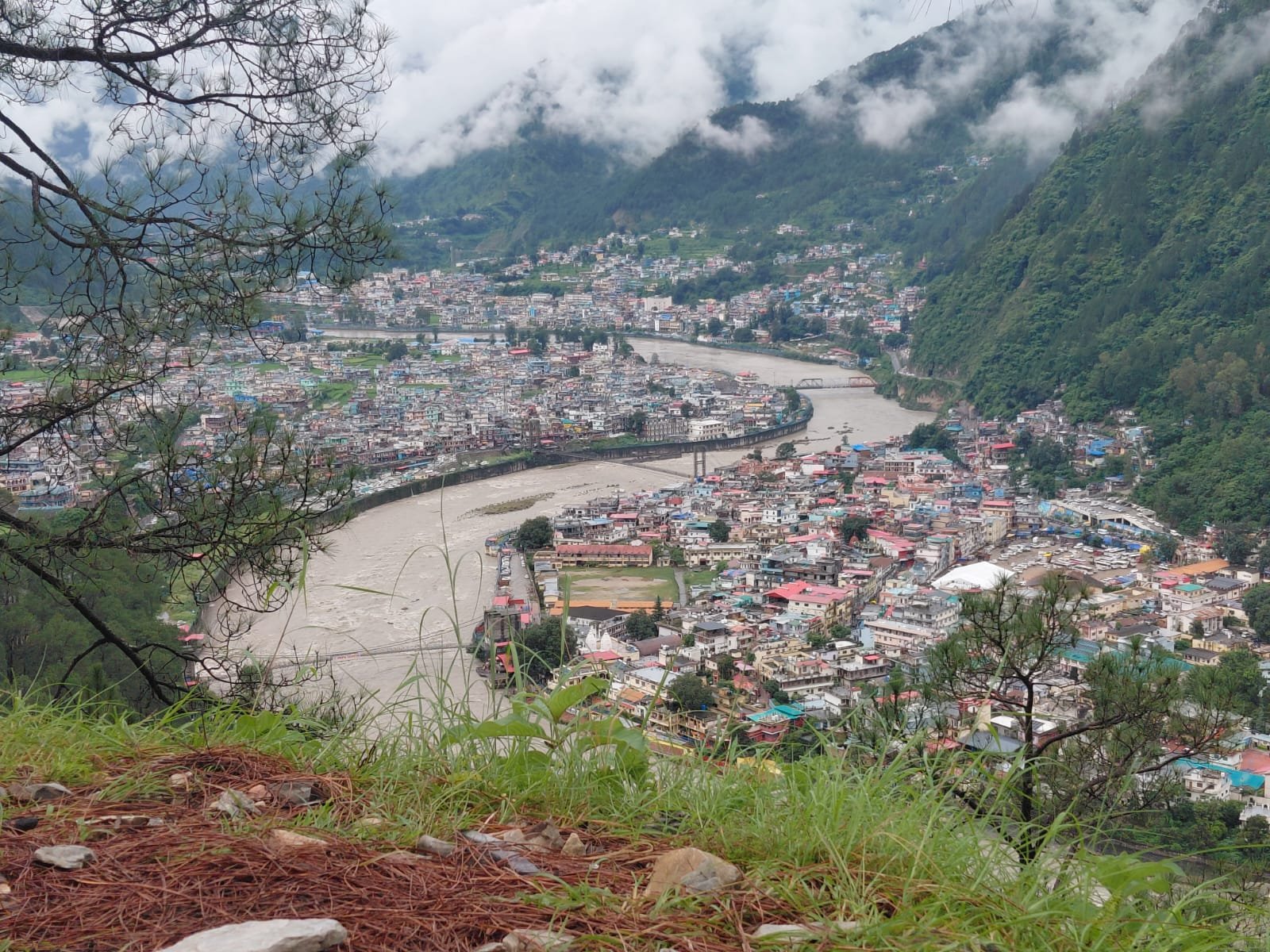
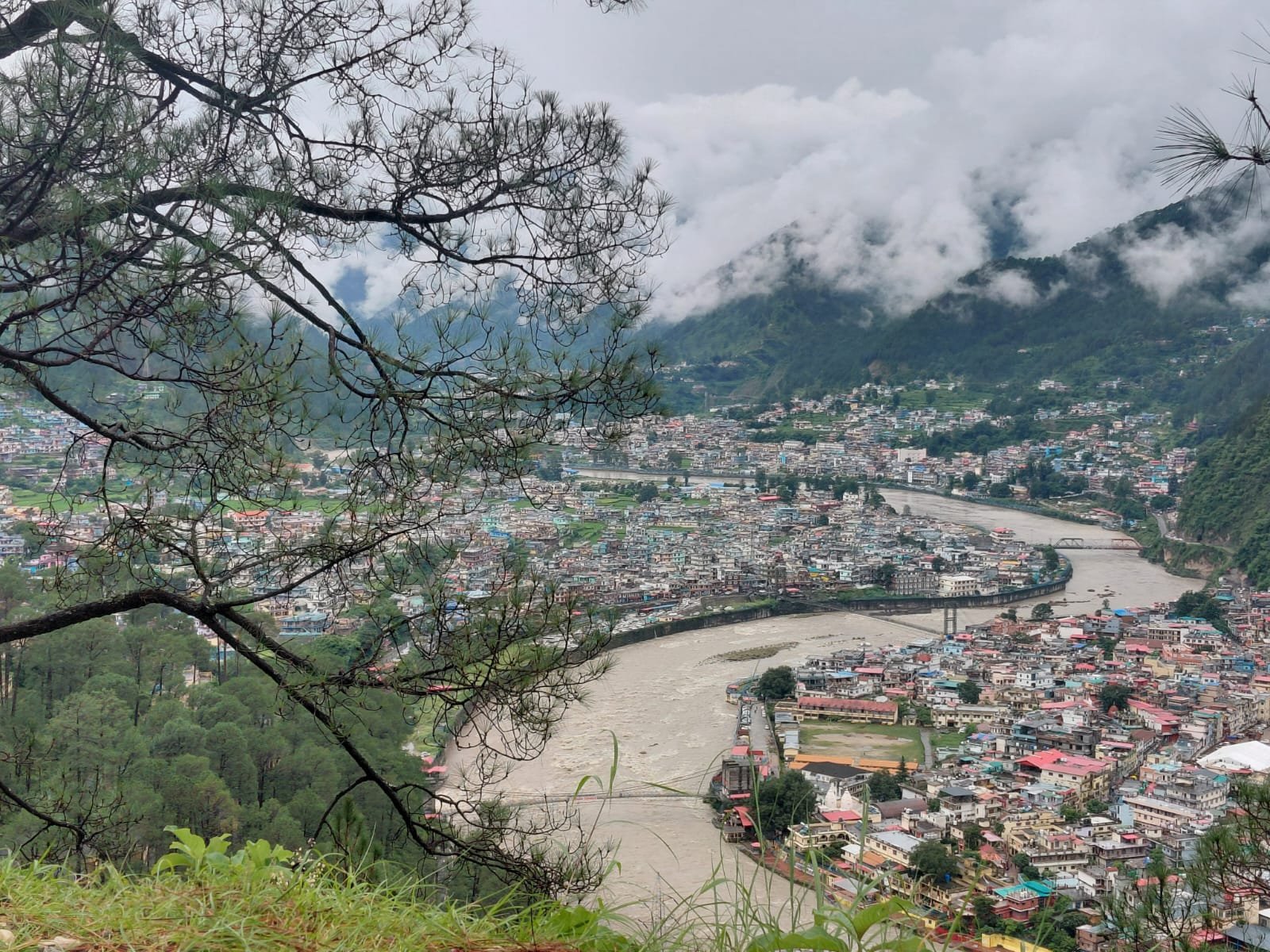
Tiloth is a small Garhwali village in the Bhagirathi Valley, roughly 5–8 km downstream from Uttarkashi town, sitting quietly beside the river with none of the pilgrimage-town bustle that defines its larger neighbour. Most people driving between Uttarkashi and Maneri pass it without a second look. Tiloth Uttarkashi is worth that second look — a working agricultural village with traditional koti banal houses, terraced fields, and its own local temples, sitting just minutes from the district headquarters.
This guide, put together by Kashi Of North, covers everything worth knowing before visiting: where Tiloth is, its history and culture, what there is to do, when to go, and how to combine it with the rest of an Uttarkashi trip. If you’re basing yourself in Uttarkashi for a few days — for the Char Dham route, for trekking logistics, or simply to see the district properly — Tiloth is the easiest, most rewarding half-day addition to that base.
Tiloth Village !!!
Tiloth is a traditional Garhwali village in Uttarkashi district, sitting on the Bhagirathi River approximately 5–8 km downstream from Uttarkashi town, at an elevation of roughly 1,100 m. It’s also the site of the Maneri Bhali Stage I Powerhouse, the underground facility where water diverted from the Maneri barrage generates electricity for the state grid — giving the village a dual identity as both a traditional farming community and a working piece of Uttarakhand’s energy infrastructure.

For travellers, Tiloth’s appeal is straightforward: it’s close enough to Uttarkashi to visit in an afternoon, and different enough from the town to feel like a genuine change of pace. Terraced fields, koti banal stone-and-timber houses, small village temples, and direct access to the Bhagirathi’s riverbank give visitors a concentrated look at Garhwali village life without needing to travel far or commit a full day to it.
Quick Travel Information
| Detail | Information |
|---|---|
| District | Uttarkashi |
| State | Uttarakhand |
| Region | Bhagirathi Valley |
| Elevation | ~1,100 m (3,609 ft), approximate |
| Nearest Town | Uttarkashi (5–8 km) |
| River Basin | Bhagirathi |
| Best Time to Visit | September–November and March–April |
| Mobile Network | BSNL, Jio, Airtel — moderate coverage |
| Suitable For | Families, cultural travellers, photographers, solo travellers, day-trippers from Uttarkashi |
| Nearby Attractions | Uttarkashi town, temples, Maneri reservoir, Bhatwari, Gangnani, Dayara Bugyal, Gangotri |
Elevation and coordinates for Tiloth are approximate, as with many smaller Garhwali villages without an official survey marker. Facilities, road conditions, and homestay availability can change — Kashi Of North can confirm current details when you’re planning your visit.
History of Tiloth Village
Tiloth’s documented history is limited, and it’s worth being upfront about that rather than filling the gap with invented detail. No comprehensive published historical record for the village exists in accessible sources — what’s known comes from its physical geography, its role in a 20th-century infrastructure project, and the general pattern of Garhwali valley settlement that applies across this part of the Bhagirathi corridor.
What can be said with reasonable confidence: Tiloth occupies one of the valley’s low-lying river terraces — flat, fertile land beside the Bhagirathi that has historically been the most productive agricultural ground available in this stretch of the valley. Terraces like these represent generations of accumulated labour, engineered over time by farming families to prevent erosion and make steep valley land cultivable. The settlement itself predates the modern highway system by a considerable margin, though exactly how far back its founding goes isn’t something available records can confirm.
The village’s more recent, well-documented history is tied to the Maneri Bhali Hydroelectric Project. Tiloth is the site of the project’s Stage I Powerhouse, an underground facility where water diverted from the Maneri barrage roughly 8.6 km upstream — carried via tunnel — drops through turbines to generate approximately 90 MW of electricity before rejoining the Bhagirathi. This project brought employment and improved road access to the area, layering 20th-century industrial infrastructure onto a village whose agricultural rhythms otherwise continued much as they had before.
Where local families share their own oral history or lineage accounts during a visit, that’s a genuinely valuable source of information this guide can’t provide — direct conversation with residents will always tell you more about the specific texture of Tiloth’s past than any published record currently can.
Geography
Tiloth sits in the lower Bhagirathi Valley, a few kilometres downstream from Uttarkashi and slightly lower in elevation than the district headquarters (roughly 1,100 m versus Uttarkashi’s 1,165 m). The valley here is comparatively open — the river runs across a wider floor than in the narrower gorge sections further upstream, with terraced agricultural land occupying the flatter ground beside the water and forested hillsides rising to the ridgelines on both sides.
The Maneri Bhali Powerhouse adds an unusual geographic feature to this stretch of river: the point where water diverted upstream through the tunnel system re-emerges and rejoins the natural Bhagirathi channel, measurably increasing the river’s flow at Tiloth compared to just upstream of the discharge point.
Climate-wise, Tiloth sits in the transition zone between the subtropical lower valley and the temperate mountain zone further up the highway — noticeably warmer than Uttarkashi and considerably warmer than the upper valley destinations toward Harsil and Gangotri. Summers (April–June) run warm to hot, monsoon (July–September) brings the valley to its greenest, and autumn (October–November) offers the clearest skies and most comfortable temperatures of the year.
Why Visit Tiloth?
Tiloth is worth visiting because it offers a genuine, undramatized look at Garhwali village life within a fifteen-minute drive of Uttarkashi’s temples and markets — no other stop in the immediate area gives you that combination of authenticity and convenience.
Authentic village character. The agricultural fields, koti banal architecture, and daily community life at Tiloth are working reality rather than anything arranged for visitors.
Direct river access. Several points near the village give access to the Bhagirathi’s bank — a different, more open river character than the gorge sections further up the highway.
Proximity to Uttarkashi. At just 5–8 km from the district capital, Tiloth is easy to add to any Uttarkashi-based itinerary without disrupting your plans.
Photography with real texture. Traditional architecture, terraced fields in various seasonal states, the river, and the mountain backdrop give photographers material that Uttarkashi’s temple circuit doesn’t offer.
Genuinely accessible. Flat terrain, no altitude demands, and a short distance from town make Tiloth suitable for families, seniors, and anyone travelling with limited mobility.
Village Life
Daily life in Tiloth still runs largely on the rhythms of agriculture rather than tourism. Families work the terraced fields beside the river, growing rajma (a smaller, more flavourful local kidney bean variety), mandua (finger millet), jhangora (barnyard millet), potatoes, and seasonal vegetables, alongside keeping livestock as part of the household economy. The Maneri Bhali project has added a layer of project-related employment to this base over the decades, but it hasn’t replaced the agricultural core of village life — most households still maintain some connection to farming regardless of other work.
The pace is unhurried in a way that’s easy to notice within minutes of arriving. Community water sources and open spaces function as informal gathering points. Children move through the village lanes with the easy familiarity of a place they know completely. Hospitality tends to be warm and understated — an offer of chai from a household is a common, genuine gesture rather than a transaction, and worth accepting if it’s extended.
Community events follow the shared Garhwali festival calendar, discussed in more detail below, with the whole village typically participating in major festivals and local devta celebrations together — occasions that briefly shift the village’s rhythm from quiet daily routine to active, music-filled gathering.
Local Culture
Tiloth’s cultural life follows the broader Garhwali pattern found throughout the Bhagirathi Valley, combining mainstream Hindu practice with traditions specific to this cultural region. The jagaron tradition — all-night devotional singing dedicated to local deities, accompanied by dhol and damau drums — is part of the community’s festival life, one of the older forms of religious expression in the Garhwal hills, predating more institutionalised temple traditions.
Traditional Garhwali cuisine forms the backbone of the local diet: mandua ki roti (finger millet flatbread), rajma chawal (the local kidney bean with rice), kafuli (a leafy green curry with garlic and jakhiya seeds), aloo ke gutke (dry-fried spiced potato), and jhangora ki kheer (barnyard millet pudding) are all dishes you might encounter in a Tiloth household, particularly if you’re staying in homestay accommodation.
Dress in the village remains conservative and modest by general convention, and visitors are expected to follow the same norm — covering shoulders and legs is both a matter of respect and a practical way to receive a warmer reception. Village customs generally favour quiet courtesy over overt display: greet people directly, ask before photographing, and let conversations develop at their own pace rather than treating an interaction as a photo opportunity.
Religious Importance
Tiloth maintains its own local temples, serving the community’s religious needs rather than functioning as pilgrimage destinations for outside visitors. As is standard across Garhwali villages, these combine shrines to mainstream Hindu deities — Shiva, Durga, Ganesha, and various forms of the Goddess — with worship of local devtas, community-specific deities tied to the village’s ancestral tradition.
Being direct about documentation: comprehensive published records for Tiloth’s individual village temples aren’t available, and this guide won’t invent deity names or founding dates that can’t be verified. What can be said with confidence is how Garhwali village temples generally function: simple stone-and-timber construction in the koti banal tradition, active daily use by the community rather than preservation as heritage monuments, and seasonal festivals that bring the whole village together for music and worship.
Visiting a village temple respectfully means removing footwear before entering the compound, dressing modestly, asking before photographing interiors or active ceremonies, not touching deity images or ritual objects, keeping your voice low, and following the presiding priest’s guidance on what areas are open to visitors.
Tiloth’s proximity to Uttarkashi means the district’s major temple destinations — the Kashi Vishwanath Temple, the Shakti Temple, Kuteti Devi Temple, and Manikarnika Ghat — are all a short drive away and worth combining with a Tiloth visit for a fuller picture of the area’s religious life. See our Uttarkashi Travel Guide for details on all four.
Things to Do in Tiloth
Walk the village. The core activity at Tiloth. An unhurried one-to-two-hour walk through the lanes takes in the terraced fields, traditional koti banal houses, community water sources, and small local temples.
Visit a local temple. Early morning or late afternoon are the most likely times to see active puja. Approach respectfully, and treat the visit as observing a working community space rather than a tourist stop.
Spend time at the Bhagirathi. Several points near the village give safe bank access to the river — sit on the boulders, take in the sound and current, and treat it as a place to be beside rather than in.
Photograph the village. Traditional architecture, seasonal field states, and the river-and-mountain backdrop give Tiloth genuine photographic depth — see the Photography Guide below.
Go birdwatching. The riparian vegetation along the Bhagirathi and the agricultural land around the village support decent bird diversity, particularly in early morning.
Try homestay food. If you’re staying with a local family or invited in for tea, a home-cooked Garhwali meal here is one of the more genuine cultural experiences available anywhere in the district.
Combine with Maneri. The reservoir is just 8–10 km upstream — visiting both in one trip gives a striking contrast between traditional village life and the valley’s modern hydroelectric infrastructure.
Nearby Attractions
Uttarkashi (5–8 km, 10–15 minutes) — The district headquarters, with the Kashi Vishwanath Temple, Shakti Temple, NIM Museum, Manikarnika Ghat, and the Bhagirathi ghats and evening aarti. See our Uttarkashi Travel Guide.
Maneri (8–10 km, 15–20 minutes) — The Maneri Bhali reservoir, one of the most photogenic stops on the Gangotri Highway and directly connected to Tiloth via the powerhouse infrastructure. See our Maneri Travel Guide.
Netala (roughly 15–20 km beyond Maneri) — Another quiet Garhwali village on the Gangotri Highway, worth combining with Tiloth if you want to compare two different village experiences in one trip. See our Netala Travel Guide.
Nachiketa Tal (32 km from Uttarkashi, short trek) — The alpine lake associated with the Katha Upanishad, reachable via an easy day trek. See our Nachiketa Tal Guide.
Dodital (via Sangam Chatti near Uttarkashi, multi-day trek) — A forest-set alpine lake linked to the birth of Lord Ganesha. See our Dodital Trek Guide.
Dayara Bugyal (via Bhatwari, 1–2 day trek) — Uttarakhand’s best-known accessible alpine meadow. See our Dayara Bugyal Guide.
Bhatwari (20–25 km, 35–45 minutes) — A service hub with a Saturday haat market. See our Bhatwari Travel Guide.
Gangnani (48 km, 1.5–2 hours) — Home to the Rishi Kund hot spring. See our Gangnani Travel Guide.
Gangotri (100 km, 3–3.5 hours) — The Char Dham temple of Goddess Ganga. See our Gangotri Travel Guide.
Suggested Itineraries
Half-Day Village Tour
- Depart Uttarkashi by local auto or taxi
- Village walk through Tiloth’s lanes, 45–60 minutes
- Visit a local temple
- Time at the Bhagirathi riverbank
- Return to Uttarkashi
Full-Day Cultural Tour (Tiloth + Uttarkashi + Maneri)
- Morning — Maneri reservoir for sunrise photography
- Mid-morning — Kashi Vishwanath Temple darshan and NIM Museum in Uttarkashi
- Afternoon — Lunch in Uttarkashi, then drive to Tiloth for a village walk and photography
- Evening — Sunset at the Tiloth riverbank, return to Uttarkashi
Weekend Uttarkashi Tour
- Day 1 — Arrive Uttarkashi; Kashi Vishwanath Temple; evening Ganga Aarti
- Day 2 — Morning at Tiloth; afternoon drive toward Maneri and Bhatwari; return to Uttarkashi
- Day 3 — Departure
Photography Tour (2 Days)
- Day 1 — Afternoon temple and town photography in Uttarkashi; evening at the ghats
- Day 2 — Pre-dawn departure for Maneri sunrise; morning at Tiloth for village and river photography; afternoon in Uttarkashi’s bazaar
Family Village Experience
- Short auto-rickshaw ride from Uttarkashi to Tiloth
- Village walk with children through the fields and traditional houses
- Riverside picnic at a safe, accessible bank section
- Return to Uttarkashi for the NIM Museum
For any of these, Kashi Of North can arrange transport, a local guide, and homestay coordination as one planned trip.
Best Time to Visit Tiloth
Spring (March–April): Rhododendron blooms color the hillsides above the valley, agricultural preparation is underway, and the village has an energetic, coming-out-of-winter feel. Good for photography and pleasant walking conditions.
Summer (May–June): Warm to hot (up to 34°C on peak days) but with pleasant evenings. This is peak Gangotri pilgrimage season on the highway, so Tiloth makes a good quieter counterpoint if you’re passing through on the way to the upper valley.
Monsoon (July–August): Heavy rainfall and intense green, with the village’s agricultural activity at its peak as crops grow. Travel flexibility is reduced and road conditions can be less predictable — beautiful, but only for travellers comfortable with monsoon uncertainty.
Autumn (September–November): Widely considered the best season — post-monsoon clarity, comfortable temperatures, and the harvest underway in the terraced fields by September–October. October in particular is Tiloth at its most photogenic.
Winter (December–February): Cold mornings, mild days, and very few visitors. At Tiloth’s relatively low elevation, the village stays fully accessible throughout winter.
Month-wise Weather Guide
| Month | Day Temp | Night Temp | Conditions | Recommended? |
|---|---|---|---|---|
| January | 10°C–15°C | 2°C–7°C | Cool, clear | Yes — quiet |
| February | 12°C–18°C | 4°C–9°C | Warming, rhododendron buds | Yes |
| March | 17°C–24°C | 8°C–13°C | Rhododendron bloom | Excellent |
| April | 21°C–28°C | 12°C–17°C | Spring warmth | Yes |
| May | 25°C–33°C | 16°C–21°C | Hot in valley | Yes |
| June | 24°C–31°C | 17°C–22°C | Pre-monsoon cloud | Yes |
| July | 21°C–26°C | 17°C–21°C | Monsoon, green | Caution — rain |
| August | 21°C–26°C | 17°C–21°C | Monsoon, lush | Caution — rain |
| September | 18°C–24°C | 13°C–18°C | Clearing | Good |
| October | 14°C–21°C | 7°C–12°C | Excellent, harvest season | Best month |
| November | 10°C–17°C | 4°C–9°C | Cool, clear, quiet | Yes |
| December | 9°C–15°C | 2°C–7°C | Cold, clear | Yes — quiet |
Flora and Fauna
The hillsides above Tiloth carry the mixed pine, oak, and rhododendron forest typical of the lower Bhagirathi Valley, with the terraced agricultural land occupying the flatter ground beside the river. Rhododendron blooms are the standout seasonal feature, appearing on the surrounding slopes in March–April.
Along the Bhagirathi, birdwatchers can look for the Common Merganser and various redstart species, both of which favour fast-moving mountain rivers specifically, along with kingfishers and dippers in the riparian zone. The agricultural land and surrounding vegetation support babblers, warblers, and finches. Langur monkeys are a regular sight in the forest edges near the village — commonly associated in Hindu tradition with Lord Hanuman and generally treated with respect by local communities.
Photography Guide
Village architecture. Look for the layered horizontal bands of koti banal construction on the older houses, along with carved wooden doorframes and balcony details — increasingly rare examples of a building tradition not being replicated in new construction.
Agricultural fields across the seasons. The terraces look markedly different depending on when you visit — bare and being prepared in March, fully green and growing in June, and gold with harvest activity in September–October.
Elevated landscape shots. From slightly raised positions above the main village — either on the hillside or from road sections that rise above the valley floor — the combination of terraced fields, rooflines, the river below, and the mountains above creates strong layered compositions.
Sunrise and sunset. The eastern wall catches first light in the morning, visible from the village or riverbank as alpenglow while the valley floor is still in shadow. Sunset light falls on the western slopes above the village in the late afternoon — best captured from elevated road sections.
River photography. The Bhagirathi at Tiloth is a strong subject from safe bank positions — fast water, boulder texture, and mountain backdrop. A polarising filter helps cut surface glare and bring out the water’s colour and depth.
Photographing people. Always ask before photographing anyone in the village, particularly inside homes or during private moments. A graciously accepted “no” matters as much as a “yes” — this is someone’s home community, not a photo set.
Drone regulations. Given Tiloth’s proximity to the Maneri Bhali Powerhouse infrastructure, airspace restrictions may apply. Verify current DGCA and local requirements before flying any drone in this area — power generation sites are typically within restricted categories.
Accommodation
There’s no dedicated guesthouse or hotel infrastructure at Tiloth itself. Homestay accommodation with local families may be available, and is the most authentic option — often including genuine home-cooked Garhwali meals as part of the stay. For homestay enquiries, ask locally on arrival or contact Kashi Of North in advance, since availability isn’t fixed and depends on individual households.
Most visitors base themselves in Uttarkashi (5–8 km), which has the district’s widest accommodation range:
| Category | Price Range | Notes |
|---|---|---|
| Budget guesthouse | ₹400–₹900 | Adequate for an overnight base |
| Mid-range hotel | ₹900–₹2,500 | Better facilities |
| GMVN rest house | ₹700–₹2,000 | Reliable, bookable in advance |
| Better hotels | ₹2,500–₹5,000 | Most comfortable available |
Booking tip: For May–June (peak pilgrimage season), book Uttarkashi accommodation at least 1–2 weeks ahead. For a Tiloth homestay, reach out well in advance — same-day arrangements aren’t guaranteed. Kashi Of North can handle both bookings as part of a single planned trip.
Food
There are no established restaurants at Tiloth. Day visitors should bring provisions from Uttarkashi; if you’re staying at a homestay, meals are typically included and are the most authentic way to experience the local diet — mandua ki roti, rajma chawal, kafuli, aloo ke gutke, and dal bhat, cooked the way village households have always made them.
Chai is available informally from most households — a universal hospitality gesture in Garhwali villages, and worth accepting if offered. For a fuller range of dining options, Uttarkashi’s dhabas and restaurants (5–8 km away) serve the complete spread of Garhwali and North Indian vegetarian food.
How to Reach Tiloth
Tiloth is reached almost entirely via Uttarkashi, making it one of the simplest add-on destinations in the district.
By Road / Self-Drive
From Uttarkashi, follow the highway downstream (toward the Rishikesh direction) for approximately 5–8 km; Tiloth is on or just off the main road, reached by a short turnoff. No formal parking facility exists, but roadside parking is available at the village approach.
By Taxi
A local taxi from Uttarkashi covering Tiloth alongside other nearby stops (Maneri, for instance) is the most flexible option for a half-day or full-day trip. Kashi Of North arranges taxi services throughout Uttarkashi district, including custom multi-stop itineraries.
By Auto-Rickshaw
The most economical option for a straightforward Tiloth visit — negotiate the fare before departing from Uttarkashi’s main stand.
By Air
The nearest airport is Jolly Grant Airport, Dehradun (~150 km), with regular connections to Delhi and other major cities. From Dehradun, continue by road via Uttarkashi.
By Train
The nearest railway stations are Rishikesh (~160 km) and Haridwar (~185 km). From either, continue by road via Dehradun and Uttarkashi.
Distance Chart
| From | Distance to Tiloth | Approx. Drive Time |
|---|---|---|
| Delhi | ~355 km | 9–10.5 hours |
| Dehradun | ~145 km | 4–5 hours |
| Haridwar | ~180 km | 5–6 hours |
| Rishikesh | ~160 km | 4.5–5.5 hours |
| Uttarkashi | 5–8 km | 10–15 minutes |
| Maneri | 8–10 km | 15–20 minutes |
| Bhatwari | 20–25 km | 35–45 minutes |
| Gangnani | ~48 km | 1.5–2 hours |
| Gangotri | ~100 km | 3–3.5 hours |
Packing List
Clothing
| Item | Notes |
|---|---|
| Full-length, modest clothing | Essential for village and temple visits |
| Light layers | For warm days and cool mornings/evenings |
| Warm layer | Needed even in summer for early mornings |
| Sun hat | Sun exposure is significant at this elevation |
Footwear
| Item | Notes |
|---|---|
| Comfortable walking shoes | Village lanes are uneven stone and earth |
| Sandals for riverside | Optional, for casual riverbank time |
Electronics
| Item | Notes |
|---|---|
| Camera with spare batteries | For architecture, field, and river photography |
| Phone with offline maps | Signal is moderate, not guaranteed everywhere |
| Power bank | Useful for a full day away from charging points |
Medical Kit
| Item | Notes |
|---|---|
| Personal medication | No pharmacy at Tiloth |
| Basic first aid kit | Minor cuts, blisters from walking |
| Sun protection | Sunscreen and lip balm |
Documents
| Item | Notes |
|---|---|
| Government-issued photo ID | Useful for any accommodation booking |
| Cash | No ATM at Tiloth — carry enough from Uttarkashi |
| Homestay/guide booking confirmation | If pre-arranged through Kashi Of North |
Responsible Tourism
Respect the community. Tiloth is a functioning village, not a heritage attraction — the families here haven’t reorganised their lives around visitors. Observe rather than intrude, and engage only when welcomed.
Dress appropriately. Full-length clothing covering shoulders and knees is expected in the village and essential for any temple visit.
No plastic. There’s no waste disposal infrastructure at Tiloth — carry out everything you bring in, without exception.
Support local businesses. Choose a homestay over a hotel booking if one’s available, and buy locally produced rajma or honey directly from village families during harvest season if offered.
Respect private property. Don’t enter fields, compounds, or homes without an explicit invitation.
Photograph responsibly. Always ask before photographing people, and never for the sake of a shot alone — the community’s daily life isn’t a performance for visitors.
Practical Information
Mobile network: BSNL, Jio, and Airtel all have some presence at Tiloth, with moderate reliability — better and more consistent coverage is available in Uttarkashi.
Internet: Limited at Tiloth; noticeably better once you’re back in Uttarkashi.
ATM: None at Tiloth — withdraw cash in Uttarkashi (5–8 km) before your visit.
Fuel: Nearest station is in Uttarkashi.
Medical facilities: None at Tiloth. The District Hospital in Uttarkashi (5–8 km) is the nearest significant medical resource.
| Service | Contact |
|---|---|
| National Emergency | 112 |
| Police (Uttarkashi) | 01374-222100 |
| District Hospital, Uttarkashi | 01374-222026 |
| SDRF Uttarkashi | 01374-222755 |
| Uttarakhand Tourist Helpline | 1364 |
| Forest Department, Uttarkashi | 01374-222624 |
For travel planning, homestay arrangements, or local guides (not emergencies): Kashi Of North — WhatsApp/Call: +91 7253079221 — Email: kashiofnorth@gmail.com — Website: https://kashiofnorth.com
Travel Tips
Road conditions between Uttarkashi and Tiloth are generally good year-round, with monsoon months (July–August) carrying the usual increased risk of disruption common across the district.
Best visiting hours are morning or late afternoon — both give better light for photography and a higher chance of catching village life and temple activity in progress, while avoiding the flattest midday light.
Book homestays ahead. Availability at Tiloth isn’t fixed the way hotel rooms in Uttarkashi are — contact Kashi Of North in advance rather than expecting to arrange something on arrival.
Follow local etiquette. Dress modestly, ask before photographing, and let any interaction with residents unfold at its own pace.
Prepare for the weather, especially outside the peak autumn window — mornings and evenings are cooler than daytime temperatures suggest, even in summer.
Carry cash. There’s no ATM at Tiloth, and homestay payments or small local purchases are typically cash transactions.
Explore Tiloth Village with Kashi Of North
We help travelers with:
- Village tours and local guides
- Homestay bookings in Tiloth
- Hotel bookings in Uttarkashi
- Taxi services across the district
- Cultural experiences and temple visits
- Customized Uttarkashi tour packages
📞 WhatsApp / Call: +91 7253079221 📧 Email: kashiofnorth@gmail.com 🌐 Website: https://kashiofnorth.com
Common Mistakes Visitors Make
- Not visiting at all. Most travellers passing through the Uttarkashi area overlook Tiloth entirely — the single most common missed opportunity in this part of the valley.
- Treating the village as a photo set. Photographing people without asking, or entering compounds uninvited.
- Arriving without provisions. No restaurants exist at Tiloth — carry food and water from Uttarkashi.
- Not carrying cash. There’s no ATM at the village.
- Dressing inappropriately for a conservative village or temple visit.
- Expecting tourist infrastructure. There are no signs, ticket counters, or guides waiting — this is a living village, not a curated attraction.
- Visiting in July–August without accounting for monsoon travel uncertainty.
- Missing the river. The Bhagirathi’s accessible bank sections near Tiloth are one of the best parts of the visit.
- Skipping Uttarkashi town entirely. Tiloth and Uttarkashi complement each other — the temples and history in town give context to the village’s everyday life.
- Leaving waste behind. There’s no waste management infrastructure at Tiloth — carry out everything you bring in.
Frequently Asked Questions
1. What is Tiloth Village? Tiloth is a small traditional Garhwali village near Uttarkashi in Uttarkashi district, Uttarakhand, on the Bhagirathi River roughly 5–8 km from Uttarkashi town, and also the site of the Maneri Bhali Stage I Powerhouse.
2. How far is Tiloth from Uttarkashi? Approximately 5–8 km, a 10–15 minute drive.
3. What is the elevation of Tiloth? Approximately 1,100 m (3,609 ft), slightly lower than Uttarkashi’s roughly 1,165 m.
4. What is the best time to visit Tiloth? September–October for post-monsoon clarity and harvest activity, and March–April for rhododendron bloom and spring energy. The village is pleasant to visit year-round.
5. What temples are there at Tiloth? Local village temples serving the community’s own religious needs, combining mainstream Hindu deities with local Garhwali devtas. These are active community spaces rather than pilgrimage monuments.
6. Is there accommodation at Tiloth? No dedicated hotels or guesthouses, but homestay accommodation with local families may be available with advance arrangement. Most visitors base themselves in Uttarkashi and visit Tiloth as a day trip.
7. What is the Maneri Bhali Powerhouse at Tiloth? An underground facility where water diverted from the Maneri barrage, via an 8.6 km tunnel, powers turbines generating approximately 90 MW of electricity. It’s operational infrastructure, not open to general visitors.
8. Is food available at Tiloth? No restaurants — carry provisions from Uttarkashi. Homestay stays typically include meals, and chai is commonly offered by local households.
9. How do I reach Tiloth from Delhi? Via Haridwar, Rishikesh, and Devprayag to Uttarkashi (~355 km, 9–10.5 hours), then a short local drive of 5–8 km to Tiloth.
10. Is Tiloth suitable for families? Yes — the low elevation, flat terrain, river access, and closeness to Uttarkashi make it manageable for all ages. Supervise children closely near the Bhagirathi.
11. What is traditional Garhwali food available near Tiloth? Mandua ki roti, rajma chawal, kafuli, aloo ke gutke, and jhangora ki kheer — most authentically experienced through a homestay.
12. Is mobile network available at Tiloth? Moderate coverage across BSNL, Jio, and Airtel, with better connectivity in Uttarkashi.
13. Are drones allowed at Tiloth? Possibly restricted given proximity to the Maneri Bhali Powerhouse — verify current DGCA and local requirements before flying.
14. What is koti banal construction? The traditional Garhwali technique of alternating stone and deodar cedar timber bands, providing earthquake resistance — visible in Tiloth’s older houses.
15. What wildlife can be seen near Tiloth? Langur monkeys, and river birds including the Common Merganser, redstarts, kingfishers, and dippers along the Bhagirathi.
16. Is Tiloth worth visiting for just an hour? Yes — even a short walk through the lanes, a temple visit, and time at the river offers a meaningful look at Garhwali village life most Uttarkashi visitors miss.
17. What crops are grown in Tiloth? Rajma, mandua, jhangora, potatoes, and seasonal vegetables, farmed on the village’s terraced fields.
18. Is Tiloth good for photography? Yes — traditional architecture, terraced fields, the Bhagirathi, and the mountain backdrop offer subjects unavailable in Uttarkashi town itself.
19. Is there an ATM at Tiloth? No — the nearest ATMs are in Uttarkashi, 5–8 km away.
20. How does Tiloth relate to Maneri? Tiloth is downstream of Maneri, and is where water from the Maneri Bhali Stage I hydroelectric system rejoins the Bhagirathi after passing through the underground powerhouse. Maneri’s reservoir is 8–10 km upstream.
21. What are the local festivals at Tiloth? Makar Sankranti, Harela (July planting festival), Phool Dei (spring flower festival), Diwali, and local devta festivals specific to the village.
22. Is the Bhagirathi safe to enter near Tiloth? No — the current is powerful. Sit at the riverbank and observe rather than wading or swimming.
23. What is the Phool Dei festival? A Garhwali spring festival in which young girls scatter flowers at community thresholds, usually observed in March–April.
24. Are there trekking routes from Tiloth? Tiloth itself isn’t a trek starting point, but Nachiketa Tal and Dodital, both accessible via Uttarkashi, are within reach for a combined trip.
25. Can foreign nationals visit Tiloth? Yes, no special permit is required — carry a passport as you would anywhere in India.
26. What is the Harela festival? A Uttarakhand-specific planting festival in July, in which grain seedlings are sprouted as an agricultural blessing, observed throughout the district including at Tiloth.
27. How does a Tiloth visit compare to visiting Uttarkashi town? Uttarkashi offers temples, a museum, and markets; Tiloth offers the quieter, agricultural, community side of the same valley. They complement rather than substitute for each other.
28. Is Tiloth accessible in winter? Yes — at roughly 1,100 m, Tiloth rarely sees significant snowfall and stays accessible by road throughout winter.
29. Can I book a homestay in Tiloth in advance? Yes — Kashi Of North can help identify and confirm homestay availability ahead of your visit, since arrangements typically need lead time.
30. Is a guide necessary to visit Tiloth? Not strictly necessary for a village walk, but a local guide adds meaningful cultural and historical context, particularly around temple etiquette and village customs.
31. What language is spoken in Tiloth? Garhwali is the everyday language; Hindi is widely understood. English is very limited.
32. Is there a market at Tiloth? No — there’s no shopping infrastructure at the village. During harvest season, locally grown rajma or honey may be available directly from families.
33. What is the ideal duration for a Tiloth visit? 30–60 minutes for a quick stop; 2–3 hours for a fuller visit including the temple and riverbank; an overnight homestay for the most complete experience.
34. How does the Maneri Bhali Powerhouse affect a visit to Tiloth? It’s not open to visitors, but its presence is part of the area’s character and story — worth knowing about even though it’s not a stop on your walk.
35. Is Tiloth suitable for solo female travellers? Yes, with the standard precautions for a conservative rural setting — dress modestly and travel during daylight. Uttarkashi’s proximity means quick access to more developed facilities if needed.
36. What is the terrain like in Tiloth village? Mostly flat, low-lying river terrace land, with some uneven stone-and-earth lanes — manageable for most visitors including seniors.
37. Can I combine Tiloth with a Char Dham Yatra trip? Yes — as a stop between Uttarkashi and the drive north, Tiloth fits naturally into a Char Dham itinerary without adding significant travel time.
38. What should I pack for a Tiloth day trip? See the Packing List above — modest clothing, comfortable shoes, cash, water, and a camera cover the essentials.
39. Are there any entry fees at Tiloth? No — there’s no ticketed attraction or entry fee anywhere in the village.
40. How do I book a trip to Tiloth with Kashi Of North? WhatsApp or call +91 7253079221, email kashiofnorth@gmail.com, or visit kashiofnorth.com to arrange a guide, homestay, or full Uttarkashi itinerary including Tiloth.
Explore More of Uttarkashi District
- Uttarkashi Travel Guide
- Maneri Travel Guide
- Netala Travel Guide
- Bhatwari Travel Guide
- Gangnani Travel Guide
- Gangotri Travel Guide
- Nachiketa Tal Guide
- Dodital Trek Guide
- Dayara Bugyal Guide
- Kush Kalyan Bugyal Trek Guide
- Jhinda Bugyal Trek Guide
- Hotel Booking
- Taxi Booking
Conclusion
Tiloth Uttarkashi won’t headline anyone’s itinerary — it has no famous temple, no glacier, no marquee attraction. What it offers instead is the quieter, working side of the Bhagirathi Valley: terraced fields farmed by families who’ve worked this land for generations, koti banal houses that are becoming rarer by the year, local temples that serve the village rather than pilgrims, and a stretch of the Bhagirathi’s bank that’s genuinely accessible rather than viewed from a moving car.
For travellers based in Uttarkashi — whether for the Char Dham route, for trekking logistics, or simply to see the district properly — Tiloth is the easiest possible addition to that base: close, uncomplicated, and different enough from the town to be worth the short drive.
Ready to include Tiloth in your Uttarkashi trip? Kashi Of North can arrange a local guide, homestay accommodation, taxi transport, and a full customized itinerary combining Tiloth with the rest of the district.
📞 WhatsApp / Call: +91 7253079221 📧 Email: kashiofnorth@gmail.com 🌐 Website: https://kashiofnorth.com