
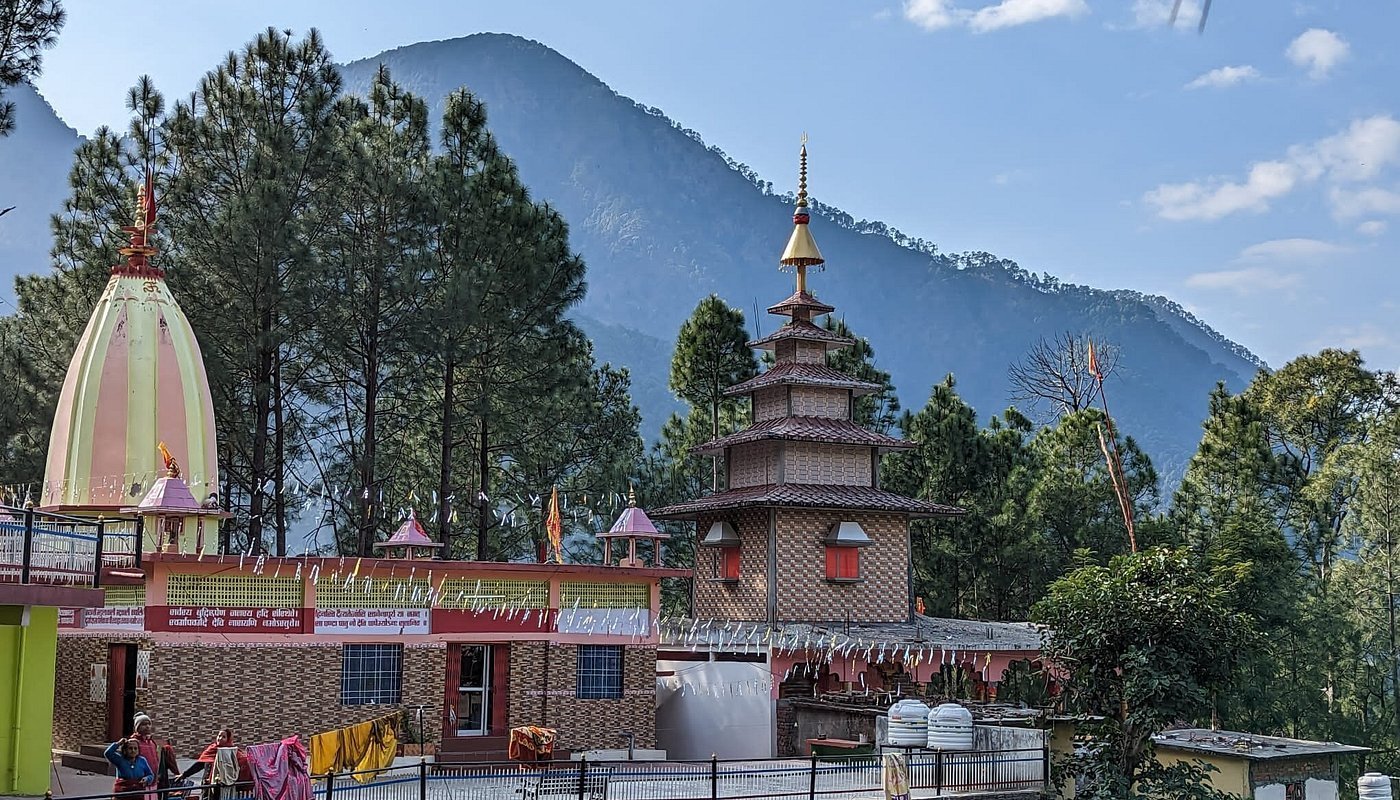
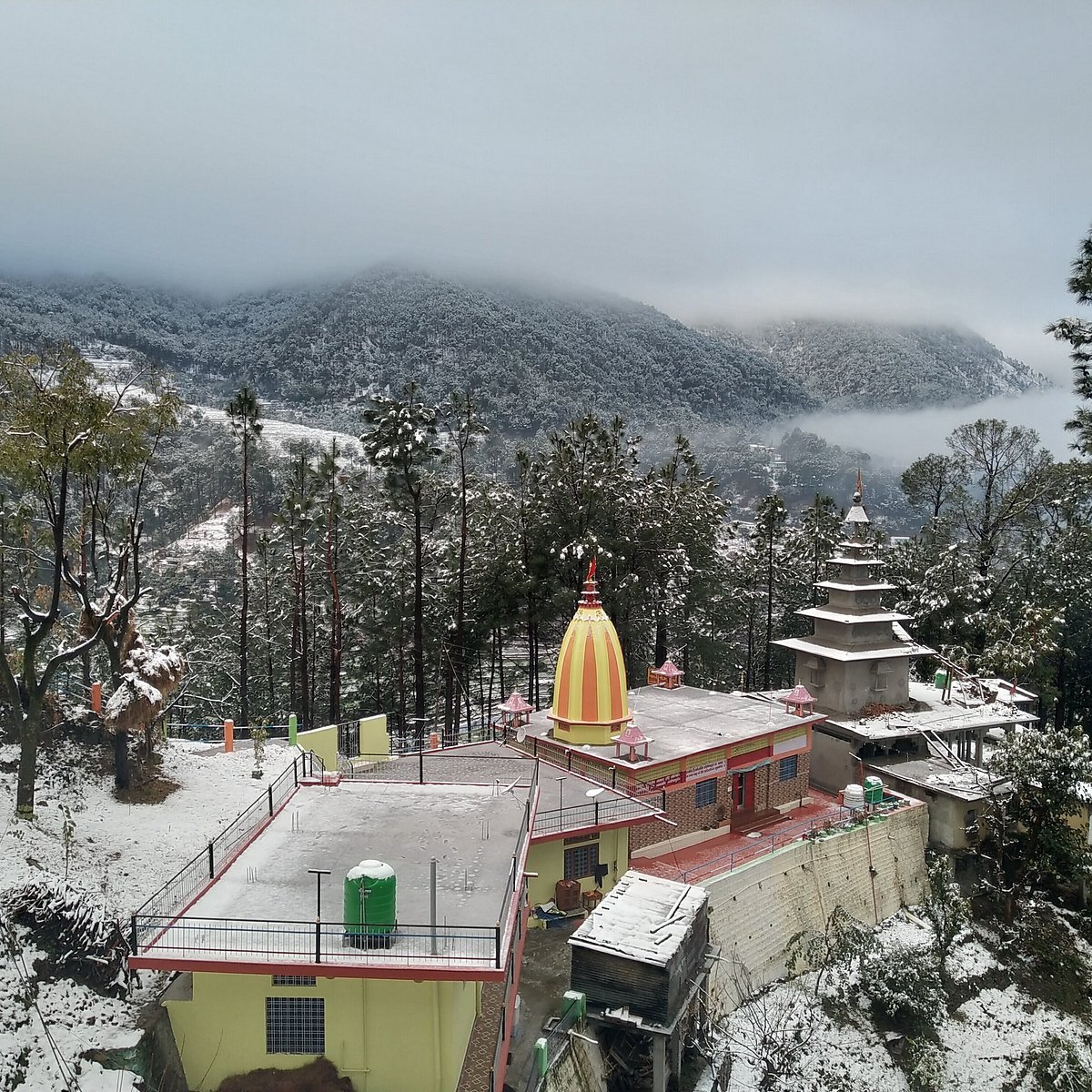

Kuteti Devi Temple is a small, locally revered hilltop shrine dedicated to the goddess Kuteti Devi, situated roughly 1.5 km from Uttarkashi town in the Garhwal Himalayas. Kuteti Devi Temple Uttarkashi sits on a modest hill reached by a short uphill walk, offering panoramic views across the surrounding valleys — a genuinely quiet, uncommercialized site compared to the district’s larger pilgrimage destinations. For travelers who’ve already covered Uttarkashi’s major temples and want a calmer, more local devotional experience, Kuteti Devi Temple is a genuine addition to an Uttarkashi itinerary.
This guide covers the temple’s history, religious significance, how to reach it, the uphill walk itself, photography opportunities, and more than 30 answered questions.
Kuteti Devi Temple
Kuteti Devi Temple is a small Hindu shrine dedicated to the local goddess Kuteti Devi, located on a hill roughly 1.5 km from Uttarkashi town, reached by a short uphill walk and offering panoramic views of the surrounding Garhwal Himalayan valleys.
The temple is modest in scale and architecture — a well-maintained but genuinely small local shrine rather than a grand pilgrimage complex — and it’s rarely crowded except during local festivals. For visitors who want to experience Garhwali devotional life as it’s actually practiced by local families, rather than as a major tourist stop, Kuteti Devi Temple offers exactly that: a quiet, authentic, and genuinely peaceful site.
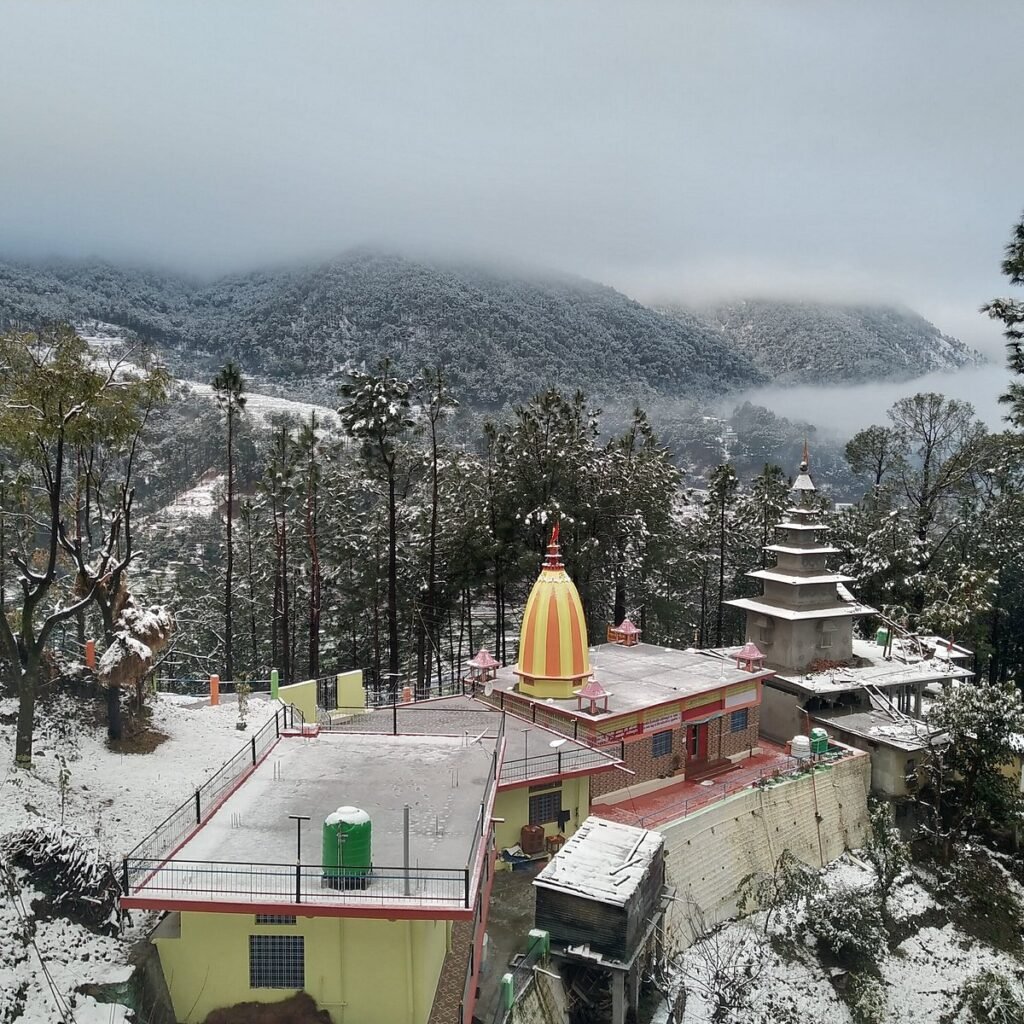
| Location | Information |
|---|---|
| District | Uttarkashi |
| State | Uttarakhand |
| Region | Garhwal Himalayas |
| Nearest major town | Uttarkashi |
| Temple type | Hindu temple, Devi shrine |
| Main deity | Kuteti Devi |
Where Is Kuteti Devi Temple Located?
Kuteti Devi Temple sits on a modest hill roughly 15 km from Uttarkashi town, in Uttarkashi district, Uttarakhand, reached by road to a base parking area followed by a short uphill walk on stone paths.
The temple’s elevated position gives it genuine panoramic views over the surrounding valleys and hills — part of what makes the site worth the short climb, beyond its religious significance. Exact elevation figures aren’t consistently documented in available sources; treat the hilltop setting as the relevant detail rather than a precise altitude number.
History of Kuteti Devi Temple
Kuteti Devi Temple’s exact construction date isn’t documented, but oral tradition and local history suggest the site has functioned as a place of worship for generations, maintained by local families as a focal point for village religious activity.
The following distinguishes documented information from local oral tradition — the two should be understood separately.
According to local tradition, the temple has been cared for by area families across generations, reflecting a continuity of devotional practice rather than any single dramatic founding event. Its cultural significance rests less in architectural grandeur and more in its ongoing role as a genuine community gathering point — a place where traditional Garhwali religious customs are actively practiced rather than performed for visitors. The temple’s modest stone construction and hillside location are broadly representative of many smaller shrines across the Garhwal Himalaya, and its history is best understood as a living local tradition rather than a documented historical record with confirmed dates
Religious Significance
Kuteti Devi is worshipped primarily by the local Uttarkashi community, and the temple’s importance rests on its role in village-level Devi worship — a tradition central to Garhwali religious life, where goddess shrines like this one sit alongside larger sites like the Kashi Vishwanath and Shakti temples as part of the district’s wider sacred geography. Devotees visit for blessings, protection, and to maintain family and community religious practice, particularly around Navratri and other regional festivals when locals gather to offer prayers and perform rituals together.
This guide makes no claims about guaranteed outcomes or miracles associated with the temple — its significance lies in its genuine, ongoing role in local devotional life rather than any specific claimed power.
Kuteti Devi and Uttarkashi’s Religious Landscape
Uttarkashi’s sacred geography extends well beyond the Kashi Vishwanath Temple that gives the town its name. Kuteti Devi Temple sits within this wider landscape alongside the Shakti Temple, Manikarnika Ghat, and the Bhagirathi River itself — all part of a district where Shiva worship, Devi worship, and river veneration coexist as layers of the same broader sacred identity. Understanding Kuteti Devi Temple as part of this fuller picture — rather than an isolated stop — helps explain why Uttarkashi functions as more than simply a waypoint on the road to Gangotri; it’s a district with genuine, distributed religious depth, of which this hilltop shrine is one authentic expression.
Why Visit Kuteti Devi Temple?
Kuteti Devi Temple is worth visiting for its serene hilltop setting and genuinely local devotional atmosphere — a quiet alternative to Uttarkashi’s larger, busier religious sites, combined with real panoramic Himalayan views.
Unlike more crowded pilgrimage stops, this temple offers a calm environment where visitors can observe local religious practice without disruption — occasional priest chanting, sounds from nearby village life, and a genuine sense of connection to Garhwali culture rather than a staged tourist experience. The short uphill walk itself, along natural stone paths, adds a small sense of accomplishment and immersion in the surrounding landscape, and the combination of spiritual and natural appeal — modest architecture, real community use, and sweeping valley views — is what distinguishes Kuteti Devi Temple from more commercialized sites.
Want Kuteti Devi Temple built into a wider Uttarkashi sightseeing day? Kashi of North designs custom temple circuit itineraries — WhatsApp +91 7253079221.
What to Expect When You Visit
Quiet, peaceful atmosphere: Rarely crowded outside festival periods, with a calm, reflective environment.
Short uphill walk: Access requires a moderate uphill walk on stone and paved paths — genuinely scenic, but with steps and uneven sections.
Basic facilities: No large restrooms or food courts; small local vendors may be present near the base. Carry water and light snacks.
Scenic views: Panoramic Garhwal Himalayan views from the temple area, best in early morning or late afternoon light.
Local devotional experience: A genuine window into traditional Garhwali rituals and offerings, actively practiced by locals rather than staged for visitors.
Weather considerations: Cold in winter, potentially slippery during monsoon — sturdy footwear is genuinely important.
Accessibility: Not suitable for wheelchairs; seniors and children should have assistance on the uphill path and steps.
Temple Timings
Specific official timings for Kuteti Devi Temple aren’t consistently published — visitors should confirm the current schedule locally before traveling, since access and timing can shift around festivals, special puja days, and winter conditions.
| Information | Details |
|---|---|
| Morning opening | Verify locally |
| Afternoon break | Verify locally |
| Evening opening | Verify locally |
| Closing time | Verify locally |
| Best visiting time | Early morning (quiet darshan) or late afternoon (scenic light) |
Entry fee: No verified entry fee is documented — confirm current arrangements, including any donation expectations, at the temple itself.
Dress Code and Temple Etiquette
Wear modest clothing — covering shoulders and knees is appropriate for this active religious site. Remove footwear before entering the temple premises. Keep conversations quiet and respectful, and avoid disrupting ongoing puja or rituals. Always ask before photographing worshippers, and don’t touch sacred objects without explicit permission. Follow any instructions from temple caretakers or priests, and keep the temple grounds clean.
Festivals and Special Occasions
Navratri is the most significant occasion at Kuteti Devi Temple, when local devotees gather in larger numbers than usual for prayers and rituals honoring the goddess. Other regional festivals and special Devi worship days may also draw increased local attendance, though specific annual dates follow the Hindu calendar and shift year to year — verify current festival timing locally rather than assuming a fixed date.
Best Time to Visit
March to June and September to November offer the most comfortable conditions for visiting Kuteti Devi Temple, combining pleasant walking weather with clear valley visibility.
- March–June: The most comfortable period — mild temperatures, an easier uphill walk, and lush, scenic surrounding valleys.
- September–November: Post-monsoon clarity brings clear skies and crisp weather, ideal for both the visit and photography.
- July–August (monsoon): Best avoided — heavy rain makes the uphill paths slippery and increases landslide risk on some sections of the approach.
- December–February: Cold, with occasional snow at higher elevations nearby — only recommended for visitors genuinely prepared for winter conditions.
Best time of day: Early morning (roughly 5:00–7:00 AM) for quiet, solitary darshan and cooler walking temperatures; late afternoon (4:00–6:00 PM) for pleasant light and scenic views. Midday tends to see more local visitors and small groups.
Kuteti Devi Temple in Winter
Winters at Kuteti Devi Temple bring genuinely cold conditions, with occasional snow possible at higher points nearby — though snowfall directly at the temple itself isn’t consistently documented, so don’t assume it for a specific date. The uphill walk becomes more demanding in cold weather, and shorter daylight hours mean planning your visit earlier in the day is worthwhile. Winter clothing is essential regardless of whether snow actually falls, given the genuine temperature drop at this elevation during the colder months.
How to Reach Kuteti Devi Temple
Kuteti Devi Temple is reached via Uttarkashi town, roughly 15 km away by road to a base parking area, followed by a short but genuinely uphill walk on stone and paved paths.
From Uttarkashi Town
Local taxis, shared jeeps, and private vehicles can reach near the base of the temple, roughly 1.5 to 2 km from central Uttarkashi in terms of the final approach (verify current exact distance locally, as sources on this vary). The last stretch is on foot, climbing narrow, uneven stone paths.
From Dehradun
Via Rishikesh and the Rishikesh–Uttarkashi highway, then on to the temple base — the overall road journey to Uttarkashi typically takes 5–6 hours depending on traffic and weather.
From Rishikesh
Follow the same route through the Uttarkashi region, continuing to the temple’s base parking area.
From Haridwar
Via Rishikesh, following the same onward route.
From Delhi
Delhi → Dehradun/Haridwar → Uttarkashi → Kuteti Devi Temple, typically requiring an overnight stop given the total travel distance.
By Air
The nearest airport is Jolly Grant Airport, Dehradun, roughly 150 km from Uttarkashi, followed by a scenic but winding road journey.
By Train
The nearest major railway station is Dehradun, roughly 140 km from Uttarkashi, with onward travel by taxi or bus.
By Bus
Uttarakhand Transport Corporation buses, local buses, and shared jeeps connect Dehradun, Rishikesh, and Haridwar to Uttarkashi.
By Taxi
Local taxis from Uttarkashi can reach the temple’s base, and full-day sightseeing taxis are a practical option for combining Kuteti Devi Temple with other Uttarkashi attractions in one trip.
Self-Drive
Roads are generally in good condition but include minor potholes and sharp turns typical of hilly terrain. Avoid traveling during heavy monsoon rain, when landslides become a real risk on some sections.
Prefer not to arrange the drive and uphill logistics yourself? Kashi of North provides taxi service and a full Uttarkashi temple tour — WhatsApp +91 7253079221.
Distance from Major Places
| Starting Point | Approximate Distance | Travel Method |
|---|---|---|
| Uttarkashi town | ~15 km (to base) | Taxi/local transport, then uphill walk |
| Dehradun | ~140–150 km to Uttarkashi | Road |
| Rishikesh | Verify current route distance | Road |
| Haridwar | Verify current route distance | Road |
| Delhi | Via Dehradun/Haridwar | Road + road |
How Much Time Do You Need?
Quick visit: 30–60 minutes for darshan and the return walk.
Relaxed visit: 1–2 hours, allowing time for photography and simply sitting with the valley views.
Uttarkashi temple circuit: A half-day or full day if combining Kuteti Devi Temple with Kashi Vishwanath Temple, Shakti Temple, and the Bhagirathi riverfront.
Photography Guide
Panoramic views: The temple’s hilltop position offers clear views of Uttarkashi town and the surrounding Garhwal Himalayas, with early morning or late afternoon light enhancing the natural color of the valleys.
Temple architecture: The small stone temple, traditional carvings, and simple altars provide genuine opportunities to capture authentic local religious architecture.
Landscape photography: The uphill path and surrounding hillside forest offer strong nature shots, with the best angles typically from the temple entrance and upper steps.
Festival photography: Visiting during Navratri allows for capturing rituals and devotees in traditional attire, with crowds still moderate enough for clear, unobstructed shots.
Tips: Carry a wide-angle lens for landscape shots, avoid flash photography inside the temple out of respect for worshippers, and be prepared for quickly changing weather and soft, diffused light during fog or cloud cover.
Drone photography: Not officially permitted at this site — verify current local restrictions before attempting to fly a drone in the area.
Places to Visit Near Kuteti Devi Temple
| Place | Notes |
|---|---|
| Kashi Vishwanath Temple | Uttarkashi’s central Shiva shrine, within town |
| Shakti Temple | Directly across from Kashi Vishwanath, famous ancient Trishul |
| Manikarnika Ghat | Bhagirathi riverside ghat in Uttarkashi town |
| Bhagirathi River | Riverside walks and views |
| Nehru Institute of Mountaineering | Mountaineering museum and history |
| Maneri | Reservoir and gorge landscape |
| Bhatwari | Gateway town on the Gangotri Highway |
| Gangnani | Hot spring stop |
| Harsil | Apple orchard valley |
| Gangotri | Char Dham temple |
Uttarkashi Temple Circuit
A natural Uttarkashi temple circuit combines Kuteti Devi Temple with Kashi Vishwanath Temple, Shakti Temple, Manikarnika Ghat, and the Bhagirathi riverfront, with the exact order adjustable depending on opening hours and local conditions.
Suggested Order
- Kuteti Devi Temple (early morning, before the day’s heat and crowds)
- Kashi Vishwanath Temple
- Shakti Temple (directly across from Vishwanath)
- Manikarnika Ghat
- Bhagirathi riverfront, in the evening
Want this exact circuit planned with transport included? Kashi of North arranges full Uttarkashi temple tours — call or WhatsApp +91 7253079221.
Kuteti Devi Temple vs Kashi Vishwanath Temple
| Kuteti Devi Temple | Kashi Vishwanath Temple |
|---|---|
| Devi (goddess) shrine | Shiva shrine |
| Goddess-centered worship | Shiva-centered worship |
| Local, village-level devotional significance | Major Uttarkashi pilgrimage landmark |
| Part of Uttarkashi’s wider sacred landscape | Central to Uttarkashi’s identity and name |
| Quiet, rarely crowded | Busier, especially in Char Dham season |
| Modest hilltop shrine | Larger, more elaborate temple complex |
These two temples represent genuinely different aspects of Uttarkashi’s religious heritage — visiting both gives a fuller picture of the district’s devotional life than either alone.
Accommodation
Kuteti Devi Temple itself has no accommodation — Uttarkashi town, roughly 15 km away, offers the district’s widest range of options, from budget guesthouses and dharamshalas to mid-range hotels. Staying in Uttarkashi makes it easy to include the temple as part of a wider sightseeing day rather than requiring a separate trip.
Want your Uttarkashi accommodation booked alongside a Kuteti Devi Temple visit? Kashi of North handles the full arrangement — call or WhatsApp +91 7253079221.
Food Near the Temple
There are minimal food facilities directly at the temple — small local vendors may be present near the base parking area, but don’t rely on this. Carry water and light snacks for the visit. Uttarkashi town, a short drive away, offers standard Garhwali and North Indian vegetarian fare, including local dishes like mandua roti, aloo ke gutke, chainsoo, phaanu, and jhangora ki kheer — availability varies by restaurant and season.
Kuteti Devi Temple for Different Travelers
Pilgrims: A genuine, quiet devotional stop worth including alongside Uttarkashi’s larger temples.
Families: Manageable with children able to handle a short uphill walk with steps; assistance recommended for younger children.
Couples: The quiet setting and valley views offer a peaceful, uncrowded experience.
Senior Travelers: The uphill walk requires genuine physical effort — those with mobility concerns should plan accordingly and consider assistance.
Photographers: Strong opportunities across architecture, landscape, and — during Navratri — festival photography.
First-Time Visitors: A good introduction to local Garhwali devotional practice beyond the district’s major pilgrimage sites.
Safety Tips
The uphill path is uneven, with steps and narrow sections — exercise genuine caution, particularly with children and seniors. Carry water and wear sturdy, grippy footwear. Avoid visiting during heavy monsoon rain given slippery paths and landslide risk on some approach sections. Weather can change quickly at this elevation, so carry a layer even on an otherwise clear day. Keep valuables secure, and have a basic emergency plan in mind given the temple’s distance from Uttarkashi’s medical facilities.
Responsible Pilgrimage and Tourism
Avoid littering and carry out any waste, since the temple has minimal facilities for waste management. Respect ongoing religious traditions and don’t disturb puja ceremonies in progress. Always ask before photographing worshippers. Support local vendors near the temple base where present. Respect temple property, and follow any instructions from local caretakers. Keep noise levels low and avoid loud music in this quiet, actively-used devotional space.
Suggested Itineraries
1-Day Uttarkashi Plan
Morning: Kuteti Devi Temple, then Kashi Vishwanath Temple. Afternoon: Shakti Temple, local market, lunch. Evening: Bhagirathi riverfront and Manikarnika Ghat.
2-Day Uttarkashi Plan
Day 1: Full temple circuit as above, plus local sightseeing. Day 2: Day trip to Maneri or Gangnani, continuing toward Gangotri if your itinerary allows.
Want either of these itineraries planned with transport and accommodation included? Kashi of North designs custom Uttarkashi trip plans — call or WhatsApp +91 7253079221.
Conclusion
Kuteti Devi Temple isn’t a destination that announces itself the way Kashi Vishwanath does — it’s a small, genuinely local hilltop shrine that rewards travelers willing to make the short uphill walk with real quiet, real valley views, and a real glimpse of Garhwali devotional life as it’s actually lived rather than performed for visitors. Combined with Uttarkashi’s other sacred sites — Kashi Vishwanath Temple, Shakti Temple, the Bhagirathi ghats — it rounds out a fuller, more honest picture of the district’s religious landscape than any single stop could offer alone.
Planning to explore Kuteti Devi Temple and the sacred side of Uttarkashi? Kashi of North can help arrange your hotel or homestay, local taxi, temple sightseeing, and customized Himalayan travel itinerary.
📞 Call/WhatsApp: +91 7253079221 📧 Email: kashiofnorth@gmail.com 🌐 Website: kashiofnorth.com
Frequently Asked Questions
1. Where is Kuteti Devi Temple located? On a hill roughly 15 km from Uttarkashi town, in Uttarkashi district, Uttarakhand.
2. What is Kuteti Devi Temple famous for? Its serene hilltop setting, panoramic valley views, and genuine, uncommercialized local devotional atmosphere.
3. What is the history of Kuteti Devi Temple? Not precisely documented — local oral tradition suggests the site has served as a place of worship for generations, maintained by local families.
4. What is the religious significance of Kuteti Devi Temple? It’s a local Devi shrine central to village-level goddess worship, part of Uttarkashi’s wider sacred geography alongside Kashi Vishwanath and Shakti temples.
5. How do I reach Kuteti Devi Temple from Uttarkashi? By local taxi or vehicle to a base parking area roughly 1.5–2 km from town, followed by a short uphill walk.
6. How far is Kuteti Devi Temple from Uttarkashi? Approximately 15 km overall, with the final stretch on foot.
7. What are the timings of Kuteti Devi Temple? Not officially published in available sources — verify current timings locally before your visit.
8. Is there an entry fee for Kuteti Devi Temple? No verified fee is documented — confirm current arrangements at the temple.
9. What is the best time to visit Kuteti Devi Temple? March–June and September–November offer the most comfortable weather and walking conditions.
10. Can I visit Kuteti Devi Temple in winter? Yes, but expect cold temperatures and plan for a more demanding uphill walk; verify current conditions before traveling.
11. Is photography allowed at Kuteti Devi Temple? Generally yes for exterior and landscape shots, though respect worshippers and avoid flash photography inside the temple.
12. What should I wear when visiting Kuteti Devi Temple? Modest clothing covering shoulders and knees, with footwear removed before entering the temple.
13. Are there hotels near Kuteti Devi Temple? No accommodation exists at the temple itself; Uttarkashi town, roughly 15 km away, has the district’s widest range of hotels and guesthouses.
14. Can families visit Kuteti Devi Temple? Yes, though children may need assistance on the uneven uphill path.
15. Can senior citizens visit the temple? Yes, with caution — the uphill walk requires genuine physical effort, and assistance is recommended.
16. What other temples can I visit near Kuteti Devi Temple? Kashi Vishwanath Temple and Shakti Temple in Uttarkashi town are natural additions to the same trip.
17. How far is Kashi Vishwanath Temple from Kuteti Devi Temple? Roughly 15 km, given Kashi Vishwanath is centrally located in Uttarkashi town.
18. What are the best places to visit in Uttarkashi? Kashi Vishwanath Temple, Shakti Temple, Kuteti Devi Temple, Manikarnika Ghat, and the Bhagirathi riverfront are core stops.
19. Can I include Kuteti Devi Temple in a Char Dham itinerary? Yes, as an optional addition during an overnight stop in Uttarkashi, though it isn’t a mandatory Char Dham stop.
20. How much time is required to visit the temple? 30–60 minutes for a quick visit, 1–2 hours for a more relaxed experience.
21. Is Kuteti Devi Temple open throughout the year? Generally yes, though access and conditions can vary seasonally — verify current status before winter or monsoon visits.
22. Does Kuteti Devi Temple have special festivals? Navratri is the most significant occasion, alongside other regional festivals tied to the Hindu calendar.
23. What is the nearest railway station? Dehradun, roughly 140 km from Uttarkashi.
24. What is the nearest airport? Jolly Grant Airport, Dehradun, roughly 150 km from Uttarkashi.
25. Can I book a taxi to Kuteti Devi Temple? Yes, through Kashi of North or local operators in Uttarkashi.
26. Can Kashi of North arrange an Uttarkashi temple tour? Yes, including Kuteti Devi Temple alongside Kashi Vishwanath and Shakti temples — reach out via WhatsApp at +91 7253079221.
27. Where should I stay when visiting Kuteti Devi Temple? Uttarkashi town, roughly 15 km away, offers the most practical and widest accommodation options.
28. Is Kuteti Devi Temple suitable for children? Yes, with supervision on the uneven uphill path.
29. Is Kuteti Devi Temple crowded during festivals? Moderately busier during Navratri, though still far quieter than Uttarkashi’s larger pilgrimage sites.
30. What should I know before visiting Kuteti Devi Temple? Expect a genuine uphill walk with steps, minimal facilities at the site, and a quiet, locally-used devotional atmosphere rather than a large tourist complex.