

Har Ki Dun Trek: Complete Guide to the Valley of Gods | Kashi of North
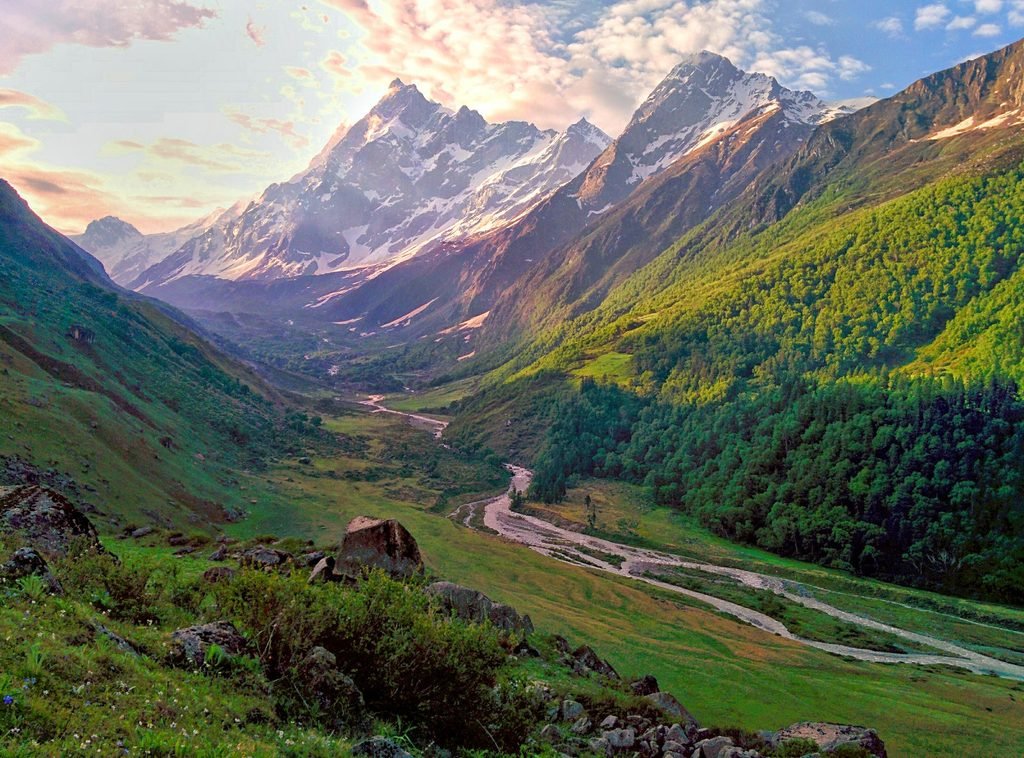
Har Ki Dun is not the kind of trek where you simply walk for a few days, reach a viewpoint, take some photos and return. The real experience starts much before the valley itself. From Sankri, the trail follows the Supin River through dense forests and traditional mountain villages, with wooden houses, old village paths, open meadows and high Himalayan peaks gradually becoming part of the journey. As you walk deeper into the valley, places like Osla and Seema give you a glimpse of how people have lived in these remote mountains for generations. Then, after the long trail through the valley, Har Ki Dun opens up into a wide alpine landscape surrounded by towering peaks. I’m writing this guide from a local travel perspective—not just to tell you the distance and itinerary, but to help you understand what the journey is actually like, when to go, what to expect on the trail, where local stays and transport fit into the trip, and the small things that are easy to miss when planning Har Ki Dun for the first time.
Where Is Har Ki Dun?
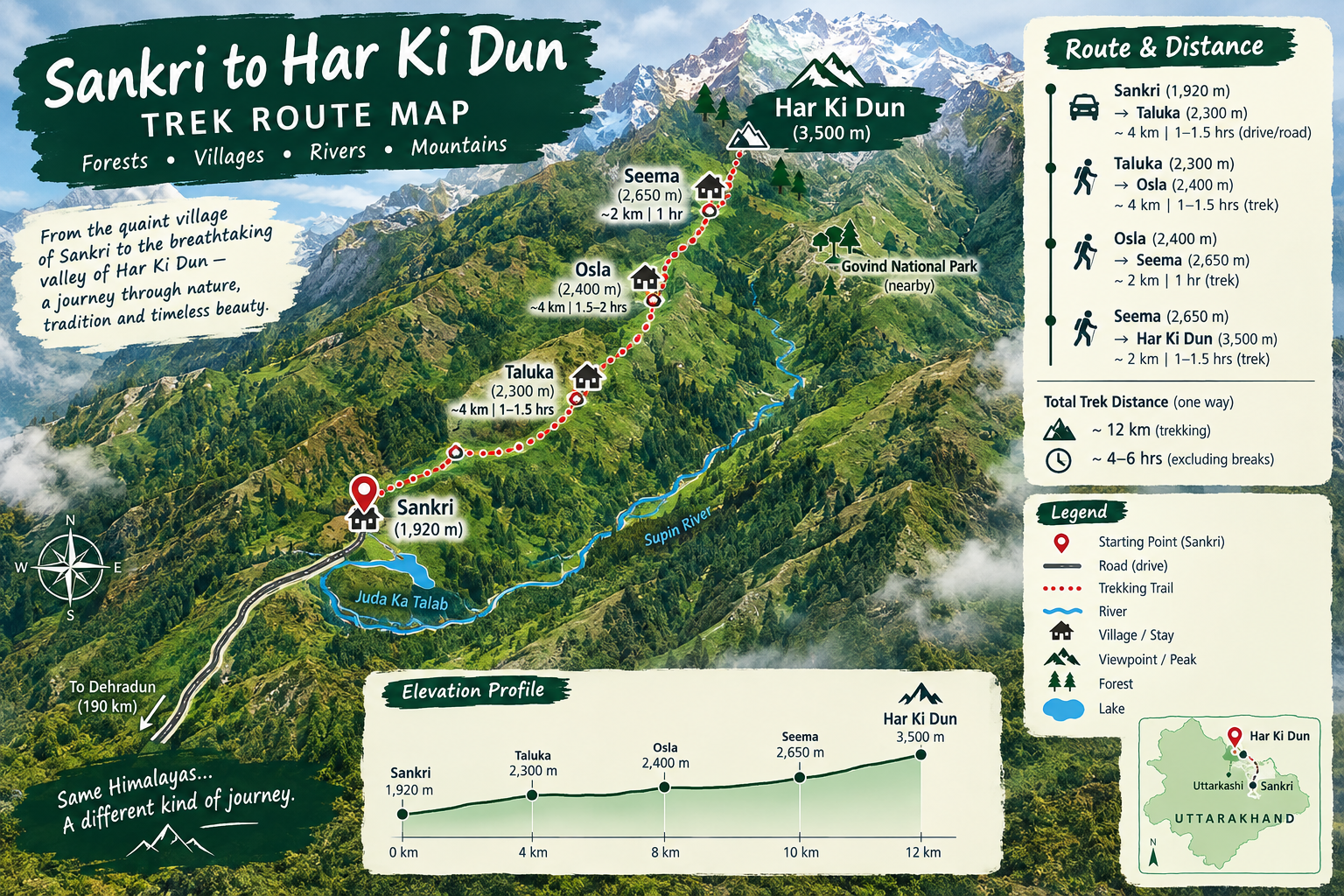
Har Ki Dun is in the Supin Valley of Uttarkashi district, Uttarakhand, inside Govind National Park. The trek starts from Sankri, a small mountain village that is also the starting point for several other treks in this area. From Sankri, you travel to Taluka, and from there the actual walking trail begins.
As you walk further from Taluka, the road is left behind and the trail takes you through forests, along the Supin River and through mountain villages like Osla and Seema. The surroundings become quieter as you go deeper into the valley, with traditional houses, green forests, open meadows and high Himalayan peaks along the way. Finally, the trail opens into the beautiful Har Ki Dun valley.
If you are planning this trek, think of Sankri as your base. This is where you arrange your stay, transport to Taluka and the other preparations needed before starting the trek. Reaching Sankri comfortably and keeping some time for the journey is a good idea, especially if this is your first visit to the region.

Har Ki Dun Trek at a Glance
Before starting the trek, it helps to have a basic idea of what the journey looks like. Har Ki Dun is a moderate Himalayan trek that takes you from Sankri into the Supin Valley, passing through forests and traditional villages before reaching the valley.
| Trek Detail | Information |
| Location | Uttarkashi, Uttarakhand |
| Starting Point | Sankri |
| Trek Route | Sankri – Taluka – Seema/Osla – Har Ki Dun |
| Altitude | Around 3,500 m |
| Difficulty | Moderate |
| Trek Duration | Around 5–7 days |
| Best Time | Spring, Summer & Autumn |
| Region | Supin Valley |
| National Park | Govind National Park |
The actual walking distance and number of days can vary depending on the itinerary, weather and the route being followed. If you are trekking for the first time, don’t focus only on the numbers—the trail has steady sections of walking, uneven paths and changing mountain weather, so being reasonably fit will make the experience much more comfortable.
Why Har Ki Dun Is Different
What I like about the Har Ki Dun trek is that the valley does not reveal itself all at once. The journey starts around Sankri and gradually takes you deeper into the mountains. You walk through forests, cross small streams, follow the Supin River and pass through villages where life still feels closely connected to the mountains. By the time you reach Osla and Seema, the surroundings are already very different from the busy places you left behind.
The villages are also an important part of the experience. You will see traditional wooden houses, small fields and the simple way of life of people living in the Supin Valley. Then, as you move further towards Har Ki Dun, the forests start opening up and the views become wider. The valley, meadows and high peaks around you are what make the final part of the trek special.
For me, Har Ki Dun is not only about reaching the destination. The villages, river, forests and changing landscape along the way are what make the whole journey worth experiencing. If you take your time instead of treating it as a race to reach the valley, you get to experience much more of what this part of Uttarkashi has to offer.
How to Reach Sankri for Har Ki Dun Trek
For the Har Ki Dun trek, Sankri is the place you need to reach first. Most travellers start their journey from Dehradun, and from there the road goes through Mussoorie, Naugaon, Purola, Mori and Netwar before reaching Sankri. The journey is roughly 190–200 km and usually takes around 8–10 hours, depending on road conditions, traffic and stops along the way.
The road journey itself is a beautiful part of the trip. After Purola and Mori, the surroundings become quieter and more mountainous, and after Netwar you are properly into the remote side of the region. Public and shared transport is available, but timings can be limited, so if you are travelling with a group or have a fixed trek schedule, arranging a private vehicle can make the journey easier.
I usually recommend reaching Sankri during daylight, especially if it is your first time coming here. Once you get beyond Mori and Netwar, services become fewer and the journey can take longer than expected if there are road delays. Staying in Sankri before starting the trek also gives you time to rest, meet your trek team, arrange the next day’s transport to Taluka and make any last-minute preparations.
If you are coming from Uttarkashi, there are also routes connecting towards the upper Tons Valley, but for most travellers coming from Dehradun or outside Uttarakhand, the Dehradun–Purola–Mori–Netwar–Sankri route is the main approach.
Sankri: The Starting Point of the Trek
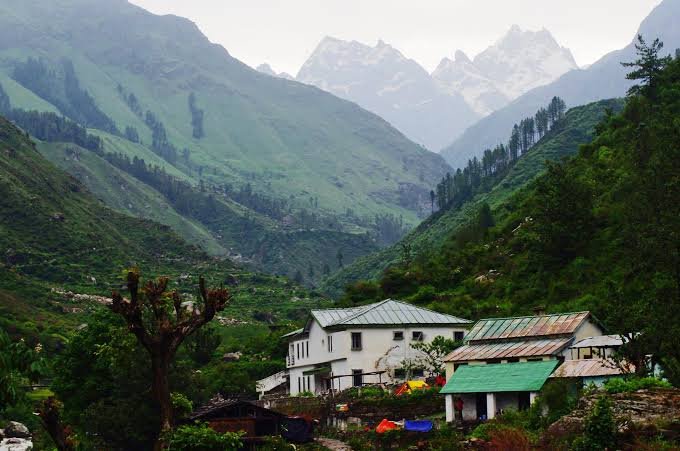
Sankri is the main base village for the Har Ki Dun trek and the last major place to complete your preparations before heading deeper into the mountains. You’ll find hotels, homestays, small shops and local eateries here, so it is a good place to rest after the journey from Dehradun and prepare for the trek.
Before leaving Sankri, make sure you have your trek arrangements, permits, transport to Taluka and essential supplies sorted. Mobile network and other facilities can become limited as you move further into the valley, so don’t wait until the trail to arrange something important. If you are travelling with Kashi of North, we can help coordinate your stay, local transport and trek arrangements from Sankri so you can start the trek without unnecessary hassle.

Har Ki Dun Trek Route: Day by Day
The Har Ki Dun trail is best experienced slowly. Every day has a different character, from the road journey to Taluka and the forest trail to the open valley around Har Ki Dun. Here is what you can expect along the route.
Day 1: Dehradun to Sankri
The journey from Dehradun to Sankri takes you through Mussoorie, Naugaon, Purola, Mori and Netwar. It is a long mountain drive, so start early and try to reach Sankri before evening. Once there, settle into your stay, have a good meal and rest for the trek ahead.
Day 2: Sankri to Taluka to Seema/Osla
From Sankri, a local vehicle takes you towards Taluka, where the walking trail begins. From here, the trail follows the Supin River through forests and small mountain settlements. The walk is a mix of gradual climbs and easier stretches, with the sound of the river often accompanying you. You eventually reach the Seema–Osla area, where trekkers usually stay overnight.
Day 3: Seema/Osla to Har Ki Dun
This is one of the most rewarding days of the trek. The trail continues deeper into the valley, with forests gradually giving way to more open landscapes. As you get closer to Har Ki Dun, the mountains become much more visible and the valley starts opening up around you. Take your time here—the views are worth stopping for.
Day 4: Explore Har Ki Dun Valley
Keep this day for exploring the valley rather than rushing back. Depending on weather and the itinerary, you can walk around the surrounding meadows and viewpoints and spend some quiet time taking in the mountains. On a clear day, the views towards the surrounding high peaks are particularly impressive.
Day 5: Har Ki Dun to Seema/Osla
After spending time in the valley, start your return towards Seema and Osla. The trail is familiar now, but the scenery looks different when you are walking back. Take the opportunity to spend some time around the village if you did not get much time on the way up.
Day 6: Seema/Osla to Taluka to Sankri
Walk back to Taluka along the Supin River. From Taluka, a local vehicle takes you back to Sankri. After several days on the trail, reaching Sankri feels like a proper return to the comforts of the road, a hot meal and a comfortable bed.
Day 7: Sankri to Dehradun
After breakfast, begin the drive back to Dehradun. Keep enough time for the journey because mountain roads can take longer than expected, especially when there are weather or road conditions to deal with.
Osla Village: A Highlight of the Har Ki Dun Trek
Osla is one of the most interesting villages you pass on the Har Ki Dun trail. Sitting high above the Supin River, the village is known for its traditional wooden houses, narrow paths and mountain setting. When you walk through Osla, you get a glimpse of everyday life in this remote part of Uttarkashi—something you don’t experience on a trek that only passes through forests and camps.
Take some time to look around rather than simply passing through. The old houses, surrounding mountains and quiet village atmosphere are worth experiencing. Local homestays also give trekkers a chance to stay closer to the village and experience the simple mountain lifestyle.
One important thing as a visitor: respect the village and its people. Ask before photographing homes or people, avoid making unnecessary noise and don’t leave waste behind. These are living villages, not just stops on a trekking route.

Seema Village & the Supin Valley
Seema is another important stop on the Har Ki Dun trail, located close to Osla on the banks of the Supin River. For many trekkers, this is where the feeling of being deep in the mountains really starts. The village is surrounded by forests, steep slopes and high mountain scenery, while the river continues alongside the trail.
Seema is also a practical overnight stop on the trek, with basic accommodation and food available for trekkers depending on the season and local arrangements. From here, the trail continues towards Har Ki Dun and gradually opens into wider landscapes.
If you have some time here, don’t rush. Sit near the river, walk around the village and enjoy the surroundings. Places like Seema are part of what makes Har Ki Dun special—the trek is not only about reaching the valley, but also about experiencing the communities and landscapes along the way.
What the Har Ki Dun Trail Is Actually Like
The Har Ki Dun trail is a moderate mountain walk, but it is not the same throughout the trek. Some sections are comfortable and gradual, while others are uneven, rocky or involve a steady climb. From Taluka onwards, you mostly walk through forests and along the Supin River, with the trail becoming more open as you get closer to Har Ki Dun.
You will cross small streams, walk over stones and roots, and deal with muddy or slippery sections when there has been rain or snow. The weather can also change quickly, so even if the morning starts clear, it is better to be prepared for cold, rain or strong winds later in the day.
You don’t need to be an experienced mountaineer for this trek, but basic fitness makes a big difference. Regular walking and some uphill practice before the trek will help you enjoy the trail instead of spending all your energy just keeping up. And as a local tip, don’t rush—keep a comfortable pace, drink water regularly and give yourself time to enjoy the valley around you.
Har Ki Dun Altitude & Difficulty
Har Ki Dun sits at around 3,500 metres (11,500 ft), so altitude is something you should take seriously even though the trek is generally considered moderate. The route gains height gradually, which gives your body some time to adjust, but the long walking days can still feel tiring.
You don’t need previous high-altitude trekking experience, but being comfortable with 5–7 hours of walking on uneven mountain trails will make the trek much easier. Start preparing a few weeks before your trip with regular walking, stairs or uphill walks. On the trail, keep your pace steady and don’t try to walk too fast just to stay ahead of the group.
If you develop symptoms such as a persistent headache, dizziness, unusual weakness or difficulty breathing, tell your guide immediately rather than trying to push through it. Mountain weather and altitude can change your plans, so it’s always better to listen to your body and follow your guide’s advice.
Best Time for Har Ki Dun Trek
Har Ki Dun changes quite a lot with the seasons, so the best time depends on what kind of experience you want. Spring and autumn are generally the most comfortable periods, while summer offers greener landscapes and winter brings snow and much colder conditions.
March to April is a good time if you want to see snow along with the first signs of spring. May and June usually bring more greenery and comfortable daytime temperatures, making it a popular period for trekking. July and August fall in the monsoon season, when rain can make the trail slippery and road conditions around Sankri can also become unpredictable.
September to November is another good period, especially for clearer mountain views and cooler trekking weather. December to February is for those looking specifically for a winter experience; snow can make the trail much more challenging, and conditions can change quickly.
If you’re visiting Har Ki Dun for the first time, I would suggest choosing your dates based not only on the weather but also on what you want to see—snow, greenery, flowers or clear mountain views.
Har Ki Dun in Different Seasons
Every season gives Har Ki Dun a different look. If you’re choosing your dates based on the experience you want, here’s what you can expect on the trail.
Spring (March–April): Snow is still present in the higher sections, while the lower trail begins turning green. This is a beautiful time for a quieter trek and changing mountain landscapes.
Summer (May–June): The valley becomes greener, the weather is generally pleasant for walking, and the villages and meadows are lively. This is one of the more comfortable periods for trekking.
Monsoon (July–August): The mountains are at their greenest, but rain can make the trail muddy and slippery. Landslides and road delays can also affect the journey to Sankri, so keep some flexibility in your plans.
Autumn (September–November): After the monsoon, the skies often become clearer and the mountain views can be excellent. The air gets cooler, especially in the higher sections.
Winter (December–February): Snow changes the entire character of the trek. The valley becomes quieter and more difficult to access, with colder temperatures and snow-covered trails. Winter trekking should be planned with proper equipment and experienced local support.
What You See on the Har Ki Dun Trek
One of the best things about Har Ki Dun is that the scenery keeps changing as you walk. You start around Sankri and gradually move through dense forests, small streams and the Supin River valley before reaching the more open landscapes around Har Ki Dun.
Along the way, you’ll pass through Osla and Seema, where traditional wooden houses and mountain farms give you a glimpse of life in the valley. Higher up, the forests begin to open and you get wider views of the surrounding mountains and meadows.
Around Har Ki Dun, the valley becomes much more open, with Swargarohini and other high Himalayan peaks forming the backdrop. Depending on the season and weather, you may also see snow-covered slopes, wildflowers, waterfalls and grazing animals around the meadows.
The scenery is best enjoyed without rushing. Stop at the viewpoints, sit beside the river when you get the chance, and let yourself take in the surroundings. On this trek, the trail itself is as much a part of the experience as reaching Har Ki Dun.
Har Ki Dun Trek Cost
The total cost of a Har Ki Dun trek depends on how you plan the trip and what is included in your package. A complete trek package may cover transport from Sankri to Taluka, accommodation, meals, guide and support staff, camping arrangements, permits and other trek-related arrangements. Your travel from Dehradun to Sankri and personal expenses are often separate, depending on the package.
If you are planning the trek independently, remember to budget for transport, stays in Sankri, food, permits, local vehicle charges, trekking equipment and any extra personal expenses. The cheaper option is not always the easiest, especially if you are visiting this region for the first time.
At Kashi of North, we can help arrange the trek along with local transport, stays and other requirements, so you know what is included before you start your journey. For the latest package price and inclusions, it is best to check the current Har Ki Dun package before booking.
Permits for Har Ki Dun
Since Har Ki Dun lies inside Govind National Park, trekkers need the required park/forest permission before entering the trekking area. Uttarakhand Tourism currently states that visitors to Govind National Park and Govind Pashu Vihar need to register online and obtain a hard copy of the permit from the designated office at Purola.
For a first-time trekker, the easiest option is to have the permit arranged as part of your trek planning. Carry your required identification documents and keep a copy of the permit with you during the trek. Rules, fees and procedures can change, so it is worth confirming the latest requirements before your departure rather than relying on old information.
If you book your Har Ki Dun trek through Kashi of North, we can help you understand the current permit requirements and include the necessary arrangements in your trek planning.
Where to Stay on the Har Ki Dun Trek
Sankri is the main place to stay before and after the trek. You’ll find a mix of small hotels, guesthouses and homestays, so it is worth booking your room in advance during the busy trekking season. Staying in a local homestay is also a good way to experience the village and have a simple, comfortable start to the trek.
Once you leave Sankri, accommodation becomes much more basic. Depending on the itinerary and current local arrangements, trekkers generally stay in homestays, guesthouses or camps around Seema and Osla, while camping is used at other sections of the route. Don’t expect hotel-style facilities on the trail—facilities are limited, and the experience is more about being close to the mountains.
If you are travelling with Kashi of North, we can help arrange Sankri accommodation and the necessary stays along the trek, based on your group size, dates and trek itinerary.
What to Pack for Har Ki Dun Trek
You don’t need to carry your entire travel bag for Har Ki Dun. Pack light, but be prepared for cold weather, rain, changing temperatures and uneven mountain trails.
Clothing: Carry 2–3 quick-dry T-shirts, warm layers, a fleece or sweater, a good insulated jacket, trekking pants, thermal innerwear for colder months, and enough socks for the trek. A waterproof jacket or poncho is useful even outside the monsoon because mountain weather can change quickly.
Footwear: A pair of comfortable, broken-in trekking shoes with good grip is one of the most important things to carry. Also pack a lightweight pair of slippers for use at your stay or camp.
For the trail: Carry a reusable water bottle, sunglasses, sunscreen, lip balm, a small headlamp, trekking poles if you use them, a small daypack and a rain cover for your backpack.
Personal essentials: Keep your basic toiletries, personal medicines, a small first-aid kit, tissues, hand sanitizer and any medication you regularly need. Carry your ID and required trek/permit documents as well.
Food & small extras: Dry fruits, energy bars, chocolate or other light snacks are useful during long walking sections. Carry some cash because facilities and digital payment options become limited once you leave Sankri.
For winter: If you’re doing Har Ki Dun during the snowy months, you’ll need substantially warmer clothing, proper gloves, a woollen cap, warm socks and suitable winter trekking equipment. The exact gear should depend on the current snow and trail conditions.
One Local Tip
Don’t overpack. You’ll be carrying your bag through forests, villages and uneven trails for several days. Take what you genuinely need, keep your backpack organised, and use a waterproof liner or dry bags to protect clothes and electronics from rain or snow.
Mobile Network, Electricity & Basic Facilities
Once you leave Sankri, don’t expect the same connectivity and facilities you have in town. Network availability becomes limited along the trail, and there can be long stretches where your phone has no signal. It is better to inform family or friends before starting the trek and not depend on your phone for communication.
Sankri has the most facilities on the route, including shops, accommodation, food and places to charge your devices. Further along, facilities are basic and depend on the village or stay where you are spending the night. Electricity can also be limited, so carry a power bank and keep your phone on battery-saving mode.
You should also carry some cash from Sankri. Small villages may not have ATMs or reliable digital payment options, and there is no reason to depend on online payments once you’re deep in the valley.
The simple rule is: finish your important shopping, charging and arrangements in Sankri. Once the trek starts, enjoy the mountains and don’t expect city-level facilities.
Local Tips Before You Start
Before leaving Sankri, take a little time to make sure everything is ready. Mountain trips don’t always go exactly according to the plan, so a bit of preparation can save you trouble later.
Keep some cash, a charged power bank, your ID and necessary documents with you. Check your shoes and rain protection before starting, and don’t leave important purchases for the trail. If you’re carrying a phone or camera, keep them protected from rain and cold.
On the trail, walk at a comfortable pace rather than trying to stay ahead of everyone. Drink water regularly, take short breaks and let your guide know if you’re feeling unwell. Weather can change quickly in the mountains, so don’t ignore your guide’s advice if the route or timings need to change.
Most importantly, respect the valley. Don’t litter, avoid loud music, don’t damage plants, and ask before photographing local people or entering private areas. Osla, Seema and the other villages are people’s homes, not just trekking stops.
And one small local rule worth remembering: leave the mountains as you found them—or better than you found them.
Is Har Ki Dun Suitable for Beginners?
Yes, Har Ki Dun can be a good choice for beginners, provided you are reasonably fit and prepared for several days of walking in the mountains. You don’t need previous high-altitude trekking experience, but the trail is not a casual walk. You will spend several hours walking each day, with uneven sections, gradual climbs and changing weather.
If this is your first trek, start preparing a few weeks beforehand with regular walking, stairs or uphill walks. Good trekking shoes and a comfortable pace will make a big difference. Don’t try to compete with other trekkers—the mountains are better enjoyed slowly.
For first-time trekkers, I strongly recommend going with a local guide or an experienced trek team. Someone familiar with the route can help with trail conditions, weather changes, village stays and decisions if plans need to change.
So, if you are reasonably active and willing to prepare, you don’t need to be an experienced trekker to enjoy Har Ki Dun. Just respect the altitude, take the trail at your own pace and listen to your guide.
Har Ki Dun Trek With a Local Guide
For a first visit to Har Ki Dun, having a local guide can make the journey much easier. The trail passes through forests, villages and changing mountain terrain, and local knowledge helps you understand the route instead of simply following a marked trail.
A local guide also knows the village stays, transport arrangements, weather changes and conditions on different sections of the trail. If the weather turns bad or the route needs to be adjusted, having someone who knows the area is especially useful.
But a guide is not only there to lead the way. They can also introduce you to the villages, explain local customs and help you experience the valley respectfully. That local connection is what can turn Har Ki Dun from just another trek into a much more meaningful mountain journey.
Plan Your Har Ki Dun Trek with Kashi of North
Planning Har Ki Dun is easier when you have someone local to help with the parts that are difficult to arrange from outside Uttarakhand. At Kashi of North, we help travellers plan their Har Ki Dun journey with local support for trek arrangements, Sankri stays, transport, permits and other travel requirements.
Whether you’re coming with friends, family or as a small group, we can help you plan the trip around your dates and requirements. Our aim is simple: take care of the practical arrangements so you can spend more time enjoying the trail, villages and mountains.
Planning your Har Ki Dun trek? Get in touch with Kashi of North and let us help you arrange the journey from Sankri to the valley and back.
Also Read……..Govind National Park Uttarkashi: Complete Travel Guide, Treks, Hotels & Permits
Har Ki Dun Trek FAQs
How difficult is the Har Ki Dun Trek?
Har Ki Dun is generally considered a moderate trek. You don’t need advanced trekking experience, but you should be comfortable walking for several hours a day on uneven mountain trails.
How many days are needed for the Har Ki Dun Trek?
A typical Har Ki Dun itinerary takes around 5–7 days, including the journey to and from Sankri. The exact duration depends on your itinerary, weather and route conditions.
What is the best time for the Har Ki Dun Trek?
Spring, summer and autumn are generally popular trekking seasons. March–April can offer snow, May–June brings greener landscapes, and September–November often offers clearer mountain views. Winter is suitable for experienced trekkers prepared for snow and colder conditions.
Where does the Har Ki Dun Trek start?
The trek generally starts from Sankri. From Sankri, trekkers travel towards Taluka, where the walking section of the route begins.
What is the altitude of Har Ki Dun?
Har Ki Dun is located at approximately 3,500 metres (11,500 ft) above sea level.
Can beginners do the Har Ki Dun Trek?
Yes. Beginners with reasonable fitness can undertake the trek, but it is important to prepare for several days of walking, changing weather and altitude.
How much does the Har Ki Dun Trek cost?
The cost depends on the season, group size and what is included in your package. Transport, accommodation, meals, permits, guides and equipment may be included or charged separately, so always check the package inclusions before booking.
Is a guide required for Har Ki Dun?
The requirements can vary depending on current forest and park regulations. For a first-time trekker, travelling with a local guide or organised trek team is strongly recommended for route knowledge, weather conditions and local arrangements.
Is Har Ki Dun open throughout the year?
Access can vary with weather, snow conditions and local forest or park regulations. Always confirm current trail and permit conditions before travelling, especially for winter and monsoon trips.
Can I book a Har Ki Dun Trek through Kashi of North?
Yes. Kashi of North can help with trek planning, local transport, Sankri accommodation, permits and other arrangements for your Har Ki Dun journey. Contact us with your travel dates and group size to plan your trek.