


Mukhba Village Travel Guide – Winter Home of Goddess Ganga, History, Best Time, Homestays & Complete Visitor Information
The Village Where the Goddess Spends Her Winter
Most travellers pass through the Harsil Valley on their way to Gangotri without realising that just a short detour off the main road sits one of the most significant — and most beautiful — villages in Uttarkashi district.
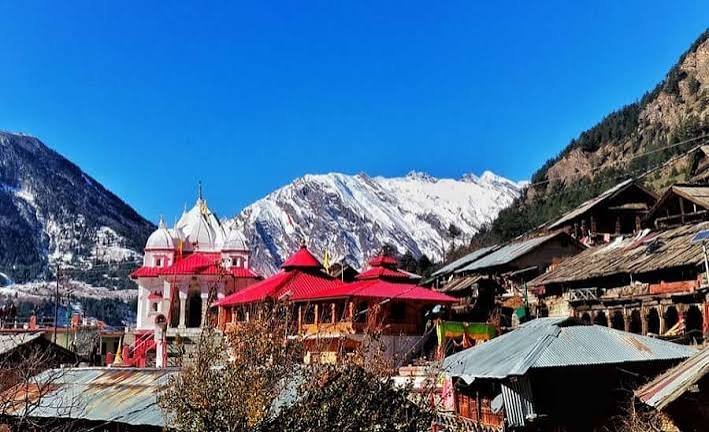
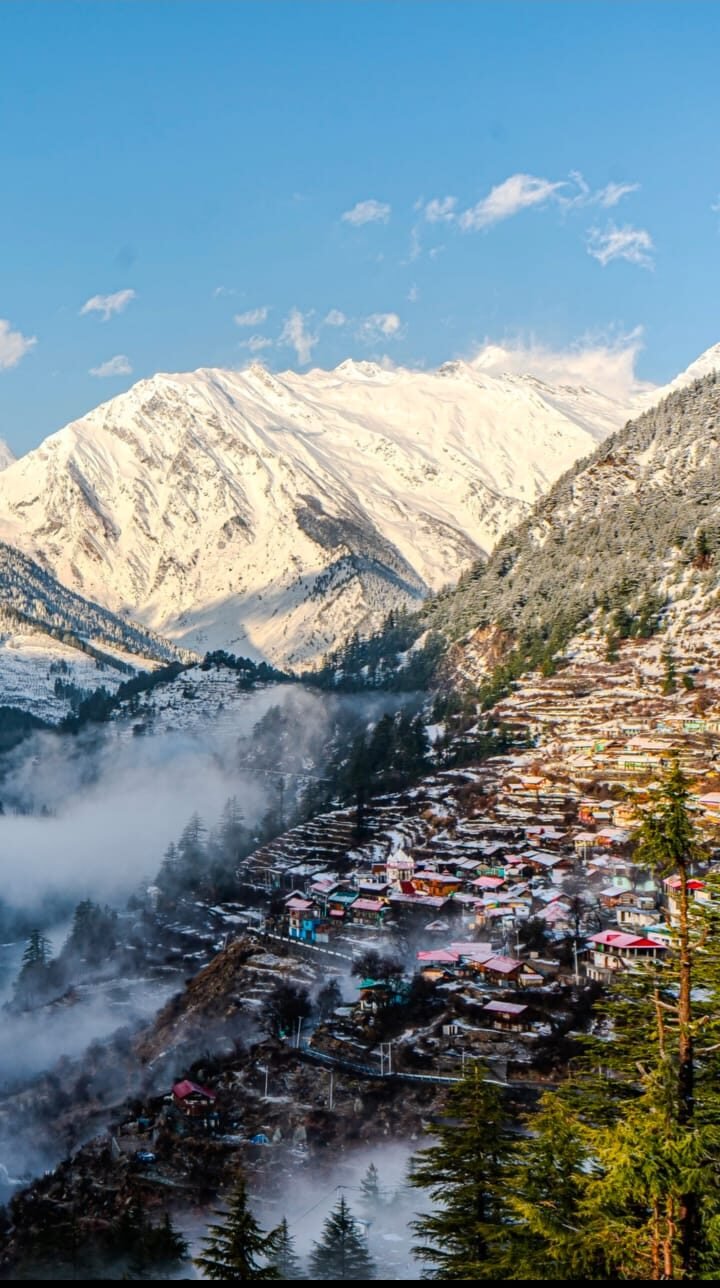
Mukhba, also known as Mukhimath, is a traditional Garhwali village perched on a ridge above the Bhagirathi River, approximately 24 kilometres from Gangotri and 8 kilometres from Harsil. From a distance it looks like any other high mountain village — a cluster of multi-storey stone and cedar homes on a terraced hillside, surrounded by apple orchards and backed by dense deodar forest. But Mukhba carries a weight that most villages of its size never acquire.
For six months every year, from Diwali through to Akshaya Tritiya, this village is the home of Goddess Ganga herself.
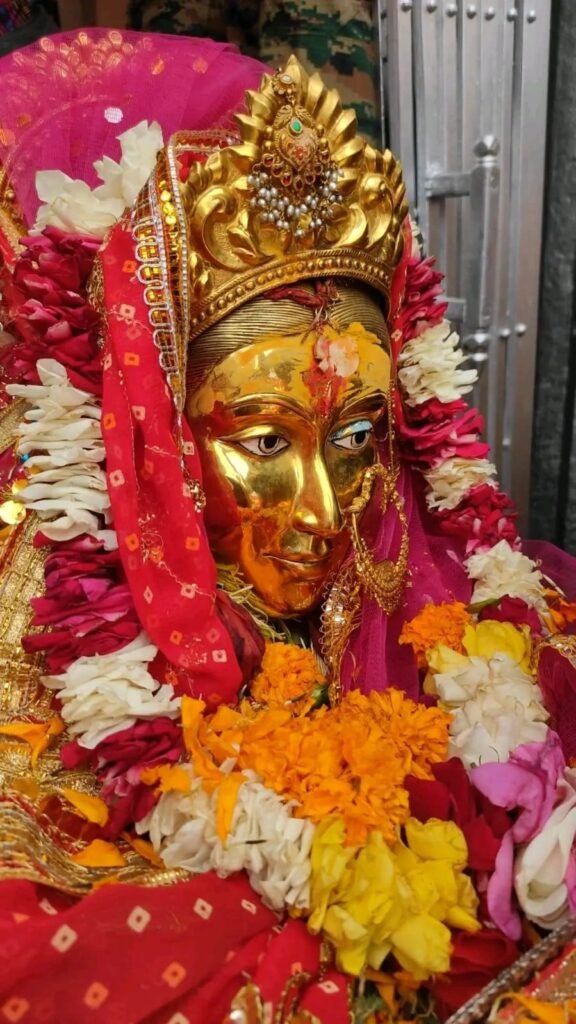
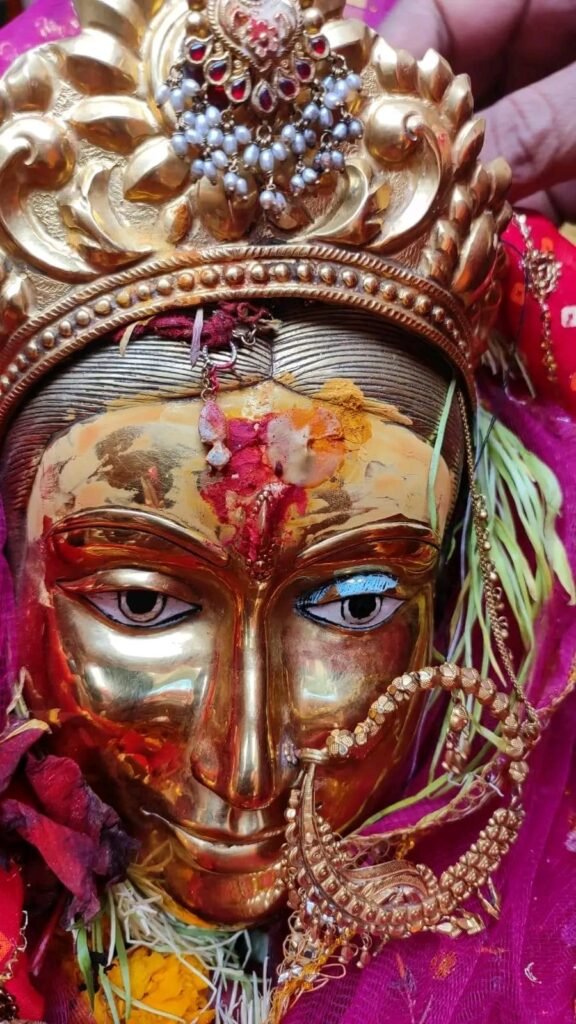
When the Gangotri Temple closes each November, the idol of Goddess Ganga does not simply lock away behind iron doors. She is carried in a ceremonial procession — on a wooden palanquin, accompanied by the Semwal priests who have served her for generations, with music and flowers and hundreds of pilgrims following on foot — down from the high temple at 3,415 metres to Mukhba village, where she is installed in the local temple and receives continuous worship through the Himalayan winter.
The Semwal family — the priestly clan of Mukhba — has maintained this ritual in an unbroken line for centuries. They are not simply temple administrators; they are the custodians of one of Hinduism’s most sacred rivers in its most intimate seasonal expression.
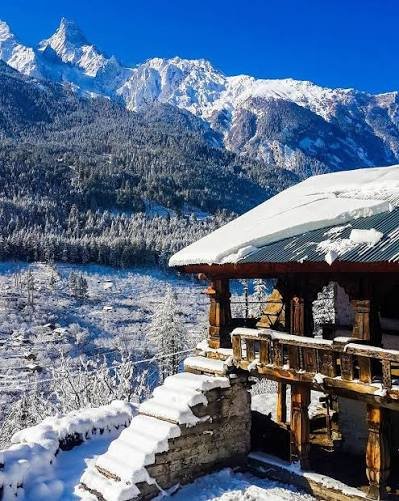
Mukhba is also, quite apart from its religious significance, a village of extraordinary architectural beauty. The traditional Garhwali homes here — built from local stone and cedar timber using a construction technique called koti banal that predates the Mughal period — represent some of the finest examples of vernacular Himalayan architecture still inhabited and intact in Uttarakhand.
Come for the goddess. Stay for the village.
Quick Information at a Glance
| Detail | Information |
|---|---|
| Place Name | Mukhba Village (also Mukhimath) |
| Location | Mukhba Village, Harsil Valley, Uttarkashi District, Uttarakhand, India |
| District | Uttarkashi |
| State | Uttarakhand |
| Elevation | Approximately 2,440 metres (8,005 feet) above sea level |
| Latitude | 31.0947° N |
| Longitude | 78.7238° E |
| Nearest Town | Uttarkashi (80 km) / Harsil (8 km) |
| Nearest River | Bhagirathi |
| Nearest Major Temple | Gangotri Temple (24 km) |
| Nearest Airport | Jolly Grant Airport, Dehradun (230 km) |
| Nearest Railway Station | Rishikesh (260 km) / Haridwar (285 km) |
| Nearest Bus Stand | Harsil (8 km) / Uttarkashi (80 km) |
| Best Time to Visit | October–November (winter deity arrival) and May (summer opening) |
| Snowfall Season | December–March |
| Average Temperature | Summer: 8°C–20°C / Winter: -8°C to 5°C |
| Entry Fee | None |
| Parking | Limited; available at village approach |
| ATM | None at Mukhba; nearest at Uttarkashi |
| Fuel Station | Harsil (limited) / Uttarkashi (80 km) |
| Medical Facilities | Basic only; hospital at Uttarkashi |
| Mobile Network | BSNL most reliable; very limited Jio/Airtel |
| Internet Availability | Extremely limited |
| Google Map Coordinates | 31.0947° N, 78.7238° E |
| Emergency Contacts | Police: 01374-222233 / SDRF: 01374-222755 / Tourist Helpline: 1364 |
About Mukhba Village — History, Origins, and Sacred Character
The Name and Its Meaning
The name Mukhba is generally understood to derive from the Sanskrit and Garhwali word for “mouth” or “face” (mukh) — a reference to the village’s position near the head of a tributary valley where it opens onto the main Bhagirathi corridor. Some local scholars suggest an alternative derivation connected to the idea of the village as the “face” of Gangotri — the place where the goddess shows herself to the world in winter.
The village is also known as Mukhimath — the math (religious establishment) at the mukh. This alternative name captures more explicitly the religious character that defines the village’s identity.
Origins and History
Mukhba’s origins as a settled community almost certainly predate recorded history in this region. The Semwal family — the village’s most prominent community and the hereditary priests of Gangotri — traces its connection to this location across many generations, with oral traditions extending the family’s presence here to a period well before any documented account of the Gangotri Temple itself.
The relationship between Mukhba and Gangotri is not incidental. The Semwal priests believe their lineage was specifically destined for service to Goddess Ganga — a divine commission rather than a historical accident. The family has maintained this service through periods of war, earthquake, flood, and political change, preserving the ritual traditions of the Gangotri shrine across centuries.
The village’s location — on a broad, south-facing terrace above the Bhagirathi, below the severe altitude of Gangotri but still well within the mountain landscape — made it an ideal choice for the winter seat. It receives more sun than the deep river gorge below, enough so that apple cultivation is viable, but sits comfortably within the spiritual geography of the upper Bhagirathi valley.
The Semwal Family — Custodians of Goddess Ganga
The Semwals of Mukhba are not simply priests — they are a community whose entire identity has been shaped by service to the Gangotri shrine. The family is believed to have been entrusted with the responsibility of Ganga’s worship by royal decree of the Tehri Garhwal state, though the tradition itself predates the formal temple built by Amar Singh Thapa in the early 18th century.
During the six-month pilgrimage season, Semwal priests divide their time between the Gangotri Temple and the village, managing the complex ritual calendar of one of India’s most visited pilgrimage sites. During the winter months, they manage the goddess’s residence in Mukhba — continuing daily worship, receiving local pilgrims, and maintaining the ancient traditions that link this small village to one of Hinduism’s most sacred rivers.
Meeting a Semwal elder in Mukhba — and if you approach with genuine respect and curiosity, this is not difficult — is one of the most rewarding conversations available to a traveller in Uttarkashi district. The depth of their knowledge about the Ganga’s sacred history, the ritual calendar, and the community’s relationship with the goddess is extraordinary.
Traditional Architecture — A Living Museum
The most immediately striking thing about Mukhba for most visitors is the architecture. The village’s older homes are built in the koti banal style — a traditional Garhwali construction technique in which horizontal bands of cedar timber alternate with stone masonry, creating walls that flex rather than crack under seismic stress.
This technique has been understood for centuries to provide earthquake resistance in a tectonically active region — though the builders understood it in terms of the wood’s strength and flexibility rather than modern engineering principles. The result is effective: villages built in koti banal style have survived multiple Himalayan earthquakes that destroyed more modern structures nearby.
The homes in Mukhba are multi-storey — typically three floors — with the ground floor used for livestock and storage, the middle floor for living spaces, and the upper floor or balcony for summer sleeping and storage of agricultural produce. The carved wooden panels on doors, windows, and balconies represent the decorative tradition of Garhwali woodcraft — intricate geometric and floral patterns carved by craftsmen whose skills are increasingly rare.
Many of these homes are 150–200 years old and remain structurally sound. In a Himalayan landscape where concrete is increasingly replacing traditional construction, Mukhba’s survival as a village of traditional architecture is significant and should be appreciated accordingly.
Did You Know? The koti banal construction technique used in Mukhba’s traditional homes was formally studied by the Wadia Institute of Himalayan Geology and has been referenced in earthquake-resistant architecture research. A 3,000-year-old tradition turns out to be excellent structural engineering.
Religious Importance — Why Mukhba Is the Winter Seat of Goddess Ganga
The Annual Migration
The most important event in Mukhba’s religious calendar — and one of the most moving ceremonies in the entire Uttarkashi district — occurs each year around Bhai Dooj / Yama Dwitiya, two days after Diwali (typically October–November).
On this day, after the final prayers at Gangotri Temple, the idol of Goddess Ganga is brought out of the sanctum, placed on a decorated wooden palanquin (palki), and carried in a formal procession from Gangotri down toward Mukhba. The procession follows the road and trail toward Harsil, with the Semwal priests walking alongside, temple musicians playing traditional instruments, and hundreds of pilgrims following on foot or accompanying by vehicle.
The journey takes several hours. The procession stops at key points along the route for prayers and offerings. When the procession finally arrives at Mukhba, the village is decorated with flowers and lights, and the idol is installed in the Mukhba temple with full ceremony.
For the next six months, Mukhba becomes Ganga’s earthly residence. Daily worship continues. Local pilgrims visit throughout the winter. The temple remains active even when snow covers the surrounding landscape.
The Akshaya Tritiya Return
The reverse journey occurs each spring on Akshaya Tritiya — one of Hinduism’s most auspicious dates, falling in April or May based on the lunar calendar. The goddess is carried back to Gangotri in an equally ceremonious procession, signalling the opening of the Gangotri Temple for the season.
This is the moment when the pilgrimage season begins. Pilgrims who have been waiting at the lower elevations begin ascending toward Gangotri. The road fills with traffic. The valley’s economy switches on. And the Semwals of Mukhba resume their summer duties at the Gangotri shrine.
Winter Pilgrimage to Mukhba
While most pilgrims visit Gangotri during the summer season, a quieter and equally meaningful pilgrimage is possible in winter — to Mukhba, where the goddess resides in her more intimate, accessible form.
Winter visitors to Mukhba have a different experience of Ganga than summer visitors to Gangotri. The crowds are absent. The setting is a living village rather than a pilgrim town. The priests who perform the worship are the same families who have done so for centuries, and in winter, without the pressure of tens of thousands of pilgrims, they have time for conversation.
For pilgrims who find Gangotri’s summer crowds overwhelming but want a genuine encounter with the goddess and the tradition she embodies, a winter visit to Mukhba is a profoundly alternative approach.
Local Insight: The daily aarti at Mukhba’s temple during winter months is attended primarily by village residents and the occasional pilgrim who knows about it. If you are in the Harsil Valley during winter (and conditions permit), attending the evening aarti at Mukhba in January or February is one of Uttarkashi district’s least-known and most extraordinary experiences.
The Semwal Priests and the Ritual Calendar
The priestly duties at Mukhba are organised around a year-round ritual calendar that integrates the mountain seasons, the Hindu lunar calendar, and the specific traditions of the Ganga’s worship. Major dates include:
- Akshaya Tritiya (April–May): Opening ceremony; deity returns to Gangotri
- Ganga Dussehra (May–June): Major festival at Gangotri; special worship at Mukhba in the days before
- Bhai Dooj (October–November): Closing ceremony; deity returns to Mukhba
- Makar Sankranti (January): Winter festival; special worship at Mukhba temple
- Various lunar festivals: Performed continuously throughout the year
Village Architecture and Culture
Koti Banal — The Earthquake-Resistant Heritage
Already described in the history section, the koti banal style deserves further appreciation as a cultural artefact. The technique requires specific timber — cedar (deodar) is preferred for its resin content and insect resistance — and skilled craftsmen who understand both the structural and decorative dimensions of the work.
As these craftsmen become rarer, the ability to repair and replicate traditional buildings is diminishing. Some homes in Mukhba have incorporated concrete elements in recent renovations — a practical necessity but an aesthetic and structural loss. The homes that remain entirely in traditional construction are architectural treasures.
Garhwali Village Life
Mukhba’s daily life revolves around agriculture, animal husbandry, and — for the Semwal families — temple service. The growing season centres on apple cultivation (August–October harvest), potato and bean cultivation, and the traditional crop of mandua (finger millet) and jhangora (barnyard millet) that forms the basis of the Garhwali diet.
Livestock — primarily cattle, goats, and sheep — graze on the upper slopes during summer and are brought down to lower enclosures in winter. The rhythm of the agricultural year gives the village a seasonal character that visitors from cities rarely encounter.
The women of Mukhba are central to both the agricultural and cultural life of the community. Traditional Garhwali dress — the ghaghra (long skirt), necklaces of local silver and beads, and the distinctive pichoda (head covering) — is still worn by older women, particularly for religious ceremonies.
Local Festivals
Beyond the Gangotri temple calendar, Mukhba celebrates:
Best Time to Visit Mukhba Village
Spring (April–May): The Opening Season
The return of Goddess Ganga from Mukhba to Gangotri on Akshaya Tritiya is one of the most significant religious events in the district. If your visit can coincide with this ceremony, you will witness something that most travellers never see. Rhododendrons are in flower, apple trees are in blossom, and the village is preparing for the season ahead.
Best for: Witnessing the Akshaya Tritiya procession; photography of apple blossoms; seeing the village at its most ceremonially alive.
Summer (May–June): Peak Season
The Gangotri pilgrimage is in full swing. Mukhba is a natural stop for pilgrims visiting the Harsil Valley, and the village accommodates visitors with warm hospitality. The weather is pleasant (12°C–20°C during the day), the landscape is lush, and the Bhagirathi is running with snowmelt.
Best for: First-time visitors, families, combining with Gangotri temple visit.
Monsoon (July–August): Lush but Uncertain
Rainfall is significant and the road from Uttarkashi can be affected by landslides. The landscape is intensely green. Apple trees are heavy with developing fruit. Very few tourists. If you can handle uncertainty about road access and don’t mind rain, this is Mukhba at its quietest and most authentically agricultural.
Best for: Photographers seeking dramatic green landscapes; those who want the village to themselves.
Autumn (September–October): Apple Harvest and Closing Ceremony
September brings post-monsoon clarity and the beginning of apple harvest. October brings the closing ceremony — the return of Goddess Ganga from Gangotri to Mukhba. The Bhai Dooj procession is Mukhba’s single most important event and the finest reason to time a visit around it.
Best for: Witnessing the Bhai Dooj procession; apple harvest; peak photography season; the village in its most ceremonially significant period.
Winter (November–March): The Goddess Resides
With the deity installed in Mukhba and the main pilgrim season ended, the village settles into winter. Snow arrives progressively from December onward. The village has a quiet, inward quality that is deeply different from the summer bustle. Daily aarti continues. The Semwal priests are present. A small number of pilgrims visit specifically to receive winter darshan.
Best for: Pilgrims seeking intimate darshan; those who want to experience the village in snow; photographers with cold-weather equipment.
Monthly Weather Breakdown
| Month | Day Temp | Night Temp | Conditions | Crowd Level |
|---|---|---|---|---|
| January | 0°C–8°C | -8°C to -3°C | Snow, cold | Very Low |
| February | 2°C–10°C | -6°C to -1°C | Snow retreating | Very Low |
| March | 5°C–14°C | -2°C to 4°C | Warming, some snow | Low |
| April | 8°C–17°C | 2°C–8°C | Clear, blossoms | Low |
| May | 12°C–20°C | 6°C–12°C | Excellent, lush | Medium |
| June | 13°C–20°C | 8°C–14°C | Warm, some cloud | Medium |
| July | 12°C–18°C | 9°C–13°C | Monsoon, green | Low |
| August | 12°C–18°C | 9°C–13°C | Monsoon, apples | Low |
| September | 8°C–18°C | 4°C–10°C | Clear, harvest | Low–Medium |
| October | 3°C–14°C | 0°C–5°C | Clear, ceremony | Medium |
| November | -2°C to 10°C | -5°C to 1°C | Cold, closing | Low |
| December | -5°C to 5°C | -10°C to -3°C | Snow, winter | Very Low |
How to Reach Mukhba Village
Mukhba is reached via a side road branching off the main Uttarkashi–Gangotri highway near Harsil. The turnoff is approximately 8 km before Gangotri from the Harsil direction.
Distance Reference Points
| Origin | Distance | Approx. Drive Time |
|---|---|---|
| Delhi | 498 km | 13–15 hours |
| Dehradun | 238 km | 8–9 hours |
| Haridwar | 280 km | 9–10 hours |
| Rishikesh | 265 km | 8–9 hours |
| Uttarkashi | 80 km | 3 hours |
| Harsil | 8 km | 20–25 minutes |
| Gangotri | 24 km | 45–60 minutes |
| Dharali | 14 km | 30–40 minutes |
By Road
The most practical approach is via Uttarkashi → Bhatwari → Harsil → Mukhba turnoff. The turnoff from the main Gangotri highway to Mukhba is a narrower road that climbs to the village on the ridge above the river. The road is driveable by SUV and most compact cars; a high-clearance vehicle is recommended after rain.
Road Conditions: The Mukhba access road is narrow and unpaved in sections. During monsoon it can be muddy. After heavy rain, check locally before proceeding.
Parking: Limited parking at the village entrance. During the Bhai Dooj procession arrival, expect significant crowds and plan accordingly.
By Shared Jeep
Shared jeeps from Uttarkashi run to Harsil and Gangotri. From Harsil, local vehicles or auto-rickshaws can reach Mukhba. Alternatively, the 8 km from Harsil can be walked (approximately 2–3 hours on a reasonable road) by fit walkers.
By Foot from Harsil
A walk from Harsil to Mukhba through the forest is one of the valley’s finest hikes — approximately 5–7 km on trail depending on the route taken, with excellent views of the Bhagirathi valley and surrounding peaks. Ask at your Harsil guesthouse for the current best trail option.
Things To Do in Mukhba Village
Visit the Mukhba Temple (Winter Seat of Goddess Ganga)
The primary reason for pilgrims to visit — and a genuinely moving experience for any thoughtful visitor, regardless of faith. The temple where the idol of Goddess Ganga resides from Bhai Dooj to Akshaya Tritiya is the village’s most important structure. Daily aarti is performed here year-round. Attend the morning or evening aarti if your timing allows.
What to know: Dress modestly, remove footwear, follow the priests’ guidance. Photography in the inner sanctum requires explicit permission.
Walk the Traditional Streets
An unhurried walk through Mukhba’s lanes — between the traditional stone and timber homes, past carved doorways and flower-filled windows, with the smell of woodsmoke and the sound of cowbells — is one of the best hours you can spend in Uttarkashi district. The village is small enough to explore thoroughly on foot in two to three hours.
Look for the decorative carved panels on the older homes — geometric patterns, floral motifs, and occasional figurative carvings that represent the tradition of Garhwali woodcraft. No two panels are identical.
Photography
Covered in the Photography Guide section. The short summary: Mukhba is extraordinary for architectural, cultural, and landscape photography, and October is the finest month of the year.
Meet the Semwal Priests
If your primary interest is the religious tradition, arrange through your homestay or guesthouse to be introduced to a Semwal family member who is willing to speak with visitors. The conversation that results — about the goddess, the tradition, the family’s history, and the meaning of the winter ritual — will be among the most memorable of your travels.
Approach this with genuine respect and curiosity, not as a tourist seeking photo opportunities. The Semwals have maintained this tradition across centuries; they deserve the engagement that centuries of commitment earns.
Walk the Apple Orchards
In August–October, Mukhba’s terraced apple orchards are heavy with fruit. The local apple varieties include heritage types specific to the high Bhagirathi valley. Walking through the orchards with permission from the orchard owners — most of whom are happy to welcome respectful visitors — is a sensory experience of considerable pleasure.
Bird Watching
The forest and orchard edge around Mukhba supports a rich avifauna including Himalayan monal, various babblers and laughing thrushes, red-billed chough (which seems to prefer the company of traditional stone buildings), and migratory species passing through the Bhagirathi corridor in spring and autumn.
River Views
A short walk downhill from the village toward the Bhagirathi provides views of the river corridor that are among the finest in the Harsil Valley — from above, the river’s course through the valley is visible for several kilometres in both directions, with the mountain walls framing it on both sides.
Sunrise Photography
From the upper section of the village, east-facing viewpoints catch the first light on the Gangotri-group peaks. An early morning walk to these spots (identifiable from the village centre by looking east along the ridge) gives views that rival anything available from the main Gangotri road.
Top Attractions Nearby
Gangotri Temple (24 km | 45–60 minutes)
The third Char Dham and the summer home of the goddess who winters at Mukhba. The relationship between these two places is direct and sacred — Mukhba is meaningless without Gangotri, and Gangotri in winter is incomplete without the knowledge that the goddess has come home to Mukhba. Our complete Gangotri Travel Guide covers everything for pilgrims and tourists.
Best Time: May–June and September–October | Ideal Duration: Full day
Harsil (8 km | 20–25 minutes)
The Bhagirathi valley’s finest landscape destination — apple orchards, wide river views, deodar forests, and extraordinary mountain scenery. Harsil makes the most practical accommodation base for a Mukhba visit. Our Harsil Travel Guide is comprehensive.
Best Time: September–October and May–June | Ideal Duration: 2–3 days
Dharali (14 km | 30–40 minutes)
A sunny, south-facing village between Mukhba and the lower valley, known for apple orchards and an increasingly popular base for those wanting a quieter alternative to Harsil. Our Dharali guide covers the options.
Best Time: April–October | Ideal Duration: Half day to full day
Bagori Village (16 km | 35–45 minutes)
A traditional Garhwali farming village further down the valley, with some of the finest cultivated rajma (kidney bean) fields in the district. Worth a brief stop between Mukhba and Uttarkashi.
Best Time: July–September (bean growing season) | Ideal Duration: Half day
Lama Top Viewpoint (12 km from Mukhba, including trek)
A ridge viewpoint above Harsil accessible by a 3–4 hour return trek, offering panoramic views of the entire Bhagirathi valley including Mukhba, Harsil, Dharali, and the peaks beyond. The best single landscape vantage point accessible on foot in this part of the valley.
Best Time: September–October | Ideal Duration: Half day
Gangnani Hot Springs (28 km | 50–60 minutes)
Natural thermal springs on the main Gangotri highway, popular as a bathing stop for pilgrims. The sulphur-rich water is warm and the setting — a small gorge beside the Bhagirathi — is atmospheric. Our Gangnani guide has details.
Best Time: Any season the road is open | Ideal Duration: 2–3 hours
Gaumukh Trek (via Gangotri, 24 km then 19 km trek)
The glacier source of the Bhagirathi, 19 km on foot from Gangotri. The most significant trek accessible from the Harsil–Mukhba area. Our detailed Gaumukh Trek guide is essential preparation.
Best Time: May–June and September–October | Ideal Duration: 2–3 days from Harsil base
Dayara Bugyal (approximately 115 km from Mukhba)
Uttarakhand’s finest accessible alpine meadow, reachable from Barkot/Uttarkashi. Our Dayara Bugyal guide covers all seasons and approaches.
Best Time: April–June (wildflowers) and December–February (snow) | Ideal Duration: 1–2 days
Uttarkashi (80 km | 3 hours)
The district capital and practical hub for all services — ATMs, hospital, petrol, Vishwanath Temple, Nehru Institute of Mountaineering. Our Uttarkashi guide is the essential starting point for district-wide exploration.
Hidden Gems of Mukhba
The Old Wooden Shrine (Upper Village)
In the upper section of the village, an older wooden shrine structure predates the main temple building. This is a quieter, less visited space with fine carved woodwork that represents the earlier tradition of Garhwali temple construction before stone became the primary material.
Forest Trail to the Upper Ridge
A trail from the village’s north side climbs through old-growth deodar forest to a ridge above Mukhba at approximately 3,000 metres. The forest is magnificent — enormous trees with deeply furrowed bark, a forest floor of ferns and wildflowers, and the sound of the valley fading as the forest deepens. Approximately 2 hours return.
Traditional Homes Open to Visitors
Several families in Mukhba will welcome respectful visitors into their homes — particularly during festival periods. A Semwal household in November, when the deity has just arrived and the family is in the midst of the installation rituals, is an experience of living religious tradition at its most intimate.
Ask through your homestay host or a village elder. Do not show up unannounced and expect entry; let the introduction be made through local intermediaries.
The View from the Southern Terrace
At the village’s southern edge, a flat terrace of agricultural land provides unobstructed views down the Bhagirathi valley — Dharali visible in the middle distance, the valley widening toward the plains, and on clear days, the hills of lower Garhwal in the far distance. This viewpoint is not marked on any map; walk south from the main temple toward the lower orchard terrace.
Pre-Dawn Light on the Gangotri Peaks
From Mukhba’s east-facing walls and upper terraces, the first light of dawn touches the Gangotri-group peaks before it reaches the valley floor. This alpenglow — soft pink on grey-white granite — lasts only 10–15 minutes and is extraordinarily beautiful. Set an alarm.
Accommodation Guide
Accommodation in Mukhba itself is extremely limited — the village is small and tourism infrastructure is minimal by design. Most visitors use Harsil (8 km) as their base and day-trip to Mukhba.
Homestays in Mukhba
A small number of village families offer homestay accommodation, typically arranged informally. These are simple — a clean room, a shared bathroom, and home-cooked Garhwali meals — but the experience of sleeping in a traditional koti banal home in a village where the goddess resides is unlike anything a hotel can replicate.
- Price: ₹500–₹1,200 per night (including one or two meals)
- Booking: Through local contacts, word of mouth, or by asking at the temple on arrival
Booking Tips
- For the Bhai Dooj period (October–November), book accommodation at Harsil at least 2–3 weeks in advance — this is the peak local event and capacity is limited.
- Mukhba homestays are best arranged on arrival or through local contacts; advance booking by phone is possible if you can reach the village directly.
- For the Akshaya Tritiya opening ceremony, similar advance planning applies.
- See our Uttarkashi Hotels guide for the widest range of options in the district.
Food Guide
Food at Mukhba is home cooking — the hospitality of a Garhwali family rather than the output of a restaurant kitchen. This is its greatest strength.
Traditional Garhwali Cuisine
- Aloo ke Gutke: Dry-fried potatoes with jakhiya seeds and local spices. The signature dish of the Garhwal hills — simple, intensely flavoured, and universally available.
- Mandua ki Roti: Finger millet flatbread — dense and earthy, with a complex flavour that grows on you quickly. The traditional staple of the high Bhagirathi valley.
- Kafuli: A thick green curry from locally grown spinach or methi (fenugreek), cooked with garlic and jakhiya. One of Garhwal’s finest dishes; hard to find in restaurants but common in Garhwali homes.
- Jhangora ki Kheer: Barnyard millet pudding with milk and local honey. A dessert of considerable subtlety and regional distinction.
- Rajma: The local red kidney bean, smaller and more flavourful than commercial varieties, cooked as a thick, spiced stew. This rajma is one of the finest reasons to eat in a Garhwali home rather than a restaurant.
- Fresh Apples (August–October): The heritage apple varieties of this valley — including the Maharaji type — are available at extraordinary freshness directly from orchard-owning families.
- Local Honey: Forest honey collected in the surrounding hills, with a floral complexity specific to alpine wildflowers.
Tea Stalls
The village has one or two simple chai stalls that serve as social gathering points. The chai is good — strong, sweet, milky, and cardamom-scented. Budget ₹10–₹20 per glass and plan to sit for longer than you intended
Shopping Guide
Mukhba’s shopping is the shopping of a village, not a tourist market — which makes it genuinely worthwhile.
Fresh Apples: In season (August–October), the local heritage apple varieties are available from orchard owners at prices that will surprise anyone accustomed to city markets. Buy directly from farmers.
Local Rajma: The valley’s kidney beans are a distinct variety worth purchasing. A kilogram or two makes an excellent and meaningful gift.
Mountain Honey: Produced by local beekeepers from alpine wildflowers. Ask at the temple or your homestay for a source.
Woollen Items: Hand-knitted socks, caps, and scarves are sometimes available from village women. Functional, well-made, and inexpensive.
Avoid: There are no souvenir shops in Mukhba. If someone offers you mass-produced trinkets, they have come from outside the village. The genuine products here are the agricultural ones.
Photography Guide
Mukhba is a photographer’s village — traditional architecture, living religious culture, agricultural landscapes, and Himalayan mountain backdrops combine in a way that is increasingly rare in accessible Uttarakhand.
Best Sunrise Locations
- Upper village terrace (east-facing): The first light on the Gangotri peaks is visible from here before it reaches anywhere below. Best in October and November.
- Southern orchard terrace: Looking down the valley, the morning light warms from north to south; the valley below takes colour about 30 minutes after the peaks.
Best Sunset Views
- Western edge of village: Looking across the valley toward the forest ridges, sunset light on the cedar canopy is extraordinary in October.
- The ridge road approaching Mukhba: Looking back toward the village from 500 metres down the approach road gives a classic view of the village on its terrace with the mountain walls behind.
Temple Photography
The Mukhba temple exterior — including the carved wooden elements and the courtyard — is generally open for photography. The inner sanctum requires explicit permission from the attending priest. During religious ceremonies (particularly the arrival procession and daily aartis), ask before raising your camera. Most priests are accommodating of respectful photographers, particularly during non-ceremony periods.
Village and Cultural Photography
The carved doorways, traditional balconies, and agricultural scenes of Mukhba are exceptional photographic subjects. Always ask permission before photographing individuals, particularly women and elderly residents. A genuine smile and a namaskar go further than any camera.
Best Seasons
- October: The undisputed best month — harvest in the orchards, the Bhai Dooj procession (if timed correctly), golden autumn light, and maximum mountain clarity.
- April–May: Rhododendrons and apple blossoms; the Akshaya Tritiya procession.
- January–February: Snow-covered village with mountain backdrop for those who can access it.
Drone Regulations
As with the wider Harsil area, proximity to military zones makes drone flying subject to strict regulations. Do not fly a drone here without explicit authorisation. Penalties are significant.
Suggested Itineraries
Half-Day Visit (From Harsil Base)
- 9:00 AM: Drive from Harsil to Mukhba (20–25 minutes)
- 9:30 AM: Village walk — traditional streets and homes
- 10:30 AM: Temple visit and morning puja
- 11:30 AM: Walk to southern terrace for valley views
- 12:30 PM: Chai at village stall
- 1:00 PM: Return to Harsil
Full Day Trip
- 7:30 AM: Drive from Harsil; arrive at Mukhba by 8:00 AM for sunrise light
- 8:00 AM–9:00 AM: Upper village sunrise photography
- 9:00 AM: Morning aarti at temple
- 10:00 AM: Village walk with guide or informal exploration
- 12:00 PM: Lunch at homestay or chai stall
- 1:00 PM: Forest trail walk (2 hours return)
- 3:00 PM: Apple orchard visit (in season)
- 5:00 PM: Sunset views from western village edge
- 6:00 PM: Evening aarti at temple
- 7:00 PM: Return to Harsil
Two-Day Village Experience
Day 1:
- Morning: Arrive Mukhba; check into homestay; morning temple visit
- Afternoon: Village walk; meet Semwal family member; orchard visit
- Evening: Evening aarti; dinner at homestay; stargazing
Day 2:
- Pre-dawn: Sunrise photography from upper terrace
- Morning: Forest trail to upper ridge (2 hours)
- Afternoon: Valley views from southern terrace; photography
- Evening: Final temple visit; depart to Harsil or Gangotri
Pilgrimage Tour (Around Bhai Dooj or Akshaya Tritiya)
The finest way to experience Mukhba religiously is to time your visit around one of the two major processions.
For Bhai Dooj (October–November):
- Arrive at Gangotri the day before closing; attend final darshan
- Follow or precede the procession from Gangotri to Mukhba
- Attend the installation ceremony at Mukhba temple
- Overnight at Harsil; morning temple visit next day
For Akshaya Tritiya (April–May):
- Arrive at Mukhba the day before the opening
- Attend the final winter puja at Mukhba temple
- Follow the procession from Mukhba to Gangotri
- Attend the opening ceremony at Gangotri Temple
Photography Tour (3 Days)
Day 1: Arrive Harsil; afternoon and sunset photography Day 2: Pre-dawn drive to Mukhba; full day in village; evening aarti photography Day 3: Morning ridge walk above Mukhba for panoramic shots; afternoon Gangotri day trip for temple and river photography
Travel Budget
Budget Traveller
| Item | Estimated Cost (INR) |
|---|---|
| Transport (shared jeep Rishikesh–Harsil return) | ₹700–₹1,000 |
| Homestay in Mukhba (1 night, including meals) | ₹600–₹1,200 |
| Food (additional meals and chai, 2 days) | ₹300–₹600 |
| Temple donations | ₹100–₹200 |
| Total (1–2 days) | ~₹1,700–₹3,000 |
Mid-Range Traveller
| Item | Estimated Cost (INR) |
|---|---|
| Private taxi (Dehradun–Harsil return) | ₹9,000–₹13,000 |
| Guesthouse in Harsil (2 nights) | ₹3,000–₹5,000 |
| Mukhba homestay (1 night) | ₹800–₹1,500 |
| Food (all meals) | ₹1,200–₹2,000 |
| Guide for village and temple | ₹800–₹1,200 |
| Total (3 days) | ~₹15,000–₹24,000 |
Luxury / Comfort Traveller
| Item | Estimated Cost (INR) |
|---|---|
| Private Innova from Delhi (return) | ₹20,000–₹28,000 |
| Best Harsil accommodation (2 nights) | ₹8,000–₹15,000 |
| Private cultural guide | ₹3,000–₹5,000/day |
| Special arranged temple access and ceremony | Variable |
| Total (3 days) | ~₹35,000–₹55,000 |
Responsible Tourism
Respect Religious Customs
Mukhba is primarily a religious community, not a tourist destination. The temple is a functioning place of worship, not a heritage site. Approach every aspect of your visit with the awareness that you are a guest in someone’s sacred space.
- Dress conservatively throughout the village, not just in the temple
- Remove footwear when entering the temple compound
- Do not carry leather items into the temple
- Keep voices low during prayers and ceremonies
- Ask before photographing rituals
Respect the Architecture
The traditional homes of Mukhba are irreplaceable cultural heritage. Do not touch or lean on carved wooden panels. Do not enter private homes without invitation. If you are invited in, treat the space with the care you would give your own grandparents’ home.
Support Homestays Over Hotels
Staying in a Mukhba or Harsil homestay rather than a corporate hotel keeps economic benefit within the community. The difference in experience is also significant — a homestay in Mukhba gives you access to local knowledge, home cooking, and human connection that no hotel provides.
No Plastic
The village and surrounding area are within the Gangotri pilgrimage corridor’s plastic-free zone. Carry a reusable bottle and cloth bags. Do not leave packaging in the village or on forest trails.
Dress Modestly
For the entire duration of your visit in Mukhba — not just at the temple — dressed modestly shows respect for a conservative community whose religious sensibility permeates daily life here. Full-length clothing and covered shoulders are appropriate
Travel Tips
Packing List for Mukhba
- Warm layers (even in summer; altitude and evenings are cold)
- Down jacket (October–April essential)
- Modest, full-length clothing suitable for village and temple
- Comfortable walking shoes with grip for village paths
- Reusable water bottle
- Cloth bags (no plastic)
- Cash (no ATM in Mukhba or Harsil; withdraw at Uttarkashi)
- Camera and spare batteries (cold drains them)
- Sunscreen SPF 50+
- Basic first aid kit
- Offline maps downloaded
Cash
There are no ATMs in Mukhba or Harsil. The nearest is in Uttarkashi, 80 km away. Carry sufficient cash for your entire stay plus an emergency reserve. Small denominations are useful for chai stalls and small purchases.
Mobile Network
BSNL is most reliable but still intermittent. Jio and Airtel have very limited coverage. Do not plan on reliable mobile communication in the village.
For Senior Citizens
The village terrain involves some uphill walking but most of the key areas — temple, village centre, southern terrace viewpoint — are accessible without strenuous effort. The drive from Uttarkashi to Mukhba (3 hours) is long and on mountain roads; break it with an overnight stop at Uttarkashi. A medical check-up before travel is advisable for those with cardiac or respiratory conditions.
For Families with Children
Mukhba is an excellent family destination for children old enough to appreciate the cultural context (roughly 8 and above). The apple orchards, traditional homes, and village animals provide natural engagement. Keep children close in the temple and on forest trails.
For Women Travelling Solo
Mukhba is a conservative community but not unwelcoming to women travellers who dress and behave appropriately. Staying in a homestay (rather than arriving and departing as a day-tripper) gives you the protective social context of being someone’s guest. The village’s Semwal women are often the most knowledgeable local sources of information about the temple traditions.
For Foreign Tourists
No permit is required. Carry your passport. The Mukhba temple and village are open to visitors of all backgrounds who approach with genuine respect. The Semwal priests have received visitors from many countries and are genuinely interested in explaining the tradition to people who want to understand it.
Interesting Facts About Mukhba Village
- Mukhba is the only village in Uttarakhand — possibly in all of India — that serves as the official winter residence of a Char Dham deity.
- The Semwal family’s priestly lineage at Mukhba is documented across at least 12 generations, and oral traditions extend the lineage considerably further.
- The koti banal construction technique used in Mukhba’s traditional homes has been studied by earthquake engineers as a model of indigenous seismic-resistant architecture.
- The heritage apple varieties grown in Mukhba include types that are not commercially available anywhere outside this valley.
- The Bhai Dooj procession from Gangotri to Mukhba is one of the longest ceremonial processions in Uttarkashi district — approximately 24 km — performed on foot by the priests and accompanying pilgrims.
- The village receives significantly more sunshine hours than the river gorge below, due to its position on a south-facing terrace — a factor that makes apple cultivation viable at this altitude.
- Mukhba’s traditional homes are among the most intact examples of koti banal architecture in Uttarakhand; many comparable villages have replaced traditional buildings with concrete construction.
- The winter aarti at Mukhba’s temple is attended almost entirely by village residents — probably making it the most authentically local religious ceremony accessible to visitors anywhere in the Char Dham region.
- The forest above Mukhba contains deodar trees estimated to be 200–300 years old, predating Frederick Wilson’s logging operations in the nearby Harsil Valley.
- Mukhba is referenced in Sanskrit texts as Mukhimath — one of the oldest documentary references to any specific locality in the upper Bhagirathi valley.
- The village’s altitude of approximately 2,440 metres makes its apple harvest season slightly later than Harsil’s (which is at 2,620 m but in a cooler, shadowed location) — a result of Mukhba’s superior sun exposure.
- The red-billed chough — a crow-family bird with striking red beak and legs — is commonly seen around Mukhba’s stone buildings. The species seems to particularly favour traditional stone architecture for nesting.
- Mukhba was relatively unknown to outside travellers until the early 2010s; the growth in visitors since then has been primarily driven by word of mouth among pilgrims who discovered the Bhai Dooj procession.
- The village’s agricultural terraces are among the best-maintained in the Harsil Valley — the Semwal community’s agricultural traditions are as carefully preserved as their religious ones.
- Mukhba receives visitors from diaspora Hindu communities around the world who specifically come to see the goddess in her winter home — a form of pilgrimage that is almost entirely invisible to mainstream travel media.
- The carved wooden doors of Mukhba’s older homes incorporate iconographic elements specific to Garhwali tradition — including symbols associated with river goddesses and mountain deities that are not found in lowland Hindu art.
- The village has maintained a continuous tradition of oral religious poetry (specifically hymns to Goddess Ganga) that are performed during the winter months by Semwal priests and community members.
- Some villagers in Mukhba maintain a tradition of keeping the first apple harvest of each season as an offering at the temple before any is consumed or sold — a practice that links the agricultural and religious calendars in a direct and daily way.
- The Bhagirathi River as seen from Mukhba’s southern terrace runs through one of its widest sections — the valley floor here is broad enough to contain agricultural land, the river, and room for the traditional footpaths that connected these villages before roads were built.
- The Mukhba-to-Gangotri procession route on Akshaya Tritiya passes through several small settlements whose residents come out to receive the deity’s blessings as the procession passes — a living tradition of roadside worship that connects the entire valley in a single religious event.
Seasonal Guide — Month by Month
January: Snow covers the village. The temple is active with winter worship. Very few visitors outside the local community. The village has a profound stillness that is rare and beautiful — but requires cold-weather preparation and flexible transport arrangements.
February: Snow begins to thin in lower sections. The first signs of approaching spring — snowdrops and early crocuses in protected south-facing spots. Still cold; still few visitors.
March: The valley is warming rapidly. Snow retreating from village level. Apple and cherry trees budding. A lovely month for those who enjoy mountain spring — flowers appearing daily, peaks still snow-capped, village life beginning to stir.
April: Apple blossom. Rhododendrons on upper ridges. The Akshaya Tritiya date falls this month some years — check the lunar calendar for the current year. If the opening ceremony falls in April, this is one of the finest times to visit.
May: Akshaya Tritiya falls in May in most years. The Gangotri temple opens; the goddess leaves Mukhba for Gangotri. The valley is lush and the Bhagirathi is running full with snowmelt. A good month for visitors who want the full range of options (Gangotri open, weather comfortable, village accessible).
June: Peak pilgrimage season for Gangotri. Mukhba sees increased passing traffic. The village is agricultural-calendar active — early summer crops being planted. Warm and pleasant.
July: Monsoon arrives. Rainfall significant. The village’s orchards are in full summer leaf and the apple fruit is developing. Very few tourists. Road disruptions possible.
August: The apples begin to ripen. The first early-variety apples are available by mid-August. The monsoon is easing toward the end of the month. A good time to witness the agricultural calendar in action.
September: Post-monsoon clarity. Apples ripening across the orchards. The mountain views are at their clearest. The Bhagirathi is settling from monsoon levels. One of the year’s finest months.
October: Apple harvest at its peak. The Bhai Dooj date falls this month some years. If the closing procession arrives in October, this is the most significant month in Mukhba’s calendar. The village is alive with activity; the orchards are at their most photogenic; the mountains are winter-sharp.
November: The goddess has arrived (if not October) and the winter rituals are established. The village becomes quieter. First snowfalls on the ridges above. A transitional month of great character.
December: Winter takes hold. Snow at village level possible. The village settles into its winter rhythm — daily temple worship, agricultural rest, and the long evenings of Himalayan winter.
Common Mistakes Tourists Make at Mukhba
- Arriving without cash. There are no ATMs anywhere near Mukhba. Carry sufficient money from Uttarkashi.
- Not knowing about the Bhai Dooj procession timing. The most significant event in the village’s calendar — and many visitors miss it because they didn’t check the date before travel.
- Dressing inappropriately. Mukhba is a religious community. Shorts, sleeveless tops, and casual Western dress are inappropriate for both the temple and general village exploration.
- Treating the village as a photography set. The homes, streets, and residents of Mukhba are not props. Ask permission for photographs; engage with people as people rather than subjects.
- Not arranging accommodation in advance for the Bhai Dooj period. Harsil guesthouses fill up around the procession event. Plan ahead.
- Skipping the village to rush to Gangotri. Many pilgrims pass Mukhba on the way to Gangotri without stopping. This is a significant missed opportunity, particularly in winter when the deity is in residence.
- Photographing inside the temple without permission. Ask first, always.
- Underestimating the cold in winter. Even in November, nights in Mukhba are very cold. Carry warm layers even for day visits in autumn.
- Leaving plastic packaging in the village. The village is within the plastic-free pilgrimage zone. Everything you bring in, take out.
- Not looking for the Semwal families. The most knowledgeable people in this village are the Semwals, who have been here for centuries. Missing the chance to speak with them is missing the heart of Mukhba.
Emergency Information
| Service | Contact |
|---|---|
| National Emergency | 112 |
| Police (Uttarkashi District) | 01374-222233 |
| SDRF Uttarkashi | 01374-222755 |
| Tourist Helpline (Uttarakhand) | 1364 |
| District Hospital, Uttarkashi | 01374-222026 |
| Forest Department Uttarkashi | 01374-222624 |
| GMVN Helpline | 0135-2559898 |
⚠️ Medical Note: The nearest hospital with real medical capabilities is in Uttarkashi, 80 km from Mukhba. For any genuine medical emergency, call 112 and begin transport toward Uttarkashi immediately. Carry personal medications and a comprehensive first aid kit. Do not rely on finding medical facilities closer than Uttarkashi.
Nearby Places Worth Visiting
Gangotri is the obvious companion to Mukhba — the summer home of the deity who winters here. Our Gangotri Travel Guide covers the temple, the Bhagirathi, and the Gaumukh Trek in full detail.
Harsil is 8 km away and serves as the practical base for most Mukhba visitors. Apple orchards, river walks, Frederick Wilson’s legacy, and some of the finest mountain scenery accessible by road in Uttarakhand. Our Harsil guide is comprehensive.
Dharali is a sun-warmed village downstream from Harsil with good accommodation and apple orchards of its own. Our Dharali guide has details.
Gangnani is the hot-spring stop on the highway, 28 km away. Worth a soak on your way in or out. Our Gangnani guide covers the visit.
Dayara Bugyal, accessible from the Barkot–Uttarkashi area, is Uttarakhand’s finest alpine meadow and an excellent two-day extension for visitors with time. Our Dayara Bugyal guide is the definitive resource.
Dodital is a beautiful lake trek from Uttarkashi — quieter than Gaumukh and deeply rewarding. Our Dodital Trek guide has full route details.
Uttarkashi is the district hub — for services, temples, and the starting point for several major treks including Kedartal. Our Uttarkashi guide and Uttarkashi Hotels guide cover the full range.
And if you are completing the Char Dham Yatra, Mukhba adds a dimension to the Gangotri visit that the standard pilgrimage itinerary misses entirely — the understanding that the goddess is not simply resident in her high-altitude summer home, but has a winter home, a community of priests, and a living tradition that continues year-round in this quiet, beautiful village.
Conclusion
Mukhba is what happens when a place is defined not by what it offers tourists but by what it has always been — a community of faithful people who have maintained an extraordinary sacred tradition across centuries, in a landscape of exceptional natural beauty, without ever particularly advertising the fact.
The Semwals of Mukhba did not build their village for visitors. They built it, generation by generation, for the goddess who comes to live with them each winter. The apple orchards are for their livelihood, not your photographs. The carved doorways were made by craftsmen who wanted their work to be beautiful for their community, not for tourism brochures.
That this combination — sacred tradition, architectural heritage, agricultural landscape, and Himalayan setting — is now accessible to respectful visitors is a gift that should be received as such.
Come with curiosity and humility. Dress appropriately. Ask permission before photographing. Support the local economy through homestays and direct purchasing. Carry out your rubbish. And if you can possibly time your visit around the Bhai Dooj procession or the Akshaya Tritiya return — do it. These ceremonies are among the most genuine and moving events in the Uttarkashi calendar, and they are almost entirely unknown to the mainstream travel world.
Mukhba is waiting. The goddess, for half the year, is at home.
Frequently Asked Questions
1. What is Mukhba Village famous for? Mukhba Village is famous as the winter seat of Goddess Ganga — the deity from the Gangotri Temple resides here from Bhai Dooj (October–November) to Akshaya Tritiya (April–May) each year. It is also known for its intact traditional Garhwali koti banal architecture and its community of Semwal priests.
2. Where is Mukhba Village located? Mukhba Village (also called Mukhimath) is in Harsil Valley, Uttarkashi District, Uttarakhand, India — approximately 8 km from Harsil and 24 km from Gangotri.
3. Why is Mukhba called the winter seat of Goddess Ganga? When the Gangotri Temple closes each year on Bhai Dooj, the idol of Goddess Ganga is ceremonially carried in procession from Gangotri to Mukhba, where the Semwal priestly family has served the goddess for centuries. The deity is installed in Mukhba’s temple and receives continuous worship through winter until Akshaya Tritiya, when she is carried back to Gangotri.
4. When does the Bhai Dooj procession from Gangotri to Mukhba happen? The procession occurs on Bhai Dooj (Yama Dwitiya), two days after Diwali, typically in October or November based on the Hindu lunar calendar. Check the current year’s date with the Devasthanam Board or local sources.
5. When does the Akshaya Tritiya procession from Mukhba to Gangotri happen? The return procession occurs on Akshaya Tritiya, typically in late April or May. This marks the opening of the Gangotri Temple for the pilgrim season.
6. What is the altitude of Mukhba Village? Mukhba Village is at approximately 2,440 metres (8,005 feet) above sea level.
7. How far is Mukhba from Gangotri? Mukhba is approximately 24 km from Gangotri by road. The drive takes 45–60 minutes.
8. How far is Mukhba from Harsil? Mukhba is approximately 8 km from Harsil. The drive takes 20–25 minutes.
9. How do I reach Mukhba Village? The most practical route is via Uttarkashi → Bhatwari → Harsil → Mukhba (80 km from Uttarkashi). The Mukhba access road branches off the main Gangotri highway near Harsil.
10. Is there an entry fee for Mukhba Village? No. There is no entry fee to visit Mukhba Village or its temple.
11. What is the best time to visit Mukhba Village? The best time is around Bhai Dooj (October–November) to witness the deity’s arrival procession from Gangotri, or around Akshaya Tritiya (April–May) for the return procession. September–October is also excellent for apple harvest and clear mountain views.
12. Are there homestays in Mukhba Village? Yes. A small number of families offer homestay accommodation — basic but authentic, typically including home-cooked Garhwali meals. Most visitors base themselves in Harsil (8 km) where more options are available.
13. Are there ATMs at Mukhba Village? No. There are no ATMs at Mukhba Village or Harsil. The nearest ATMs are in Uttarkashi, 80 km away. Always carry cash.
14. Is photography allowed at Mukhba Temple? Photography is generally permitted in the outer areas of the temple complex. The inner sanctum requires explicit permission from the attending priest. Always ask before photographing during ceremonies.
15. Who are the Semwal priests of Mukhba? The Semwals are the hereditary priestly family of Mukhba who have served the Gangotri Temple and maintained the winter worship of Goddess Ganga for generations. Their ancestral home village is Mukhba, and they divide their time between the summer Gangotri Temple duties and the winter Mukhba worship.
16. Can non-Hindus visit Mukhba Village? Yes. Visitors of all faiths are welcome. Approach with respect, dress modestly, and follow the guidance of temple priests.
17. Is Mukhba Village safe for solo female travellers? Yes, generally. The community is conservative but respectful. Staying in a homestay rather than arriving as a day-tripper provides additional social context and security.
18. What traditional architecture can I see in Mukhba? Mukhba has some of the finest surviving examples of koti banal architecture in Uttarakhand — traditional stone and cedar timber homes with intricately carved wooden panels on doors, windows, and balconies, many 150–200 years old.
19. What is koti banal architecture? Koti banal is a traditional Garhwali construction technique in which horizontal bands of cedar timber alternate with stone masonry, creating earthquake-resistant walls that flex rather than crack under seismic stress. The technique has been studied by engineers as a model of indigenous earthquake-resistant design.
20. What food is available at Mukhba Village? Food is home-cooked Garhwali vegetarian cuisine at homestays — aloo ke gutke (spiced potatoes), mandua ki roti (finger millet bread), kafuli (spinach curry), rajma (kidney beans), and jhangora ki kheer (millet pudding). Tea stalls serve chai.
21. Can I visit Mukhba in winter? Yes. The deity is in residence from Bhai Dooj through Akshaya Tritiya, making winter the most religiously significant time. However, snow can cover the village from December through February, and access may be difficult. Verify road conditions locally before travel.
22. Is mobile network available at Mukhba? Very limited. BSNL is most reliable but intermittent. Jio and Airtel have minimal coverage. Do not rely on mobile connectivity.
23. How far is Mukhba from Delhi? Approximately 498 km. The drive takes 13–15 hours. Most travellers break the journey with overnight stops at Rishikesh or Uttarkashi.
24. What apple varieties are grown in Mukhba? The village grows heritage apple varieties specific to the high Bhagirathi valley, including types related to the Maharaji apple of Harsil. These are not commercially available outside this region and can be purchased directly from farmers during harvest season (August–October).
25. Are drones allowed at Mukhba Village? Drone flying is subject to strict restrictions due to proximity to military zones. Explicit prior authorisation is required. Do not fly a drone here without all necessary permits.
26. What is the Mukhba Temple open for in winter? The Mukhba temple is open year-round, with daily aarti performed by Semwal priests. During winter (Bhai Dooj to Akshaya Tritiya), it houses the idol of Goddess Ganga from Gangotri and is the active winter seat of the deity.
27. What should I wear when visiting Mukhba Village? Dress modestly throughout the village — full-length clothing, covered shoulders. This is appropriate for the temple and shows respect for the community’s conservative religious sensibility.
28. Is Mukhba Village suitable for families with children? Yes, for children old enough to engage with the cultural context (roughly 8 and above). The apple orchards, traditional homes, village animals, and temple ceremonies provide genuine engagement.
29. How is Mukhba different from Gangotri as a pilgrimage experience? Gangotri in summer is a busy pilgrimage town serving tens of thousands of pilgrims. Mukhba in winter is an intimate village where the goddess resides in a more private, accessible form, attended by the same priestly families who serve at Gangotri. The experience is quieter, more personal, and in some ways more spiritually accessible.
30. What are the best months for photography in Mukhba? October is the finest photography month — apple harvest, maximum mountain clarity, golden autumn light, and potentially the Bhai Dooj procession. April–May is also excellent for apple blossoms and the Akshaya Tritiya ceremony. January–February gives dramatic snow photography for those who can access the village in winter conditions.