
Dharali Travel Guide – Best Time, Apple Orchards, Hotels, Weather & Complete Visitor Information
The Village That Gets It Just Right
Between the bustle of the Gangotri pilgrimage route and the comparative quietude of Harsil lies a village that most travellers drive through without stopping. That is their loss.
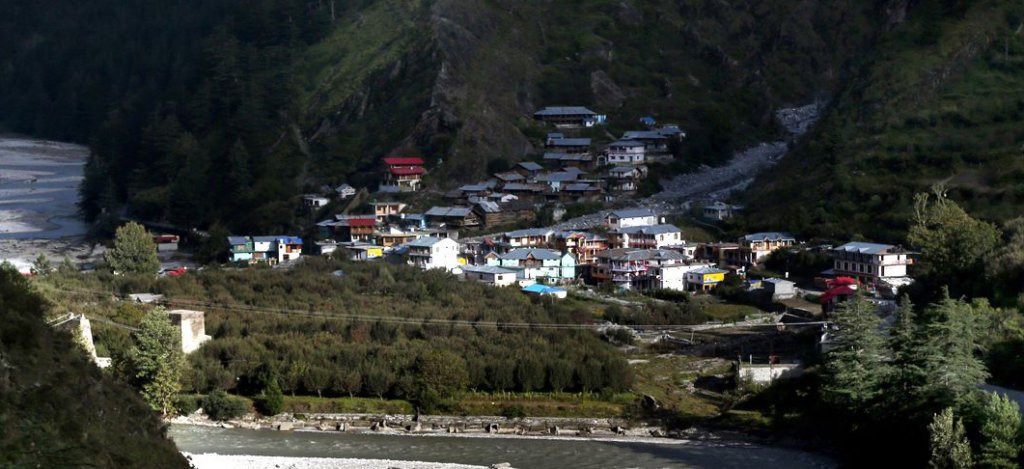
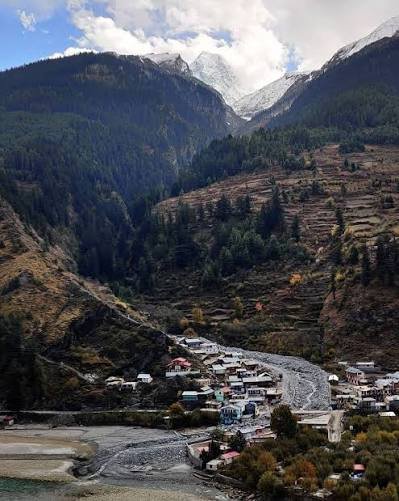
Dharali sits at approximately 2,480 metres in the Harsil Valley of Uttarkashi District, tucked into a sunny south-facing terrace above the Bhagirathi River. It is not a dramatic destination in the way that Gangotri is dramatic — there is no landmark temple, no glacier, no famous trek departing from its edge. What Dharali has is something more quietly compelling: a combination of warm microclimate, extraordinary apple orchards, traditional Garhwali village life, and the kind of mountain scenery that reveals itself gradually rather than announcing itself all at once.
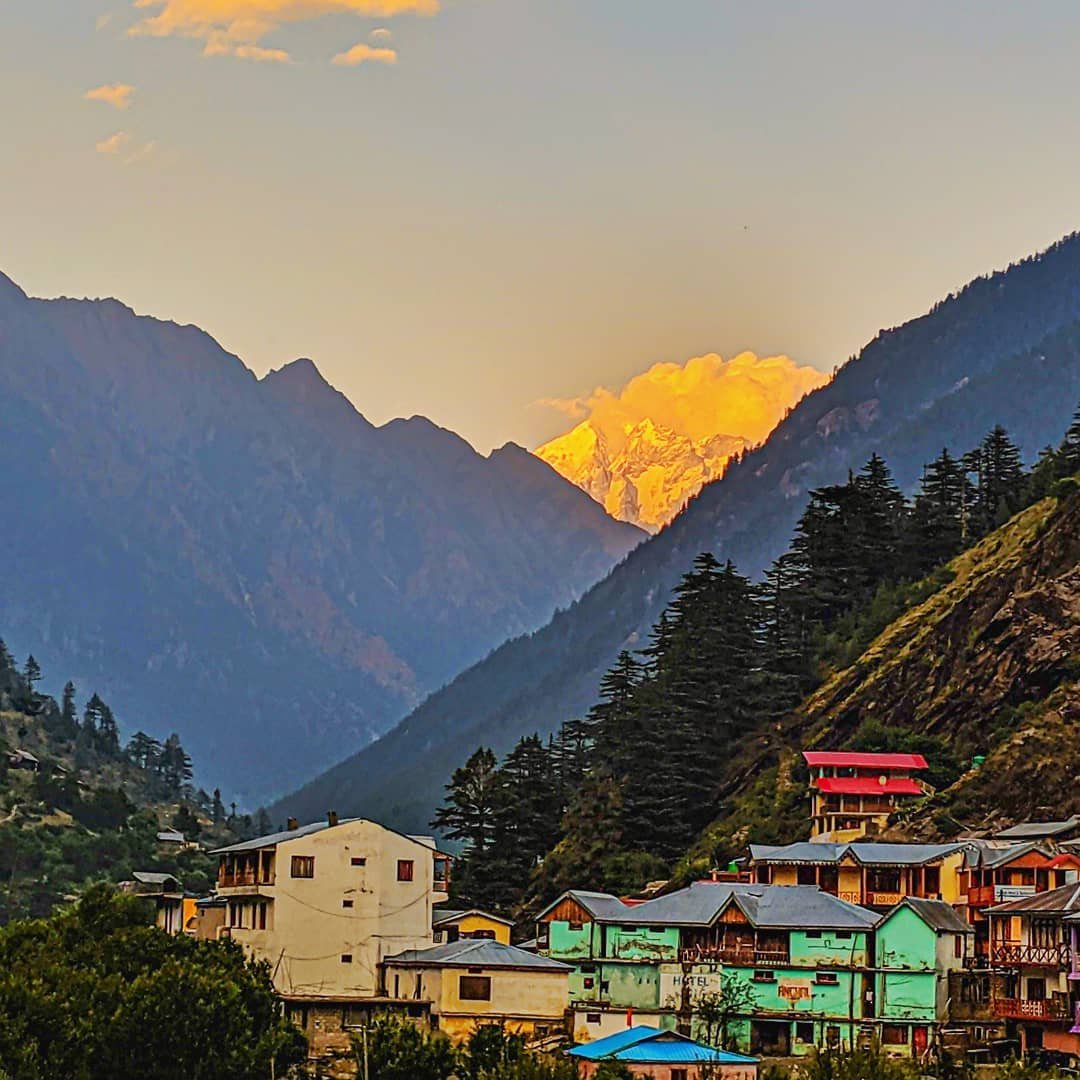
The Bhagirathi River runs wide and fast below the village terraces. On clear days — and this part of the valley, sheltered by its ridge orientation, has more clear days than anywhere else in the upper Bhagirathi — the Gangotri group peaks are visible above the valley walls, their snow catching the light in a way that changes hour by hour. In September and October, the apple trees are heavy with fruit, the air carries a sweetness that has no urban equivalent, and the afternoon sun is warm enough to sit in long-sleeved comfort while watching the mountain shadows lengthen across the valley.


This is Dharali’s pitch: not spectacle, but quality. Not a reason to rush toward it, but many reasons to slow down once you arrive.
For road-trippers connecting Uttarkashi to Gangotri, it is the perfect overnight stop. For families who want a mountain experience without altitude challenge or crowd stress, it is close to ideal. For photographers who prefer to work at a steady, observant pace rather than racing between viewpoints, it rewards the kind of patient attention that most Himalayan destinations discourage by their very drama.
Come without expectations of the obvious, and Dharali will give you something you did not know you were looking for.
About Dharali Village — History, Agriculture, and Character
The Village and Its Setting
Dharali is one of several traditional Garhwali farming villages strung along the Harsil Valley between Uttarkashi and Gangotri. It occupies a wider, sunnier section of the valley than most of its neighbours — the terraces here receive more direct sunlight than the gorge sections upstream and downstream, which contributes both to the village’s agricultural productivity and to the warmth of its microclimate.
The name Dharali has local linguistic roots suggesting a flat or levelled area — dharal or dhar indicating a ridge or level ground, the suffix indicating a settled place. The topography reflects this: the village sits on a relatively flat terrace above the river, with the mountain wall rising sharply behind and the fields and orchards stepping down toward the Bhagirathi on the lower slope.
Settlement History
Like most upper Bhagirathi Valley villages, Dharali’s settlement history is measured in centuries rather than decades, though written records are sparse. The village developed as part of the network of Garhwali agricultural communities that populated the valley corridors of the Garhwal Himalaya, dependent on a combination of terrace farming, livestock, and — from the pilgrimage economy — trade and service provision for Gangotri-bound travellers.
The community belongs primarily to the agricultural castes of the Garhwali tradition. Unlike Mukhba, whose identity is defined by the Semwal priestly family’s connection to Gangotri, Dharali is an agricultural village in the more direct sense — its relationship with the land and its crops defines it more than any specific religious function.
The Apple Economy
Commercial apple cultivation transformed the upper Bhagirathi Valley’s economy in the second half of the 20th century, and Dharali’s orchards are among the finest in the Harsil area. The village’s south-facing aspect and relatively warm microclimate create near-ideal conditions for apple cultivation — warm enough days for good fruit development, cold enough nights and winters for the necessary dormancy period.
The dominant varieties include standard commercial apple types alongside local heritage varieties, among them the Maharaji apple specific to this valley region. The harvest season (August–October) is the most visually and sensually rewarding time to be in Dharali — the orchards are heavy with fruit, baskets of apples wait at every gate, and the air carries that distinctive sweet-sharp fragrance that urban dwellers find immediately evocative.
Rajma (red kidney beans) is the other significant crop — a local variety smaller and more flavourful than commercially available types, grown on the terrace fields between orchards and used both for home consumption and local sale.


Village Architecture and Lifestyle
Dharali retains a meaningful number of traditional Garhwali structures alongside more modern concrete construction. The traditional buildings use the koti banal technique — interlocking bands of local stone and deodar cedar timber — that is earthquake-resistant and thermally efficient. The carved wooden elements on older doorframes and window surrounds represent craft traditions that are increasingly rare in the wider region.
Daily life in Dharali follows the rhythms of mountain agriculture: early rising, work in the orchards and fields during the productive hours, the social life of the village lanes in the afternoon, and early evenings by the fire. Electricity has arrived, and mobile coverage (BSNL) is limited but present in most areas. What has not arrived, and hopefully will not arrive soon, is the standardisation of tourist infrastructure that flattens many hill villages into interchangeable experiences.
Why Visit Dharali?
There are destinations you visit for what they contain — a famous temple, a famous glacier, a famous view. And there are destinations you visit for what they are. Dharali is firmly in the second category.
The microclimate is genuinely warmer. Dharali receives more sun and less wind than comparable-altitude villages in gorge sections. On a crisp October morning when Gangotri is cold and grey, Dharali can be bathed in warm sun from 9:00 AM onward. This matters more than it sounds.
The apple orchards are a genuine sensory experience. Not a heritage attraction — a working landscape. Walking through rows of laden apple trees with mountains visible at the end of every row, accompanied by the smell of ripe fruit and the sound of the river below, is one of those experiences that converts travellers who thought they were only passing through.
It is genuinely quiet. Even during the May–June Char Dham peak season, Dharali sees only a fraction of Gangotri’s traffic. The village has not been reconfigured for mass tourism because mass tourism has not arrived. This is temporary; enjoy it while it lasts.
It is a perfect road-trip stop. The village sits exactly where the traveller on the Delhi–Gangotri route needs a stop — at a comfortable distance from Uttarkashi (66 km), with good overnight options, in a setting worth lingering in rather than simply passing through.
The photography is extraordinary. Mountain light on apple orchards, traditional architecture, river views, and the particular quality of morning mist in the Bhagirathi valley — these are subjects that reward multiple visits and different times of day.
Culture and Local Life
Traditional Architecture
Several families in Dharali maintain traditional homes in the koti banal style. The most distinctive features are the carved wooden panels and balcony railings — though fewer examples survive in Dharali than in the more historically significant Mukhba. Walking the village’s lanes reveals a mix of traditional and modern that honestly reflects where Garhwali mountain villages are at this particular moment in their history: neither museum pieces nor fully modernised, but communities in transition, retaining what is practical and losing what is not.
Festivals
The community observes the standard Garhwali Hindu calendar with local flavour:
- Makar Sankranti (January): The harvest festival, celebrated even in winter
- Phool Dei (Spring): A Garhwali festival of flowers and new beginnings
- Harela (July): A planting festival specific to Uttarakhand
- Diwali and Bhai Dooj (October–November): Major celebrations, with the Bhai Dooj period carrying additional significance as the time of the Gangotri deity’s sdescent to Mukhba
- Selku mela : (August -September)festival includes the Bhailu fire-play, a distinct ritual not seen in every Selku village ( read more… about selku mela)

The apple harvest itself has a festive quality — a period of concentrated communal effort, shared meals, and the satisfaction of abundant yield.
Hospitality
The hospitality offered by Dharali’s families to genuine travellers — those who arrive with curiosity rather than demands — is the warm, practical hospitality of a community accustomed to pilgrims and travellers. Chai is offered readily. Conversation is available for those who speak Hindi or Garhwali (English is limited among older generations but increasingly present among younger residents).
Best Time to Visit Dharali
Spring (April–May): Blossom Season
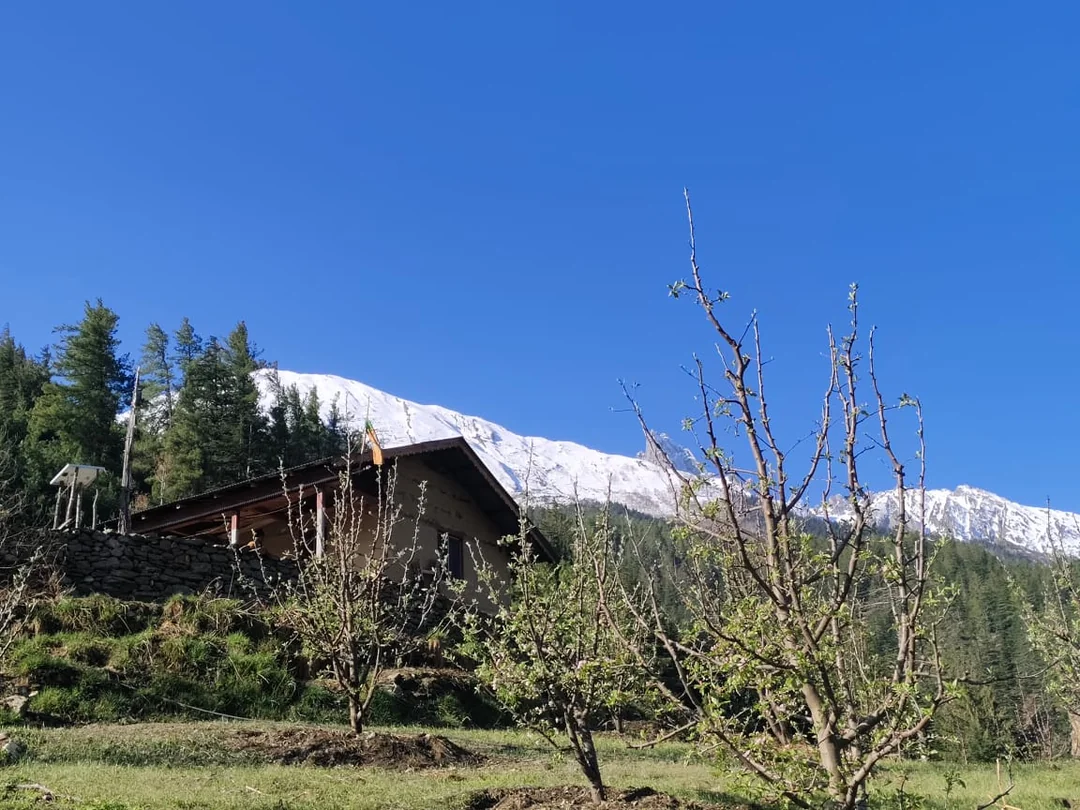
Apple trees in flower are among the most beautiful sights in the Himalayan foothills. Dharali’s orchards in April — white blossom against a backdrop of the still-snowy peaks — are striking. The weather is warming but still crisp, the fields are greening, and the energy of a new season is palpable. This is an underrated time to visit.
Summer (May–June): Full Season
All accommodation is open, the weather is reliable and warm during the day, the Gangotri Temple is open for those combining both destinations, and the orchards are in full leaf. The busiest period for the wider region but still relatively quiet in Dharali itself.
Monsoon (July–August): The Green Season
Rain transforms the valley. Waterfalls appear on every cliff face. The forest turns intensely green. The apple trees are laden with developing fruit. The road from Uttarkashi can be affected by landslides in heavy rain. For travellers who enjoy monsoon landscapes and are comfortable with uncertainty, this season has an atmospheric quality that the clear-sky months cannot replicate.
Autumn (September–October): The Best Season
This is Dharali at its finest, and it is not a close call. The post-monsoon clarity delivers skies of a deep, uncompromised blue. The apple harvest is at its peak — the orchards are a spectacle of laden branches, coloured fruit, and harvest activity. The mountain views are at their annual best. Temperatures are cool and comfortable. This is when photographers, couples, slow travellers, and anyone who has been here before tend to return.
Winter (December–February): Cold and Beautiful
Dharali’s warmer microclimate means it receives less snow than Gangotri or even Harsil, but winters are genuinely cold. The Gangotri road beyond Uttarkashi can be affected by snowfall. Most guesthouses reduce their operations or close. For those with appropriate preparation and flexibility, a winter Dharali visit offers extraordinary scenery and total solitude.
Monthly Weather Table
| Month | Day Temp | Night Temp | Conditions | Crowd | Visit? |
|---|---|---|---|---|---|
| January | 3°C–10°C | -6°C to -2°C | Cold, possible snow | Nil | ⚠️ Cold |
| February | 5°C–12°C | -4°C to 0°C | Cold, clearer later | Nil | ⚠️ Cold |
| March | 7°C–16°C | -1°C to 5°C | Warming, road opening | Very Low | ✅ Late March |
| April | 10°C–19°C | 4°C–9°C | Blossom season | Low | ✅ Yes |
| May | 14°C–23°C | 8°C–14°C | Best weather, full season | Medium–High | ✅ Yes |
| June | 15°C–23°C | 10°C–15°C | Warm, slight cloud | Medium | ✅ Yes |
| July | 14°C–20°C | 10°C–14°C | Monsoon rain | Low | ⚠️ Landslide risk |
| August | 13°C–20°C | 10°C–14°C | Rain easing, apples growing | Low | ⚠️ Caution |
| September | 9°C–20°C | 5°C–11°C | Excellent, post-monsoon | Medium | ✅ Excellent |
| October | 5°C–16°C | 1°C–7°C | Best month, harvest | Medium | ✅ Excellent |
| November | 0°C–12°C | -3°C to 3°C | Cooling, some closing | Low | ✅ Early November |
| December | -3°C–7°C | -6°C to -1°C | Cold, limited access | Nil | ⚠️ Cold |
How to Reach Dharali
Dharali is well connected to Dehradun, Rishikesh, and Uttarkashi by road. There is no direct train or flight, so most travelers route through Delhi first.
By Air
The nearest airport is Jolly Grant Airport, Dehradun (232 km away). Book a direct flight to Dehradun, or fly into Delhi and take a connecting flight or train onward.
By Train
The nearest railway stations are Haridwar, Rishikesh, and Dehradun. Convenient trains from Delhi include:
- 12017 Dehradun Shatabdi Express — New Delhi to Dehradun, daily, ~6 hrs 10 mins
- 12055 Jan Shatabdi — New Delhi to Dehradun, daily, ~5 hrs 50 mins
- 22659 Kochuveli Yog Nagri Rishikesh SF Express — runs Fridays, starts from Kochuveli, Kerala
- 14309 Ujjaini Express — Lakshmibai Nagar to Yog Nagri Rishikesh, runs Wed & Thu
Tip: Avoid the Mussoorie Express due to frequent delays.
By Bus & Road
From Delhi’s Kashmiri Gate, Anand Vihar, or Sarai Kale Khan, take a bus to Dehradun, Haridwar, or Rishikesh, then continue to Uttarkashi and Harsil. Buses to Gangotri from Dehradun/Rishikesh also pass through Dharali during Char Dham Yatra season.
Dehradun to Dharali (218 km): Take an early UTC bus from Dehradun Hill Bus Station to Uttarkashi, then a shared taxi to Dharali.
Dharali is located on the main Uttarkashi–Gangotri highway, approximately 66 km from Uttarkashi and 31 km before Gangotri. It is one of the more accessible points in the upper Bhagirathi Valley for precisely this reason.
Skip the Hassle — Let Kashi of North Handle Your Travel
From airport pickup to a private Tempo Traveller or car on hire for families and groups, Kashi of North arranges end-to-end transport to Dharali Uttarkashi — no multiple bookings, no guesswork. Get your travel plan from KON (+91-7253079221).
Things To Do in Dharali
Walk Through the Apple Orchards
Dharali’s orchards are the defining experience of the village. The best time is August–October when the trees are loaded with fruit. Many orchard-owning families are welcoming to respectful visitors — ask at your guesthouse for an introduction rather than wandering into private land unannounced. Walking the rows of laden trees, the mountains visible between the branches, is one of those simple experiences that stays in the memory disproportionately long.
Bhagirathi River Walk
A trail descends from the village toward the Bhagirathi River, approximately 20–30 minutes on foot. The river here — between the gorge sections upstream and downstream — runs across a broader bed, creating sections of accessible bank suitable for sitting, picnicking, and photography. In October, the river level has dropped from monsoon highs and the clarity is excellent.
Pro Tip: The river bank directly below Dharali (accessed via the lower village trail) is significantly less visited than the Harsil riverbank and offers comparable scenery with complete solitude.
Photography
Covered in detail in the Photography Guide section. The short version: the combination of orchards, traditional architecture, river, and peaks makes Dharali a richer photography subject than its fame would suggest.
Village Walks
The lanes connecting the different parts of Dharali — the upper road, the orchard paths, the lanes through the older section of the village — reward an unhurried hour or two of walking. Traditional houses with carved woodwork, grain storage structures, the community water source, children heading to the local school — these are the textures of a genuine mountain village rather than a constructed tourism experience.
Sunrise Photography
The east-facing upper section of Dharali receives some of the finest morning light in the Harsil Valley. From a vantage point above the main orchards, the dawn light catches the Gangotri peaks and gradually descends into the valley below. Allow 30–45 minutes of climbing before your intended shot time.
Sunset from the Ridge Above
The ridge above the village catches the last light on the western peaks in the late afternoon. A 45-minute walk up the hill behind the village brings you to a viewpoint with panoramic views in three directions.
Bird Watching
The orchard and forest interface around Dharali is excellent habitat for Himalayan bird species. Himalayan monal, koklass pheasant, laughing thrushes, various finches, and the gorgeous Himalayan whistling thrush are all present. Early morning (6:00–9:00 AM) is best.
Meditation and Slow Travel
Dharali has been discovered by the slow travel community — those who specifically choose quieter, less-developed destinations for extended stays that allow genuine connection with place. The combination of gentle terrain, good light, and a community not yet overwhelmed by tourism makes it ideal for this mode of travel. Several guesthouses welcome extended stays at reduced rates.
Exploring Local Markets and Tea Stalls
The daily rhythm of Dharali includes a small market activity along the main road — local produce, basic groceries, the tea stalls where the community’s social life plays out. Sitting at one of these stalls with chai for an hour is free, reveals more about the village than any guidebook, and is the kind of simple pleasure that overcheduled travel constantly bypasses.
Top Nearby Attractions
Harsil (6 km | 15 minutes)
The most immediately accessible neighbour and the practical hub for the Harsil Valley area. The Bhagirathi River, Frederick Wilson’s cottage, wider accommodation and food options, and access to Mukhba village. Our full Harsil Travel Guide is the definitive resource for the valley.
Best Time: September–October | Ideal Duration: 1–2 days
Mukhba Village (12 km | 25–30 minutes)
The winter home of Goddess Ganga and one of Uttarkashi district’s most atmospheric traditional villages. The Semwal priestly family, traditional koti banal architecture, and the Bhai Dooj/Akshaya Tritiya processions make this a uniquely significant destination. Our Mukhba Village guide covers it comprehensively.
Best Time: October (Bhai Dooj) or April–May (Akshaya Tritiya) | Ideal Duration: Half to full day
Gangotri Temple (31 km | 55–70 minutes)
The third Char Dham, the temple of Goddess Ganga on the Bhagirathi’s bank at 3,415 metres. Dharali makes an excellent lower-altitude base for a Gangotri visit — you sleep at 2,480 m, drive up for the day, and return to warmer, more comfortable sleeping conditions. Our comprehensive Gangotri Travel Guide covers everything.
Best Time: May–June, September–October | Ideal Duration: 1 day from Dharali base
Bagori Village (20–22 km toward Uttarkashi | 35–45 minutes)
A traditional agricultural village between Dharali and Uttarkashi with good apple production and an authentic farming community. Worth a stop for those interested in the full character of the Bhagirathi Valley rather than just its famous endpoints.
Best Time: September–October | Ideal Duration: Half day
Lama Top (Accessible via Harsil, 6 km then trek)
A ridge viewpoint above the Harsil Valley offering panoramic views of the Bhagirathi corridor and the Gangotri group peaks. Accessed by a 3–4 hour return trek from Harsil.
Best Time: September–October | Ideal Duration: Half day
Gangnani (35 km toward Uttarkashi | 60–70 minutes)
Natural hot springs on the Gangotri highway with sulphur-rich thermal water comfortable for bathing. A traditional pilgrim rest stop that also appeals to non-pilgrims seeking a warm soak in a mountain setting. Our Gangnani guide has full visitor details.
Best Time: Any accessible season | Ideal Duration: 2–3 hours
Gaumukh Trek (via Gangotri, 31 km then 19 km trek)
The Gangotri Glacier’s snout at 4,023 metres — one of the most dramatic landscapes in India, accessible by a moderate 19-km trek from Gangotri. Dharali is an ideal acclimatisation base before the trek. Our Gaumukh Trek guide is essential pre-trip reading.
Best Time: May–June, September–October | Ideal Duration: 2–3 days from Dharali
Dayara Bugyal (approximately 110 km via Uttarkashi)
Uttarakhand’s most accessible high-alpine meadow — extraordinary wildflower displays in summer and excellent snow in winter. Accessible as a day trip from the Harsil Valley area via Uttarkashi. Our Dayara Bugyal guide covers the full range.
Best Time: April–June (flowers), November–February (snow) | Ideal Duration: 1–2 days
Kedartal Trek (from Uttarkashi, 66 km from Dharali)
A demanding multi-day trek to a spectacular glacial lake beneath Thalay Sagar. The finest technical alpine trek in Uttarkashi District. Our Kedartal Trek guide covers route and preparation.
Best Time: May–June, September–October | Ideal Duration: 4–5 days
Dodital Trek (from near Uttarkashi)
A beautiful lake trek through mixed temperate forest — the legendary birthplace of Lord Ganesha at high altitude. Quieter than Gaumukh with an equally rewarding payoff. Our Dodital Trek guide is comprehensive.
Best Time: April–June, September–October | Ideal Duration: 3–4 days
Uttarkashi (66 km | 2–2.5 hours)
The district capital with ATMs, hospital, petrol station, Vishwanath Temple, Nehru Institute of Mountaineering, and the widest range of accommodation and restaurants in the district. Our Uttarkashi guide covers it in full.
Hidden Gems in and Around Dharali
The Lower River Trail
The trail from the lower village down to the Bhagirathi bank is known to locals and almost unknown to visitors. The 20–30 minute descent through terrace fields and scrub forest arrives at a section of river bank that sees very few people even in peak season. Excellent for picnics, quiet sitting, and river photography.
The Upper Orchard Viewpoint
Follow the orchard paths above the village to the highest cultivated terrace. From here, looking back down over the layered orchard roofscape toward the Bhagirathi gorge, with the Gangotri peaks visible above, is one of the most satisfying compositions in the Harsil Valley and one that very few visitors find.
Old Village Core
The oldest section of Dharali’s built fabric — typically slightly set back from the main highway — contains the most intact examples of traditional koti banal architecture. Several doorways here retain original carved cedar woodwork. Ask at the guesthouse for directions to the older section.
The Road at 6:00 AM
Not a place but a time. The main highway through Dharali at dawn, before pilgrimage traffic begins, before the tea stalls open, when only the village’s own rhythms are operating — the sound of cow bells, wood smoke, the river below — is one of those Himalayan morning experiences that cost nothing and give back disproportionately.
Apple Blossom (April)
The orchard blossom in April is essentially unknown to most visitors, who arrive in May–June at the earliest. The combination of white blossom, winter-residue snow on the peaks, and the particular cold-clear light of early spring makes this one of the valley’s finest photographic seasons.
Shopping Guide
Fresh Apples: August–October. Farm-gate prices. Multiple varieties including the local Maharaji. The freshest, most flavourful apples you are likely to have eaten.
Local Rajma: The small, dark red kidney bean variety grown on local terrace fields. A kilogram makes an excellent, meaningful gift. Available at local shops and from families.
Mountain Honey: Forest honey from surrounding hive locations, occasionally available directly from producers. Quality is significantly higher than commercial alternatives.
Woollen Items: Hand-knitted socks, caps, and scarves from local women. Functional and well-made.
Organic Local Produce: Mandua (finger millet), jhangora (barnyard millet), and seasonal vegetables from terrace farming. Available at local shops or directly from households.
Photography Guide
Dharali’s photographic value is substantially underestimated by travellers who pass through without stopping. The combination of orchard, architecture, river, and peak creates a layered compositional environment that repays multiple hours of work.
Best Sunrise Spots
- Upper orchard viewpoint: 30–45 minutes of climbing above the main village, facing east. The Gangotri peaks receive alpenglow before the valley fills with light, giving a brief window of peak gold against a deep blue sky.
- Highway junction viewpoint: A natural vantage on the highway above the village looks northeast toward the valley’s upper reaches. The first light catches the snow peaks here at a favourable angle in summer.
Best Sunset Views
- Ridge above village (west-facing): Looking westward from the ridge above Dharali, late afternoon light illuminates the valley below in warm tones. September–October gives the richest colour.
- River bank access point: The last light falls on the Bhagirathi’s surface and the western cliff faces from the river bank below the village.
Autumn Photography (September–October)
This is the season. Specifically:
- Apple harvest scenes: laden branches, baskets of fruit, family harvest activity
- Golden and red fruit against blue sky
- The particular clarity of October mountain light on the Gangotri peaks
- Turning deciduous trees (birch and maple pockets in the forest above) creating colour contrasts
Blossom Photography (April)
An almost unknown season for photography here. White blossom against winter-residue snow on peaks, in the clean cold light of early spring, is extraordinary. Very few photographs of this exist because very few photographers come at this time.
Drone Regulations
The Dharali–Harsil area is within proximity to military installations due to the region’s position near the LAC. Drone flying requires explicit prior permission and is inadvisable without all necessary clearances from civil aviation authority and, potentially, the army. Do not fly without verified permission. Penalties are severe.
Adventure Activities
Nature Walks
Multiple walks radiate from Dharali without requiring guide or permit: the river trail, the upper orchard path, the forest edge above the cultivation boundary. Each offers a different perspective on the valley in an hour or two of easy walking.
Short Village Trek
A trail connects Dharali to Bagori Village (downstream) through a combination of field paths and village lanes — a 2–3 hour walk through the inhabited landscape of the Bhagirathi Valley that reveals the valley’s agricultural character in detail not visible from the road.
Bird Watching
The orchard-forest interface is excellent habitat year-round. April–May and September–October are peak months for diversity including migratory species. The rare and beautiful Himalayan monal — Uttarakhand’s state bird — is regularly seen in the forest above the orchards in early morning.
Cycling
The Uttarkashi–Gangotri highway through Dharali is used by a small but growing number of cycle tourers. The gradient is significant and the altitude real, but the road quality and scenery make it a compelling route. Dharali is a natural overnight stop for cyclists doing this route.
Gaumukh Trek (from Gangotri, 31 km)
Using Dharali as an acclimatisation base before driving to Gangotri and starting the Gaumukh Trek is an excellent strategy. A night at 2,480 m (Dharali), a second night at Gangotri (3,415 m), then the trek begins well-acclimatised.
Responsible Tourism
Protect the Orchards
The apple orchards are private agricultural land. Enter only with explicit permission from the owner. Do not pick fruit without being invited to. Do not damage branches or tree structure. These orchards are the family’s livelihood — treat them accordingly.
No Plastic
There is no waste collection system in Dharali. Pack all plastic out with you. This is not optional good behaviour; it is a practical necessity in a remote mountain community.
Support Local
Stay at local homestays rather than highway hotels that may be owned from outside the community. Eat at local dhabas. Buy rajma and apples directly from farmers. The economic benefit of locally-directed spending is significant for a village of this size.
Respect Privacy
The village is a community, not an attraction. Photographing people requires their permission. Do not enter private homes without invitation. Do not treat the daily life of the village as entertainment.
Wildlife and Forest
The forest above Dharali is habitat for Himalayan monal, various deer species, and smaller mammals. Do not disturb wildlife. Do not cut or damage vegetation. Do not light fires in the forest.
Travel Tips
Clothing
Even in summer, nights at 2,480 metres are cool. Pack layers: a down jacket for evenings and mornings, thermal underlayers for October–November visits, full waterproofs for the monsoon period. In October–November, warm socks and gloves are necessary.
Altitude Advice
Dharali’s altitude is manageable for most visitors arriving from a lower overnight stop. If you have driven directly from Delhi (sea level to 2,480 m in 13 hours), take the first day gently — drink water, avoid alcohol, and don’t overexert on day one.
Cash
No ATMs exist in Dharali or the immediate area. Withdraw in Uttarkashi before proceeding. Carry sufficient cash for your full stay plus reserves.
Fuel
Fill up in Uttarkashi. The road beyond Uttarkashi toward Gangotri has limited and unreliable fuel availability. Calculate your consumption and carry a reserve if driving a fuel-hungry vehicle.
Mobile Network
BSNL is the most reliable carrier. Jio and Airtel work in some sections along the main highway but are unreliable in the village. Download offline maps before leaving Uttarkashi.
For Senior Citizens
Dharali’s terrain along the main highway is relatively accessible. The village lanes have some uneven stone surfaces. The altitude is moderate and the microclimate is warmer than most comparable elevations. A medical check before travel is wise for those with cardiac or respiratory conditions.
For Families with Children
Excellent destination. The orchards, river access (supervised), and village texture are all engaging for children old enough to walk comfortably. Carry child-appropriate snacks, warm layers, and basic first aid.
For Women Travelling Solo
Dharali is on the pilgrimage highway and the cultural context is respectful. Standard sensible travel precautions apply. Arrange accommodation in advance and inform your host of your plans. The community is generally protective toward respectful visitors.
For Couples
Dharali is a genuinely romantic destination in the quieter sense — not Valentine’s Day decorated, but genuinely beautiful, genuinely quiet, with the kind of scenery that provides its own ambiance. September–October is the finest time for a couples visit.
For Foreign Tourists
No special permits required. Carry passport at all times. English is limited among older community members but increasing among younger residents. The community is curious about and welcoming toward foreign visitors who approach with genuine respect.
Seasonal Guide — Month by Month
January: Cold and quiet. The highway is typically passable to Dharali but can be snow-affected in heavy winters. Very few visitors. The village is in its deepest agricultural rest period. A rewarding experience for those prepared for -6°C nights.
February: Gradually warming through the month. The snow on the upper slopes begins showing patches of brown by late February. Not for most visitors, but those who come find absolute solitude.
March: The valley awakens. Snow retreats rapidly in the lower areas. Apple orchards show the first buds. Road conditions improve week by week. A good month for those who want the valley before the season begins.
April: Blossom season — one of the valley’s finest visual experiences and almost entirely unvisited. White flowers on every tree, the peaks still white above, morning cold that gives way to warm afternoon sun. This month deserves far more attention than it receives.
May: Full season opens. All guesthouses operating. The valley is green and the mountains clear. The Gangotri Temple opens on Akshaya Tritiya, bringing pilgrimage traffic to the highway. Dharali’s orchards are in full leaf.
June: Warm summer days. Some afternoon cloud builds in. A comfortable month with full facilities and moderate crowds.
July: Monsoon arrives. Rain can be daily and heavy. Landslide risk on some road sections. The valley is extraordinarily lush. Not recommended for those without flexibility, but beautifully atmospheric for those who embrace uncertainty.
August: Rain continues but easing by late August. Apple trees heavy with developing fruit. The colour palette is deep green and grey with peaks occasionally visible through clearing cloud.
September: The year’s transformation. Monsoon leaves, blue sky returns, peaks emerge in full clarity. Apples beginning to ripen. The finest season begins. This is when Dharali is at its best.
October: Apple harvest. The orchards are the primary visual and sensory event of the valley. The light is extraordinary — that particular October Himalayan clarity that photographers specifically travel to find. The Bhai Dooj procession at nearby Mukhba adds an extraordinary cultural dimension to late October.
November: Early November still has good weather and the harvest’s final stages. By mid-November the valley cools significantly. Most accommodation begins closing in the second half of the month.
December: Winter. Cold and quiet. Limited accommodation open. Beautiful for those who can manage it.
Common Mistakes Tourists Make
- Driving through without stopping. The single most common mistake. Dharali is a destination, not a waypoint.
- Not carrying sufficient cash. No ATMs. No exceptions. Withdraw in Uttarkashi.
- Visiting only in peak season (May–June) and missing autumn. September–October is dramatically better for orchard scenery, mountain clarity, and crowd levels.
- Entering orchards without permission. These are private working farmland. Always ask before entering.
- Not planning for cold nights even in summer. At 2,480 m, temperatures drop significantly after sunset year-round. Always have a warm layer accessible.
- Bringing plastic bags and water bottles. No disposal system exists. Carry reusable alternatives.
- Filling up on fuel after Uttarkashi. Fuel availability beyond Uttarkashi is unreliable. Fill completely there.
- Missing the dawn. The best light in the valley is in the hour after sunrise. Many visitors sleep through it.
- Treating guesthouse owners as service providers only. They are the best local information source available. A genuine conversation over morning chai will tell you more about the valley than a week of solo exploration.
- Rushing to Gangotri and back without exploring the valley. The highway corridor between Uttarkashi and Gangotri contains more interest than most travellers access. Dharali, Mukhba, Harsil, Bagori — each rewards time that most visitors give to Gangotri alone.
⚠️ Medical Note: There are no medical facilities at Dharali. The nearest hospital is in Uttarkashi, 66 km and approximately 2–2.5 hours away. For any emergency, call 112 immediately and begin transport toward Uttarkashi. Carry a comprehensive personal first aid kit including all prescription medications.
Conclusion
Dharali does not have a famous glacier or a thousand-year-old temple. It does not appear on most people’s Uttarakhand itinerary. It is, in the most straightforward sense, a beautiful Himalayan village on a beautiful stretch of road — a place that rewards stopping.
The apple orchards in October are as fine as anything the Himalayan foothills produce. The south-facing warmth and the particular quality of the light in the afternoon justify the overnight stay that most travellers do not give it. The local rajma, cooked by a homestay family on a wood fire with spices that grew in the valley below, eaten at a table with mountains visible through the window — this is what mountain travel is theoretically about, and what it so often delivers only in places exactly like this.
Travel responsibly. Carry out your plastic. Buy from local farmers. Eat at local dhabas. Treat the village with the respect due a community’s home.
And explore what surrounds you. Harsil is 6 km upstream and has the valley’s finest river scenery. Mukhba Village is 12 km away and offers one of the most authentic pilgrimage village experiences in Uttarakhand. Gangotri is 31 km and worth every kilometre. The Gaumukh Trek begins at Gangotri and ends at one of the Himalaya’s most dramatic landscapes. The meadows of Dayara Bugyal are a day circuit away via Uttarkashi.
Uttarkashi District — and the Bhagirathi Valley that forms its axis — is one of the finest travel corridors in India. Dharali is where you realise the corridor is worth slowing down for.
Interesting Facts About Dharali
- Dharali’s south-facing slope gives it the warmest microclimate in the Harsil Valley — a full 2–3°C warmer on sunny winter days than shaded positions at the same elevation.
- The Maharaji apple variety grown around Dharali was reportedly introduced to this valley in the early-to-mid 20th century and has since developed locally distinct characteristics.
- The local rajma variety grown at Dharali’s altitude is smaller and darker than commercially available kidney beans, with a more concentrated flavour attributed to the long, cold growing season.
- Dharali sits on a natural terrace created by glacial outwash deposits — the same geological process that shaped the broader Harsil Valley flatness.
- The village is one of the last in the upper Bhagirathi Valley to have maintained a significant portion of traditional koti banal construction alongside modern concrete.
- The Bhagirathi River below Dharali runs on some of the oldest exposed granite in the Garhwal Himalaya, estimated at over 500 million years old.
- Apple blossom in Dharali’s orchards typically begins in the second week of April — earlier than most comparable valley villages due to the warmer microclimate.
- The Himalayan monal pheasant (Uttarakhand’s state bird) is regularly seen in the forest above Dharali’s upper orchards in the early morning hours.
- The finger millet (mandua) grown at this altitude has a longer growing season than plains varieties, which is associated with higher micronutrient density in the final grain.
- Several Dharali families have maintained the same orchard plots for three or more generations, with the oldest apple trees estimated to be 70–80 years old.
- The road through Dharali carries an estimated 200,000+ vehicles per year during the pilgrimage season — virtually all of them continuing to Gangotri without stopping.
- The village is situated at almost exactly the same elevation as the highest altitude vineyards in France’s Rhône Valley — though the climate and geology produce very different results.
- Dharali’s traditional terrace irrigation system, using channels (kuhls) diverted from seasonal streams, has been functioning for generations without mechanical assistance.
- The upper forest above Dharali is dominated by West Himalayan subalpine forest — primarily silver fir, blue pine, and birch — transitioning to rhododendron scrub above the treeline.
- Wild strawberries grow in the forest edge and field margins above Dharali from June through July — a detail known to local children and almost no visitors.
- Barnyard millet (jhangora), grown on Dharali’s terrace fields, is one of the most nutritionally dense cereals in India and has been cultivated in Garhwal for at least 3,000 years.
- The carved woodwork on Dharali’s older houses used deodar cedar — a timber so resin-rich and rot-resistant that examples from the region survive 100–150 years of Himalayan winter without significant deterioration.
- The lammergeier (bearded vulture) — one of the world’s largest raptors — is occasionally seen soaring over the Bhagirathi gorge sections below Dharali.
- The community kuhl (irrigation channel) in Dharali is maintained communally by the village, cleaned and repaired each spring before the growing season — one of the few traditional cooperative water management practices still functioning in the area.
- Dharali’s position exactly midway between Uttarkashi (66 km) and Gangotri (31 km via Harsil) makes it the mathematical midpoint of the most-used section of the pilgrimage highway in the district.
Frequently Asked Questions
1. What is Dharali famous for? Dharali is known for its exceptional apple orchards, warm Himalayan microclimate, views of the Bhagirathi River, traditional Garhwali village atmosphere, and its position on the Uttarkashi–Gangotri highway. It is one of the finest orchard villages in Uttarkashi District.
2. What is the best time to visit Dharali? September–October is the finest time — clear post-monsoon skies, apple harvest at its peak, and excellent mountain views. April–May (apple blossom) and May–June (full season) are also excellent.
3. How far is Dharali from Gangotri? Approximately 31 km from Dharali to Gangotri via Harsil. The drive takes 55–70 minutes.
4. How far is Dharali from Uttarkashi? 66 km from Uttarkashi to Dharali. The drive takes approximately 2–2.5 hours along the Bhagirathi highway.
5. How far is Dharali from Harsil? 6 km. The drive takes approximately 15 minutes.
6. What is the altitude of Dharali? Approximately 2,480 metres (8,136 feet) above sea level.
7. Are there ATMs at Dharali? No. The nearest ATMs are in Uttarkashi, 66 km away. Always carry sufficient cash before leaving Uttarkashi.
8. Is mobile network available at Dharali? BSNL is the most reliable carrier with limited coverage. Jio and Airtel work in some sections along the highway but are unreliable in the village proper.
9. What is the apple harvest season at Dharali? August–October, with the peak harvest in September–October. The local Maharaji apple variety is particularly prized.
10. Is there an entry fee for Dharali? No. There is no entry fee to visit Dharali Village.
11. What food is available at Dharali? Garhwali vegetarian food: rajma chawal, mandua ki roti, aloo ke gutke, kafuli, and jhangora ki kheer. Tea stalls serve chai. All food in the area is vegetarian.
12. Is Dharali good for photography? Yes — it is excellent for orchard, landscape, traditional architecture, and river photography. September–October and April (blossom) are the finest photography seasons.
13. Can foreigners visit Dharali? Yes. No permit is required. Carry your passport at all times.
14. Is Dharali suitable for families with children? Yes. The terrain is accessible, the orchards are engaging, and the river access (supervised) is enjoyable for children. Carry warm layers even in summer.
15. What is the nearest hospital to Dharali? Uttarkashi, 66 km away. No medical facilities exist in Dharali. Carry a comprehensive personal first aid kit.
16. Is Dharali good for a road trip stop? Dharali is one of the finest overnight stops on the Delhi–Gangotri road. It sits at exactly the right distance from both Uttarkashi (66 km) and Gangotri (31 km), with better accommodation value than either endpoint during peak season.
17. Does Dharali get snowfall? Yes, from December through February. The village’s warmer microclimate means less snow accumulation than Harsil or Gangotri, but winters are genuinely cold.
18. Is there accommodation at Dharali? Yes — guesthouses along the highway and homestays in the village. Limited in quantity; book in advance for May–June.
19. Is Dharali open year-round? The village is inhabited year-round. Most guesthouses operate April–November; limited options exist in winter months.
20. How do I reach Dharali from Delhi? Drive via Haridwar → Rishikesh → Devprayag → Uttarkashi → Dharali (approximately 480 km, 13–14 hours). Break the journey with an overnight stop at Rishikesh or Uttarkashi.
21. Is Dharali suitable for couples? Yes. The combination of mountain scenery, orchard atmosphere, and genuine quiet makes Dharali an excellent couples destination, particularly in September–October.
22. What language do people speak in Dharali? Garhwali is the community language; Hindi is widely spoken. English is limited but increasing among younger residents.
23. Can I buy apples directly from farmers at Dharali? Yes. During harvest season (August–October), fresh apples are available at farm-gate prices directly from local families. Ask at your guesthouse for introductions.
24. Is the road to Dharali good? The road is paved throughout. It is a mountain highway — narrow in sections, with drops and turns requiring careful driving. An SUV or high-clearance vehicle is recommended.
25. Are drones allowed at Dharali? Drone flying in this region requires explicit prior permission due to proximity to military zones. Do not fly without verified clearance from all necessary authorities.
26. What wildlife can I see near Dharali? Himalayan monal, koklass pheasant, various laughing thrushes, lammergeier vulture, Himalayan whistling thrush, and various finch species. The forest above the orchards is the best watching area.
27. What is the difference between Dharali and Harsil? Dharali is 6 km south of Harsil on the Gangotri highway. Harsil is larger, with the Bhagirathi River’s broadest accessible section and more accommodation options. Dharali is slightly warmer, more orchard-focused, and even quieter than Harsil.
28. Can I camp near Dharali? No formal camping facilities are available at Dharali. Camping near the river below the village is possible with your own equipment in the dry season. The nearest organised camping is in the Harsil area.
29. What should I pack for an October visit to Dharali? Down jacket, thermal base layers, waterproof outer layer, warm socks, trekking shoes, sunscreen SPF 50+, UV sunglasses, reusable water bottle, sufficient cash, offline maps, power bank, and a camera for what will be some of the finest mountain photography light of the year.
30. Is Dharali on the Char Dham Yatra route? Dharali is on the road to Gangotri, which is the second Char Dham. It is not itself a dham but is an integral part of the pilgrimage road experience. For the full Char Dham Yatra circuit planning, see our comprehensive guide.