
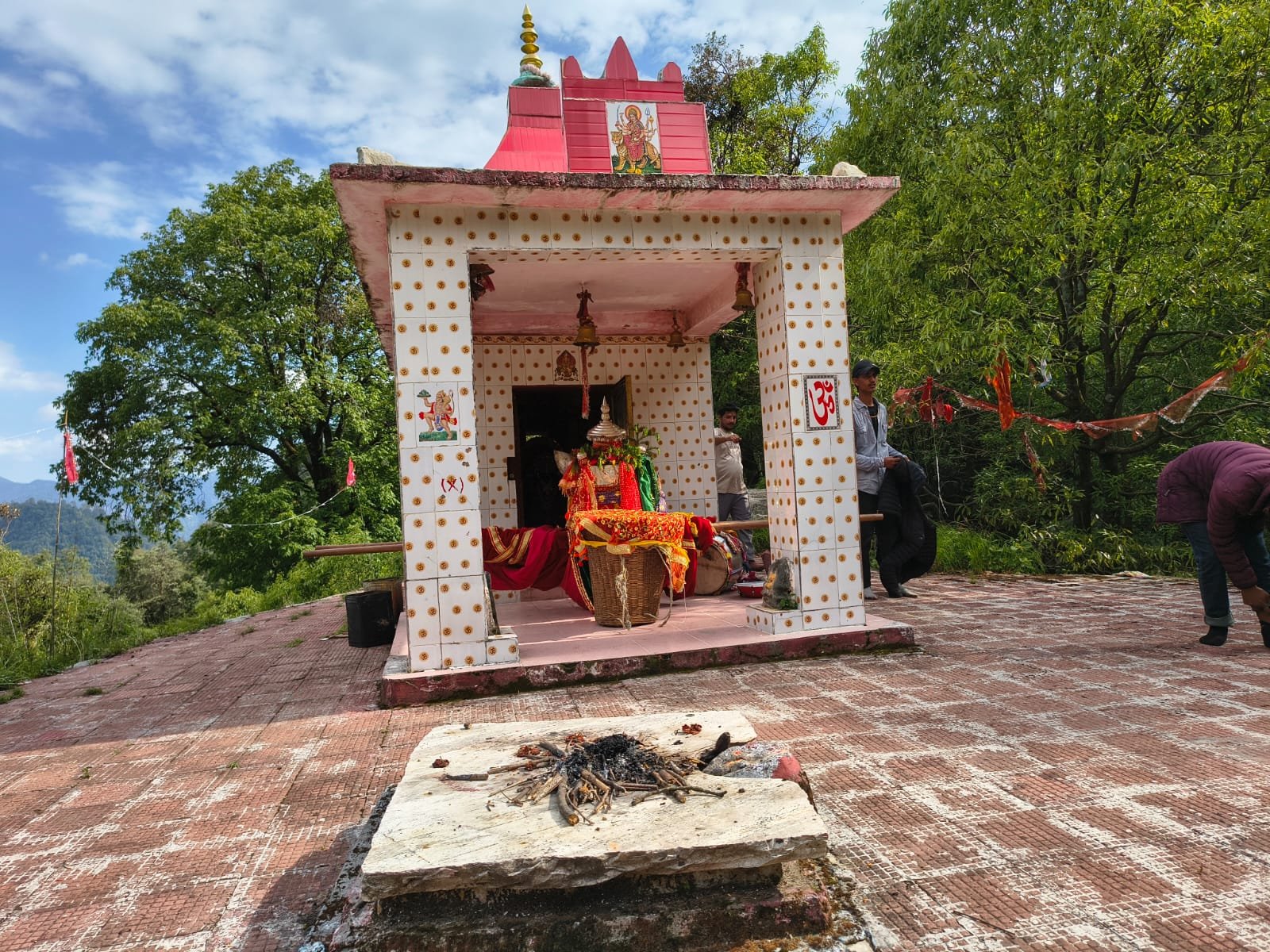
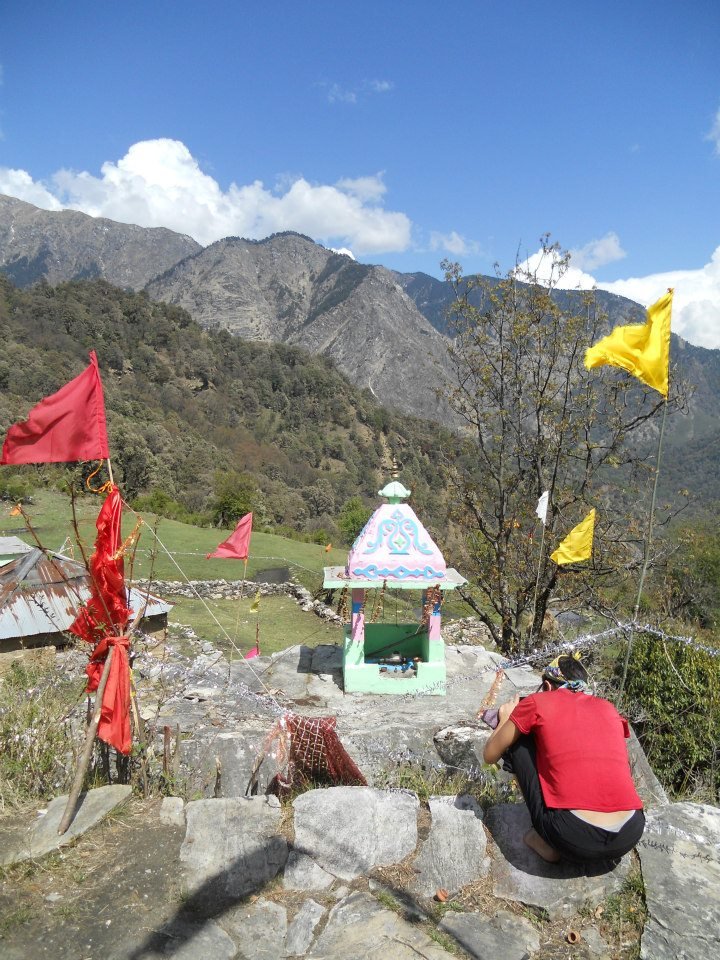

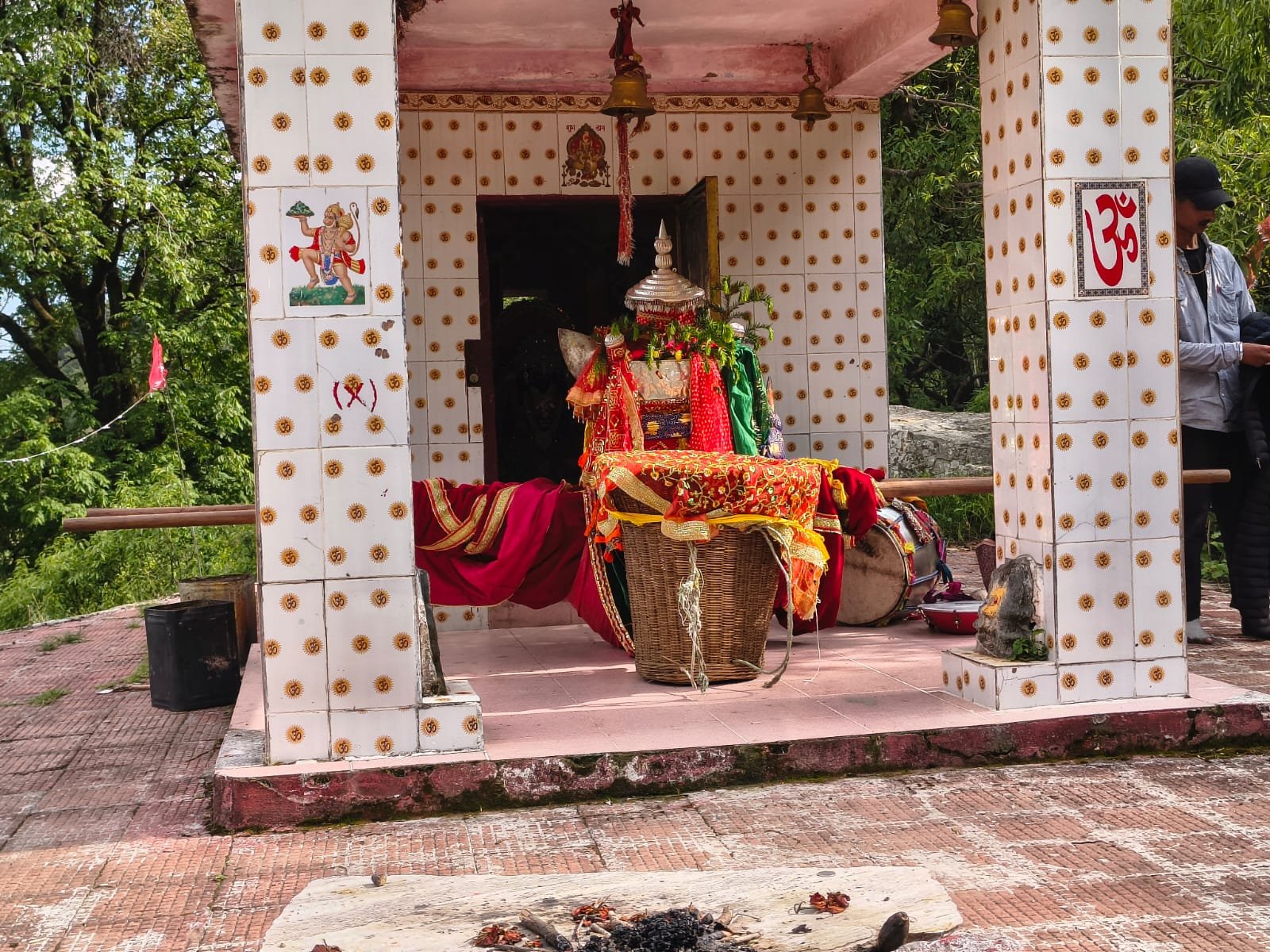

Ayana Devi Temple sits in a high meadow above Naald village, roughly 11 km from Uttarkashi town, reached by a moderate hike of about 12 km (7.6 miles) that follows the Ganesh Ganga stream up through pine, oak, and rhododendron forest. The Ayana Devi Temple hike Uttarkashi travellers ask about isn’t a famous Char Dham stop — it’s a local shrine and a genuinely good day hike, the kind of trip that rewards people who want one solid walking day built into an otherwise temple- and market-focused Uttarkashi itinerary.
This guide, from Kashi Of North, covers the hike itself — route, distance, difficulty, timing — alongside what’s known and not known about the temple’s history and religious significance, the best season to go, and how to fit it into a longer Uttarkashi trip.
Ayana Devi Temple Uttarkashi Uttarakhand
Where Is Ayana Devi Temple?
Ayana Devi Temple sits in a high meadow near a stream, above Naald village in Uttarkashi district, Uttarakhand. Naald itself is described as sitting high on a mountainside overlooking the confluence of the Asi Ganga and Bhagirathi rivers — a genuinely dramatic setting for a trailhead. The temple is reached on foot from Naald, following the Ganesh Ganga, a stream that feeds into the wider Bhagirathi/Ganga system, through forest that shifts from pine at lower elevation to oak and rhododendron closer to the meadow.
Naald village, the starting point for the hike, is approximately 11 km from Uttarkashi town by road. The trailhead itself is reported to be near the Sivananda Seva Samiti in the Naald area — a useful landmark to ask for locally, though exact road markers and parking arrangements are worth confirming when you arrive, since this level of detail can change and isn’t something a general guide can verify with certainty.
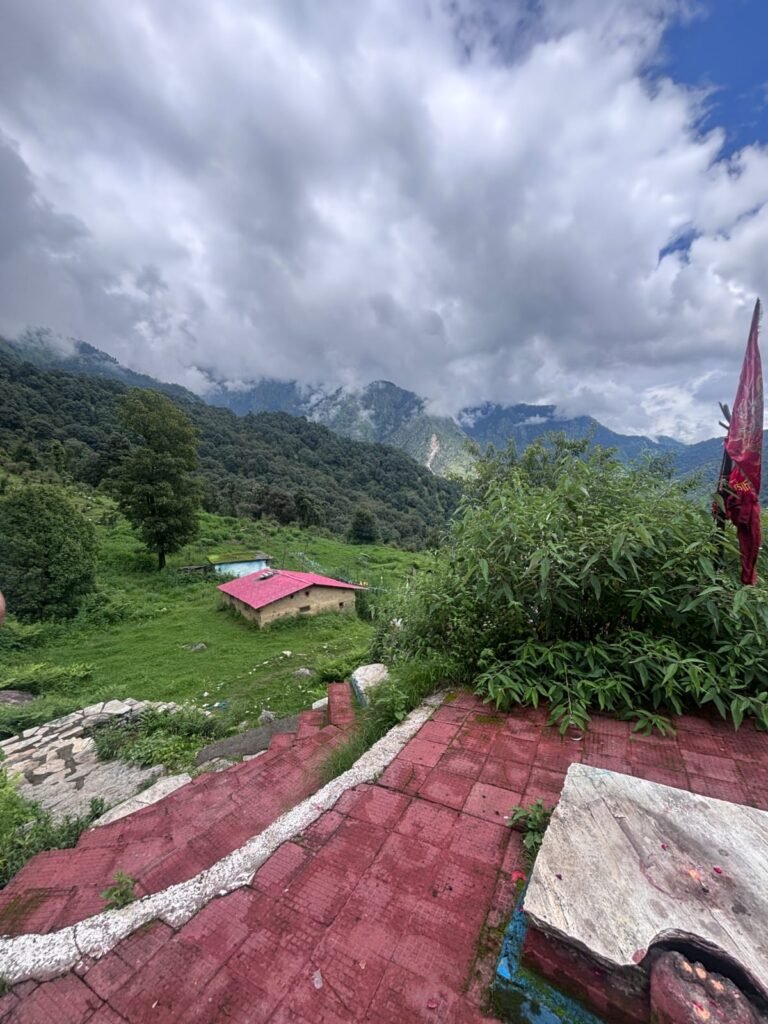
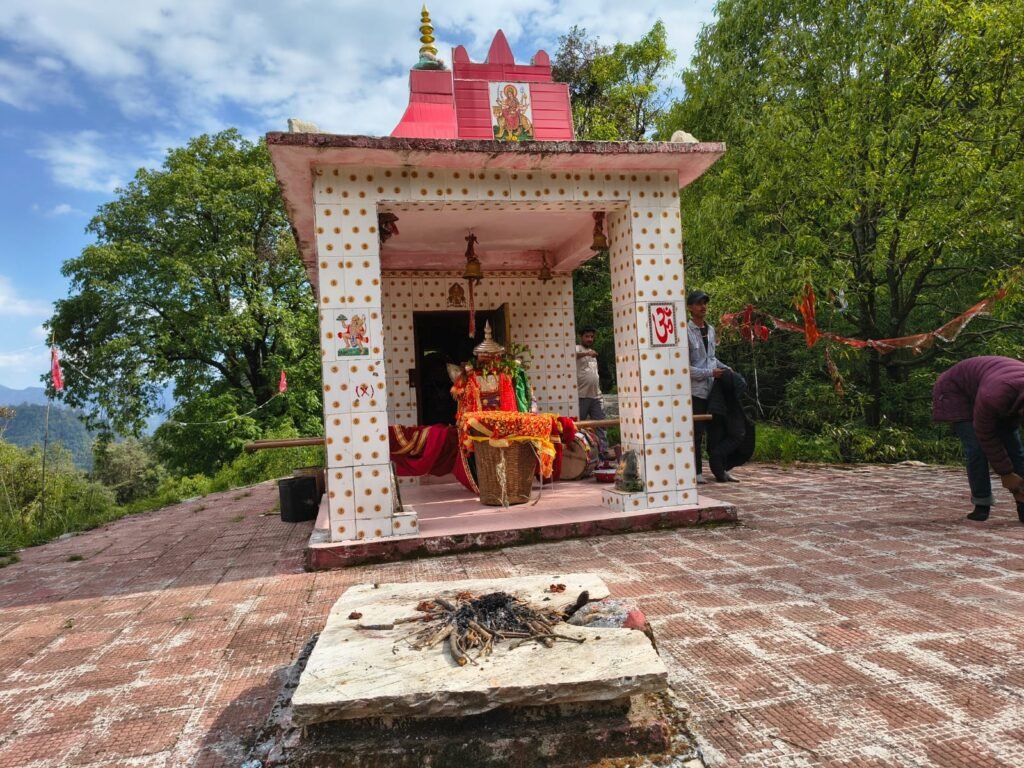
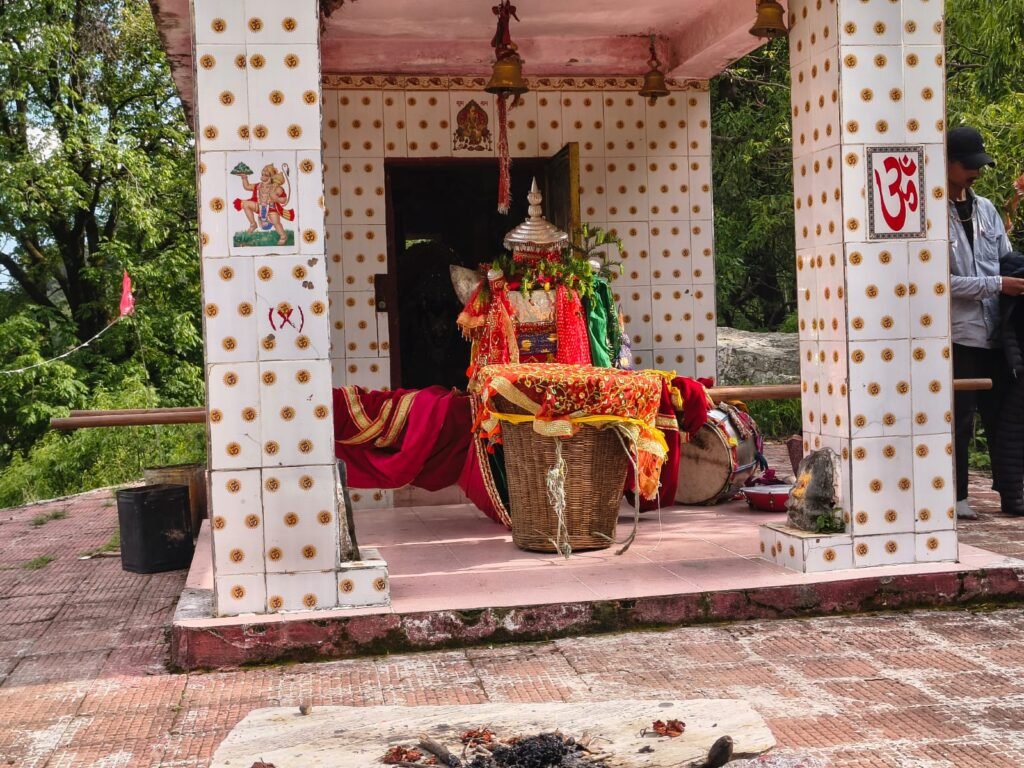
The surrounding landscape is characteristic mid-elevation Garhwal terrain: forested hillsides, a fast stream running through the valley, and — once you clear the tree line near the meadow — open views back across the ridgelines toward the Asi Ganga–Bhagirathi confluence below.
Why Is Ayana Devi Temple Important?
Ayana Devi Temple functions primarily as a local and regional shrine rather than a major Char Dham pilgrimage stop — its importance is rooted in the surrounding villages’ ongoing relationship with the site rather than in wide public fame. For local communities, the temple appears to serve as a focal point of devotion tied to the high-altitude meadow it sits in, a pattern common across Garhwali village religion, where specific natural sites — meadows, confluences, groves — carry accumulated spiritual significance tied to a local devi or devta.
What’s reasonably well supported: the temple sits in a meadow associated with a stream near Naald village; it draws visitors specifically for the hike-and-shrine combination; and the surrounding high pastures are used seasonally by shepherds, which ties the site to the area’s pastoral culture as well as its religious life.
What falls into local belief and oral tradition, and should be treated as such: specific claims about the temple’s spiritual classification, its historical custodianship, and precise ritual practices. This guide flags these clearly wherever they come up rather than presenting them as settled fact — see the Local Legends and Stories and Religious Significance sections below.
History of Ayana Devi Temple
There’s no comprehensive, independently verifiable published history of Ayana Devi Temple available to draw on here, and this guide won’t invent one. No confirmed founding date, no documented construction history, and no verified inscriptions are available in accessible sources.
This is a common situation for smaller Himalayan village and regional shrines, which is worth understanding rather than treating as a gap to be filled with guesswork. Across the Garhwal hills, temples like this one typically preserve their history through oral tradition, ongoing ritual practice, and community memory rather than written records — a system that works well for continuity of worship but doesn’t translate easily into the kind of documented timeline a travel guide can responsibly report as fact.
What can be said is that the temple’s setting — a meadow tied to a stream, at a moderate hiking distance from the nearest substantial village — fits a broader pattern of Garhwali devi shrines sited at specific natural features rather than within village centres. Beyond that, visitors who want the fuller story are better served by asking directly at Naald or from a local guide familiar with the specific oral tradition attached to this shrine.
Religious Significance
Ayana Devi is worshipped locally as a form of the Goddess (Devi), and devotees visit the temple for the combination of pilgrimage and pastoral-landscape pilgrimage that a meadow shrine like this offers. Available accounts differ on Ayana Devi’s precise identification within the wider Hindu tradition — some describe her in association with Durga, others with Kali — and given that inconsistency, this guide won’t assert one identification as definitive. If this matters to your visit, it’s worth asking a local priest or long-time resident directly, since regional and even village-specific devi traditions frequently carry their own distinct identity alongside broader pan-Hindu associations.
Forms of worship at village and regional devi shrines in this part of Garhwal generally follow familiar patterns — simple puja, the offering of flowers, and seasonal community gatherings — though the specific ritual calendar and offerings customary at Ayana Devi Temple aren’t documented in detail in available sources. Confirm current practice locally, and follow the lead of anyone performing puja alongside you rather than assuming standard temple etiquette covers every specific custom.
Local Legends and Stories
Local Story: A Site of Spiritual Energy
Local tradition holds that Ayana Devi Temple sits on a particularly potent spiritual point in the landscape — described in some accounts as a place of unusual spiritual energy, well suited to quiet reflection and meditation.
What the tradition means: This kind of belief — that certain natural sites carry heightened spiritual significance — is common across Himalayan devi worship, where temples are frequently sited at meadows, confluences, and other striking natural features rather than built independently of the landscape around them.
How locals observe it today: Visitors describe the meadow setting itself, with the stream nearby and open views back toward the valley, as conducive to quiet time at the temple beyond a brief darshan — worth building into your schedule if the pace of your trip allows it.
Local Story: The Bhotiya Community’s Connection to the Shrine
According to some accounts, the shrine has traditionally been cared for by the Bhotiya community and residents of neighbouring high-altitude villages.
What the tradition means: Bhotiya communities across the Uttarakhand Himalaya have long-standing associations with high-altitude trade routes, pastoral land use, and specific mountain shrines — a custodial relationship with a meadow temple like this would be consistent with that broader pattern.
How locals observe it today: This detail isn’t something a general travel guide can independently verify, so treat it as background rather than confirmed fact, and ask locally if the specific community relationship to the temple interests you.
Shepherd Culture at the Meadow
Not a legend so much as a living seasonal tradition worth knowing about: during the summer months, shepherds bring their flocks up to graze in the meadows around Ayana Devi Temple, as they do across many of this region’s high pastures. Traditional flute music carrying across the meadow while flocks graze is a specific, recurring detail in descriptions of the hike — if you’re timing your visit for early-to-mid summer, this pastoral backdrop is genuinely part of the experience rather than an occasional bonus.
Temple Architecture
Detailed, verified information about Ayana Devi Temple’s specific architecture isn’t available in accessible sources, so this guide won’t claim a particular construction style, age, or specific structural features that can’t be confirmed. What can reasonably be expected, based on the pattern typical of small Garhwali meadow and village shrines, is a modest stone-and-timber structure scaled to community rather than pilgrimage-crowd use, set directly into its meadow surroundings rather than approached via any elaborate temple complex.
If specific architectural detail — stonework, woodwork, roof style, sanctum layout — matters to your visit, this is genuinely best confirmed by observation on the day, or by asking a local guide who has visited the shrine directly.
The Ayana Devi Temple Hike
This is the section most people searching for the Ayana Devi Temple hike Uttarkashi actually want, so here’s the practical detail in full.
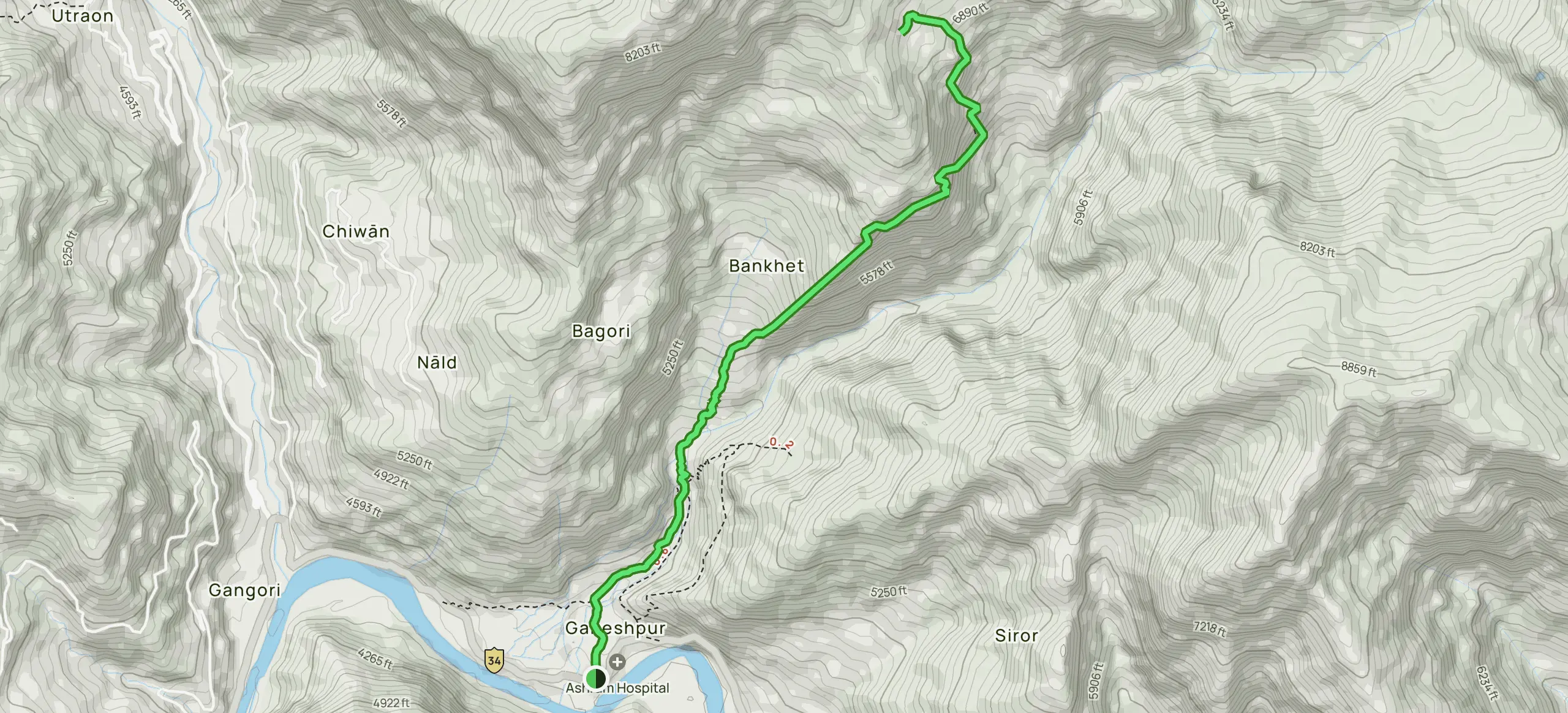
The hike begins at Naald village, roughly 6,500 ft (about 1,980 m) in elevation and about 11 km by road from Uttarkashi. From the trailhead near the Sivananda Seva Samiti, the trail climbs to the temple at approximately 7,150 ft (about 2,180 m) — a modest elevation gain of roughly 650 ft (about 200 m) spread across the full distance, which is part of why the hike is generally described as moderate rather than strenuous despite its length.
The trail follows the Ganesh Ganga stream for much of its length, moving through forest that starts as pine at lower elevation and shifts toward oak and rhododendron as you climb — genuinely varied forest walking rather than a single monotonous belt of trees. The setting is described as rich in flora and fauna, and the stream itself is a consistent presence alongside the trail for a significant stretch of the walk.
Total one-way distance is reported at approximately 12 km (7.6 miles), taking roughly 3 hours at a standard hiking pace — treat this as a planning estimate rather than a fixed number, since actual time depends heavily on your fitness, the weather, and how much you stop for photography or rest along the way.
Water availability: The trail runs alongside the Ganesh Ganga stream for much of its length, so water is generally accessible, but stream water should always be treated or filtered before drinking rather than assumed safe.
Rest points and facilities: Specific formal rest points along the trail aren’t documented in available sources — plan to take breaks as needed rather than expecting marked stopping points, and carry your own snacks and water rather than relying on anything being available en route.
Mobile network: Not reliably documented beyond Naald — see the Mobile Network and Internet section for more detail. Plan for limited to no signal for most of the hike.
Safety considerations: Covered in full in the dedicated Safety Guide below — the short version is: start early, watch the weather, and don’t attempt the hike in poor visibility or heavy rain.
Ayana Devi Temple Hike Route
| Section | Distance | Approx. Time | Terrain |
|---|---|---|---|
| Uttarkashi → Naald (roadhead/trailhead) | ~11 km | Confirm locally (road drive) | Road |
| Naald village → forest section | Portion of ~12 km total | Portion of ~3 hrs total | Village trail into pine forest |
| Forest section → meadow and temple | Portion of ~12 km total | Portion of ~3 hrs total | Forest trail transitioning to oak/rhododendron and open meadow |
The Naald-to-temple distance and time are reported in total (~12 km / ~3 hours one-way); the specific split between the village and forest sections above isn’t independently documented, so treat the segment breakdown as a general planning guide rather than a precise itinerary. Some sources also describe a wider “Ayana Devi Circuit” connecting Uttarkashi, Naald, a point referred to as Ayana, and Ganeshpur back to Uttarkashi — worth asking about locally if you’re interested in a longer, circular route rather than the standard there-and-back hike.
Ayana Devi Temple Hike Difficulty
The Ayana Devi Temple hike is generally described as moderate — a genuine day hike rather than a casual stroll, but well within reach of anyone with reasonable fitness and some hiking experience. The modest overall elevation gain (roughly 650 ft / 200 m across 12 km) means the trail doesn’t involve sustained steep climbing, but the total distance and duration (around 3 hours one-way, so 6 or more hours round trip with breaks) make it a real commitment rather than a short outing.
Trail quality and incline: The route follows forest and stream-side terrain rather than exposed ridge walking, which generally makes for a more sheltered, less weather-exposed hike than high-altitude alpine treks — though specific trail surface conditions (rocky, root-covered, muddy in places) aren’t documented in detail and are worth asking about locally, especially outside the peak dry months.
Fitness and experience required: Comfortable, sustained walking ability over roughly 24 km round trip is the main requirement. Prior hiking experience isn’t strictly necessary, but a reasonable baseline of fitness makes the day considerably more enjoyable.
Children: The distance and duration make this a demanding day for young children — families should assess their children’s walking stamina honestly rather than assuming a “moderate” rating means easy going for everyone.
Senior citizens: Achievable for fit, experienced senior hikers, but the round-trip distance and duration warrant an honest fitness assessment beforehand — this isn’t a short, casual walk regardless of the modest elevation gain.
How Long Does the Hike Take?
One-way: Roughly 3 hours from Naald to the temple, at a standard hiking pace.
Return: Similar or somewhat faster on the way down, depending on trail conditions and your own pace — plan for at least 2.5–3 hours for the descent.
Total suggested time: Including time at the temple itself (allow at least 30–45 minutes for darshan and rest) and breaks along the trail, budget a full 7–8 hours for the round trip from Naald, plus the roughly 30–45 minute drive each way between Uttarkashi and Naald.
Actual hiking time varies with your fitness level, current weather, trail conditions at the time of your visit, and how much time you spend photographing or resting — treat the figures above as a planning baseline, and build in buffer time rather than cutting your day close, particularly given the distance involved.
Best Time for the Ayana Devi Temple Hike
Reported guidance points to April through November, excluding the monsoon months, as the workable window for this hike — consistent with general seasonal patterns across the Uttarkashi district.
Spring (March–April): Generally good hiking weather as the valley warms, with the added appeal of forest coming into fresh growth. Confirm current trail conditions locally if you’re planning an early-spring visit.
Summer (May–June): Warm days at lower elevation but pleasant at the temple’s roughly 7,150 ft, and the season when shepherds bring flocks up to the meadow — worth timing your visit for if that pastoral atmosphere interests you specifically.
Monsoon (July–August): Not recommended. Heavy rainfall makes forest trails slippery and increases landslide risk on the approach road to Naald — this is explicitly flagged in available trekking guidance as a season to avoid.
Autumn (September–November): Generally the clearest, most comfortable hiking window, with the added benefit of settled post-monsoon weather across the district.
Winter (December–February): Not well documented for this specific hike. Given the elevation and regional context, colder temperatures, shorter daylight hours, and the possibility of snow at the temple’s altitude are all realistic considerations — confirm current accessibility locally before planning a winter attempt.
Month-by-Month Travel Guide
| Month | Weather | Trail Conditions | Crowd | Recommendation |
|---|---|---|---|---|
| January | Cold, clear | Possible snow near temple; confirm locally | Low | Confirm access before planning |
| February | Cold, clearing | Possible snow at altitude | Low | Confirm access before planning |
| March | Mild, warming | Generally good | Low–Moderate | Good |
| April | Warm, spring conditions | Good | Moderate | Good |
| May | Warm | Good | Moderate | Good — shepherd season begins |
| June | Warm, pre-monsoon | Good, watch for early rain | Moderate | Good |
| July | Hot, monsoon rain | Slippery, landslide risk | Low | Avoid |
| August | Monsoon rain continues | Slippery, landslide risk | Low | Avoid |
| September | Cooling, clearing | Improving through the month | Moderate | Good later in month |
| October | Cool, clear | Good | Moderate | Best month |
| November | Cool, clear | Good | Low–Moderate | Good |
| December | Cold | Possible snow at altitude; confirm locally | Low | Confirm access before planning |
Weather and trail figures reflect general regional patterns for this elevation band rather than confirmed month-specific data for the Ayana Devi trail itself — confirm current conditions before departure, particularly for the winter months.
What to Carry
Essential
- Comfortable hiking shoes with good grip
- Water (at least 1.5–2 litres) and a way to treat stream water if needed
- Snacks for a full day’s hike
- Light backpack
- Rain protection (jacket or poncho)
- Warm layer, even in summer, for the temple’s higher elevation
- Basic first-aid kit
- Personal medicines
- Identification documents
- Phone (with offline maps downloaded in advance)
- Power bank
Useful
- Walking pole, particularly if the trail is wet or uneven
- Sunglasses
- Sunscreen
- Cap or sun hat
- Headlamp, in case your return runs later than planned
- Small towel
- Basic toiletries
Temple Etiquette
- Dress respectfully — cover shoulders and legs, as you would at any Garhwali village temple.
- Remove footwear where required at the temple compound.
- Follow local instructions from the priest or anyone attending the shrine.
- Ask before photographing people, active rituals, or temple interiors.
- Don’t enter any area marked or indicated as restricted.
- Don’t touch sacred objects or deity images without explicit permission.
- Keep the temple surroundings clean — carry out anything you bring in.
- Avoid loud music or conversation in and around the temple area.
- Respect local customs even where they aren’t explicitly explained to you — when in doubt, watch and follow rather than assume.
Photography Guide
Temple exterior and meadow setting. The combination of the shrine, the open meadow, and the stream nearby is the strongest single subject on this hike — worth allowing extra time for once you arrive.
Forest trail sections. The shift from pine to oak and rhododendron forest along the Ganesh Ganga gives strong, varied texture for trail photography, particularly in the morning light on the way up.
Mountain and valley views. Look back toward the Asi Ganga–Bhagirathi confluence from elevated points on the trail near Naald for some of the hike’s best landscape framing.
Village and trailhead. Naald itself, positioned above the confluence, is worth a few minutes of photography before you start climbing.
Sunrise and sunset. Given the roughly 3-hour one-way hike, a full day trip with an early start gives you the best shot at good light both on the ascent and back at Naald in the evening — plan your start time with this in mind.
People and ceremonies. Always ask permission before photographing villagers, worshippers, or any active religious ceremony — this applies throughout the hike and at the temple itself, without exception.
Nearby Attractions
Uttarkashi Town (~11 km from Naald) — The district headquarters, with the Kashi Vishwanath Temple, Shakti Temple, NIM Museum, and Manikarnika Ghat. See our Uttarkashi Travel Guide.
Kashi Vishwanath Temple (in Uttarkashi) — The principal Shiva temple of the district, at the Bhagirathi confluence. Covered in our Uttarkashi guide.
Kuteti Devi Temple (near Uttarkashi) — A significant goddess temple in the Uttarkashi area, worth combining with a visit to Ayana Devi if goddess-temple circuits interest you.
Manikarnika Ghat (in Uttarkashi) — The riverside cremation ghat mirroring its Varanasi namesake, and a site of the annual Uttaraini Mela.
Bhagirathi River — Accessible at several points around Uttarkashi and the surrounding villages; see our guides to individual villages for specific access points.
Netala — A quiet Garhwali village on the Gangotri Highway. See our Netala Travel Guide.
Tiloth — Another village close to Uttarkashi, with its own temples and terraced fields. See our Tiloth Village Guide.
Bhatwari — A service hub with a Saturday haat market. See our Bhatwari Travel Guide.
Gangnani — Home to the Rishi Kund hot spring. See our Gangnani Travel Guide.
Harsil Valley — Apple orchards and river scenery further up the Gangotri Highway. See our Harsil Travel Guide.
Gangotri — The Char Dham temple of Goddess Ganga. See our Gangotri Travel Guide.
Dayara Bugyal — Uttarakhand’s best-known accessible alpine meadow trek. See our Dayara Bugyal Guide.
Dodital — A forest-set alpine lake trek near Uttarkashi. See our Dodital Trek Guide.
Gaumukh and Gaumukh Tapovan — The source glacier of the Bhagirathi, reached via a multi-day trek beyond Gangotri. See our Gaumukh Trek Guide and Gaumukh Tapovan Trek Guide.
Ayana Devi Temple + Nearby Attractions
Given Naald’s position roughly 11 km from Uttarkashi, the most geographically sensible pairing is a dedicated hiking day at Ayana Devi, combined with Uttarkashi’s temple circuit either the day before or after — rather than trying to stretch further up the Gangotri Highway toward Bhatwari or Gangnani on the same day as the hike itself, which would make for an unrealistically long day given the driving distances involved.
Ayana Devi Temple Distance
| Starting Point | Approx. Distance | Travel Mode | Approx. Time |
|---|---|---|---|
| Uttarkashi | ~11 km (to Naald) + ~12 km hike | Road + Hike | ~30–45 min drive + ~3 hrs hike |
| Dehradun | ~156 km (to Naald) | Road | ~5–6 hours |
| Rishikesh | ~171 km (to Naald) | Road | ~5.5–6.5 hours |
| Haridwar | ~191 km (to Naald) | Road | ~6–7 hours |
| Gangotri | ~111 km (to Naald, via Uttarkashi) | Road | ~3.5–4 hours |
Figures beyond Uttarkashi are estimated by adding the approximate 11 km Uttarkashi–Naald road stretch to standard district travel distances — confirm exact routing and current road conditions before travel.
Accommodation
There’s no dedicated hotel or guesthouse infrastructure documented at Naald village itself. Homestay accommodation with local families may be available — worth arranging in advance through Kashi Of North rather than assuming you can organize something on arrival.
Uttarkashi (the practical base, ~11 km from Naald) offers the district’s widest accommodation range:
Booking tip: During Char Dham season (roughly May–June), major festivals, and summer holidays, book Uttarkashi accommodation at least 1–2 weeks ahead — availability tightens considerably during these windows.
Food
There’s no restaurant infrastructure documented at Naald or along the trail itself, and food availability this close to a hiking trailhead should never be assumed — carry your own provisions and water for the full day. Uttarkashi’s dhabas and restaurants (roughly 11 km away) offer the fuller range of Garhwali and North Indian vegetarian food, and are the sensible place to eat before or after the hike rather than en route.
Tea shops may operate seasonally near Naald, but this isn’t reliably documented — treat any such stop as a bonus rather than something to plan around.
Mobile Network and Internet
Mobile network coverage along the Ayana Devi Temple trail isn’t reliably documented in available sources. Given the trail’s forest and stream-side terrain and its distance from any major town, it’s realistic to plan for limited to no signal for a meaningful portion of the hike, with better and more consistent coverage once you’re back in Uttarkashi. Download offline maps before you leave Uttarkashi rather than relying on live data on the trail, and let someone know your planned return time before setting out.
ATM, Fuel, and Medical Facilities
None of these are available at Naald or along the trail — prepare fully in Uttarkashi before heading out. Withdraw cash, fill your vehicle’s fuel tank, and carry any personal medication you might need for the full day, since none of these can be sourced closer to the trailhead. The District Hospital in Uttarkashi is the nearest significant medical facility to the Ayana Devi trail.
Safety Guide
- Weather changes: Mountain weather in this part of Garhwal can shift quickly — carry rain protection regardless of the forecast at the start of your day.
- Slippery trails: Particularly relevant outside the dry season — the forest sections along the Ganesh Ganga can become slick after rain.
- Monsoon landslides: The approach road to Naald, like many hill roads in the district, carries increased landslide risk during July–August — this is a primary reason the monsoon season is not recommended for this hike.
- Dehydration: The roughly 3-hour one-way hike is a real physical commitment — carry enough water and don’t rely solely on the stream without treatment.
- Altitude: The temple’s elevation (~7,150 ft / ~2,180 m) is moderate and unlikely to cause serious altitude issues for most hikers, but pace yourself and stay attentive to how you’re feeling regardless.
- Hiking after dark: Given the roughly 7–8 hour round-trip time including breaks, start early enough to comfortably finish before dark — this is not a hike to begin in the afternoon.
- Wildlife awareness: The forest sections support typical Himalayan wildlife; keep a respectful distance from any animals encountered and don’t leave food waste on the trail.
- Local road conditions: Confirm current road status to Naald before departure, particularly outside the peak dry season.
- Emergency planning: Carry a charged phone, know the nearest emergency contacts (listed below), and inform someone of your plans and expected return time.
Responsible Tourism
- Carry your waste back. There’s no waste management infrastructure at Naald or along the trail — everything you bring in, take out.
- Avoid plastic where possible, and never leave any behind at the temple or along the stream.
- Respect the temple. Follow the etiquette guidance above without exception, and be especially mindful during any active ritual you happen to encounter.
- Respect villagers. Naald and the surrounding area are working communities, not trail infrastructure — approach with the same courtesy you’d want shown to your own home.
- Support local businesses. Choose a Naald homestay over a hotel-only stay if one is available, and buy from local families where the opportunity arises.
- Avoid disturbing wildlife. Keep noise levels down, particularly near the meadow where shepherds’ flocks may be grazing in summer.
- Stay on established trails. Particularly important through the meadow section near the temple, where off-trail walking can damage slow-recovering vegetation.
- Avoid loud music on the trail and especially near the temple.
- Do not damage religious or cultural sites — this includes not touching or leaning on temple structures, and not removing anything from the site.
Why Visit Ayana Devi Temple with Kashi Of North?
Planning a hike to a lesser-documented shrine like Ayana Devi is easier with someone who can confirm current trail and road conditions before you commit a full day to it. Kashi Of North can help arrange:
- Guided Ayana Devi Temple hikes
- Taxi transport to Naald
- Homestay bookings near the trailhead
- Hotel bookings in Uttarkashi
- Local guides familiar with the current trail and temple customs
- Combined Uttarkashi sightseeing and village tours
- Fully customized pilgrimage and hiking itineraries
📞 WhatsApp / Call: +91 7253079221 📧 Email: kashiofnorth@gmail.com 🌐 Website: https://kashiofnorth.com
Frequently Asked Questions
Temple
1. What is Ayana Devi Temple? Ayana Devi Temple is a local Hindu shrine in Uttarkashi district, Uttarakhand, set in a meadow above Naald village and reached via a moderate hike of approximately 12 km.
2. Where is Ayana Devi Temple located? In a meadow near a stream above Naald village, roughly 11 km by road from Uttarkashi town, in Uttarkashi district, Uttarakhand.
3. Who is Ayana Devi? Ayana Devi is worshipped locally as a form of the Goddess. Accounts differ on her precise pan-Hindu identification — some associate her with Durga, others with Kali — so confirm locally rather than assuming a single definitive answer.
4. Why is Ayana Devi Temple important? It serves as a focal point of devotion for local and regional communities, tied to a meadow setting with its own local tradition of spiritual significance.
5. Is Ayana Devi Temple an ancient temple? There’s no verified founding date or documented construction history available — its age isn’t something this guide can confirm one way or the other.
Hiking
6. Is there a hike to Ayana Devi Temple? Yes — the temple is reached via a roughly 12 km, 3-hour one-way hike from Naald village.
7. How difficult is the Ayana Devi Temple hike? It’s generally rated moderate — a real day-hike commitment given its length, but without steep sustained climbing given the modest overall elevation gain.
8. How long does the hike take? Roughly 3 hours one-way, similar or slightly faster on the return, plus temple time — budget 7–8 hours for the full round trip from Naald.
9. What is the Ayana Devi Temple hike distance? Approximately 12 km (7.6 miles) one-way from Naald village to the temple.
10. Is the trail suitable for beginners? Reasonably fit beginners can manage it, but the total distance (about 24 km round trip) makes it a genuine commitment rather than a casual walk.
11. Can children do the hike? Possible for older, fit children, but the distance and duration are demanding for young kids — assess your child’s walking stamina honestly before attempting it.
12. Can senior citizens visit? Yes, for fit and experienced senior hikers — the modest elevation gain helps, but the total distance still requires an honest fitness assessment.
13. Do I need a guide? Not strictly required, but recommended given the trail isn’t extensively documented — a local guide adds real value for navigation and current conditions.
Travel
14. How do I reach Ayana Devi Temple? Drive or taxi to Naald village (~11 km from Uttarkashi), then hike approximately 12 km to the temple.
15. How far is it from Uttarkashi? About 11 km by road to the Naald trailhead, plus the roughly 12 km hike itself.
16. Can I reach the starting point by car? Yes — Naald is reachable by taxi, private vehicle, or bus connection from Uttarkashi.
17. Is parking available? Specific parking arrangements at Naald aren’t documented in detail — confirm locally on arrival.
18. Are taxis available? Yes, from Uttarkashi to Naald — Kashi Of North can arrange this as part of a booking.
Weather
19. What is the best time to visit? April–June and September–November, avoiding the July–August monsoon period.
20. Can I visit during monsoon? Not recommended — heavy rain increases landslide risk on the approach road and makes the forest trail slippery.
21. Can I visit in winter? Possible but not well documented — cold temperatures and potential snow at the temple’s elevation mean you should confirm current accessibility before planning a winter visit.
22. Is snowfall possible? Given the temple’s elevation (~7,150 ft), snowfall in winter is plausible, though this isn’t specifically documented for this site — confirm locally.
Facilities
23. Are hotels available nearby? Not at Naald itself. Uttarkashi (~11 km away) has the district’s full range of accommodation options.
24. Are homestays available? Possibly at Naald, though availability isn’t fixed — arrange in advance through Kashi Of North rather than assuming on-arrival availability.
25. Is food available? No documented restaurant infrastructure at Naald or along the trail — carry your own provisions and eat in Uttarkashi before or after.
26. Is mobile network available? Not reliably documented on the trail itself — plan for limited to no signal once you leave Naald.
27. Are ATMs available nearby? No — withdraw cash in Uttarkashi before heading to Naald.
Religious
28. What should I wear? Modest, full-length clothing covering shoulders and legs, as at any Garhwali temple.
29. Can I perform puja? Yes, following the guidance of the priest or anyone present, and current local practice on the day.
30. Can I take photographs? Generally yes for the temple exterior and surroundings, but always ask before photographing people or active rituals.
31. What offerings can devotees bring? Specific offering customs for this temple aren’t documented in detail — flowers are a generally safe default across Garhwali devi worship, but confirm locally if you want to bring anything more specific.
Uttarkashi Tourism
32. What can I visit near Ayana Devi Temple? Uttarkashi’s temple circuit, Netala, Tiloth, Bhatwari, Gangnani, Harsil, and Gangotri are all reasonably combinable into a wider district itinerary — see Nearby Attractions above.
33. How many days are enough for Uttarkashi? A minimum of 2–3 days covers the town’s temples plus one dedicated hiking day at Ayana Devi; longer trips can add Tiloth, Netala, and further destinations up the Gangotri Highway.
34. Can I combine the temple with Gangotri? Yes, as part of a longer district itinerary — Gangotri is roughly 111 km from Naald via Uttarkashi, best treated as a separate leg of your trip rather than combined with the hike on the same day.
35. Can Kashi Of North arrange a visit? Yes — guided hikes, taxi transport, homestay or hotel bookings, and custom itineraries are all available through Kashi Of North.
36. Is there an entry fee at Ayana Devi Temple? None reported in available sources — confirm locally, though local shrines of this kind typically don’t charge entry.
37. What is the “Ayana Devi Circuit”? Some sources describe a circular route connecting Uttarkashi, Naald, a point referred to as Ayana, and Ganeshpur back to Uttarkashi — a longer alternative to the standard there-and-back hike, worth asking a local guide about if it interests you.
38. Is there a specific festival at Ayana Devi Temple? No specific festival dates are documented for this temple in available sources — ask locally if you want to time a visit around a particular observance.
39. What wildlife might I see on the hike? The forest sections support typical Himalayan wildlife; specific species aren’t documented for this trail, so treat any sighting as a bonus rather than an expectation.
40. Is this hike a good acclimatization trek before a bigger Himalayan trek? It’s been described as a solid day-hike option near Uttarkashi — reasonable given its moderate rating and full-day distance, though it shouldn’t be treated as a substitute for proper acclimatization planning on a genuinely high-altitude trek.
Explore More of Uttarkashi District
- Tiloth Village Guide
- Uttarkashi Travel Guide
- Bhatwari Travel Guide
- Netala Travel Guide
- Gangnani Travel Guide
- Harsil Travel Guide
- Gangotri Travel Guide
- Dayara Bugyal Guide
- Dodital Trek Guide
- Gaumukh Trek Guide
- Kush Kalyan Bugyal Trek Guide
- Jhinda Bugyal Trek Guide
- Hotel Booking
- Taxi Booking
Conclusion
Ayana Devi Temple belongs in an Uttarkashi itinerary for a specific reason: it’s the rare local pilgrimage site that’s also a genuinely satisfying day hike — a meadow shrine reached by following a mountain stream through changing forest, with shepherd culture, a dramatic river confluence at the trailhead, and a temple setting that rewards the effort of the climb rather than merely marking its endpoint. It won’t have the crowds or the fame of the Char Dham circuit, and much of its specific history remains held in local memory rather than published record — which is exactly why a visit here, done with a bit of local guidance, tells you something about Uttarkashi’s religious and pastoral life that the district’s bigger temples can’t.
Combined with a couple of days in Uttarkashi town, or paired with a stop at Tiloth or Netala, the Ayana Devi Temple hike gives faith, landscape, and village life equal weight — a genuinely rounded look at what this part of the Garhwal Himalaya offers beyond its most famous stops.
Ready to plan your visit? Kashi Of North can arrange your Ayana Devi Temple hike, taxi transport to Naald, homestay or hotel bookings, a local guide, and a full customized Uttarkashi itinerary around it.
📞 WhatsApp / Call: +91 7253079221 📧 Email: kashiofnorth@gmail.com 🌐 Website: https://kashiofnorth.com